Wildfire Mitigation Tree Services: Creating Safer Perimeters Around Buildings
Wildfire changes the way people look at trees. A shade tree that felt like an asset for twenty years can become a liability in one hard wind event, especially when drought, slope, and accumulated debris all line up at the wrong time. The goal of wildfire mitigation is not to strip a property bare. It is to create defensible space, reduce ladder fuels, interrupt fire spread, and give structures a better chance when embers start moving ahead of the flame front.
That work sits right at the intersection of arboriculture, fire behavior, and practical property management. Homeowners often assume the answer is simple: cut everything close to the house and hope for the best. In practice, the right plan is much more selective. Some trees should come out. Some need careful reduction, thinning, or crown lifting. Some can stay but need monitoring, support, or irrigation changes. A mature oak with high moisture content and good separation from the roof is not the same risk as a resinous conifer overhanging a gutter full of needles.
Wildfire Mitigation Tree Services are most effective when they start with a site-specific assessment. There is no universal clearance distance that solves every problem because the risk picture changes with topography, species, canopy density, prevailing wind, and the way outbuildings, fences, decks, and driveways connect to the main structure. Two properties on the same road can require very different treatments.
The perimeter around a building is a fire system, not a single task
People often think in terms of one operation, usually tree removal. In the field, wildfire mitigation is almost never one task. It is a system of decisions that work together. You might remove a dead cedar within ember range of the eaves, prune lower limbs on several pines to reduce ladder fuels, grind stumps where regrowth or trip hazards would complicate maintenance, and then clear the buildup of bark, cones, and leaves under the remaining canopy. If any one of those steps is ignored, the whole perimeter stays more vulnerable than it looks from the driveway.
The reason this matters is simple. Most structures exposed to wildfire are not lost because a wall of flame sat on the siding for ten straight minutes. They are often ignited by embers that land in receptive fuel beds. Mulch against the foundation, needles in valleys and gutters, dry ornamental shrubs under windows, wood fencing tied directly into the house, and low branches that let a surface fire climb into the canopy all create pathways. Trees matter, but trees are only part of the chain.
A good mitigation plan reads the site vertically and horizontally. Vertically, it asks whether flames can climb from ground fuels into shrubs and then into the tree crowns. Horizontally, it looks at whether tree canopies or surface fuels are close enough to carry fire toward structures or from one structure to another. That is why Tree Pruning & Crown Shaping, Dangerous Tree Assessment and Removal, and even Stump Removal & Grinding can all play a role in the same project.
Where tree risk comes from
Not all high-risk trees look obviously hazardous. Some of the most problematic specimens still appear green from the road. A tree can carry hidden decay at the base, hold a heavy lean toward the structure, or have crown dieback that increases dead fuel load without looking completely failed. In drought years, I have seen trees that held just enough foliage to seem stable, but once crews got into the canopy it became clear large sections were brittle and already dying back.
Species matters too. Trees with high oil or resin content, shaggy or fibrous bark, dense needle litter, and low branches often demand closer scrutiny near buildings. Fast-growing trees can also become fire and failure risks when they outgrow their space, crack at included unions, or press canopies together until there is no effective separation left. Add a steep slope, and the urgency increases because fire typically runs uphill faster, preheating fuels above it.
Then there is deferred maintenance. A tree that was structurally sound ten years ago may now have multiple co-dominant stems, storm damage, or dead limbs over the roofline. In wildfire territory, neglect compounds risk. Deadwood increases ember catch. Dense crowns hold litter. Overextended limbs hang over chimneys and vents. Surface roots can trap leaf litter and make cleanup harder in exactly the places where cleanliness matters most.
The role of a Certified Arborist Consultation
There is real value in having a Certified Arborist Consultation before major work starts. Not because every property needs a thick report, but because wildfire mitigation can go wrong when people treat all trees as interchangeable. An experienced arborist can identify which trees are contributing to risk, which are structurally compromised, and which still provide shade, screening, or slope stability without materially increasing the fire load near the home.
That distinction protects both safety and budget. I have seen owners spend heavily on removing visually prominent trees while leaving far more important hazards untouched, such as ladder fuels under windows or dead limbs directly above an outbuilding that stored fuel and equipment. I have also seen over-thinning create new problems. Once the canopy is opened too aggressively, wind exposure rises, sunscald becomes possible on some species, and previously shaded understory dries faster. Mitigation is not just subtraction. It is controlled rebalancing.
An arborist who understands fire-adapted landscapes will usually walk the property in zones, starting closest to structures and then expanding outward. The first area gets the most scrutiny because that is where ember resistance and low-fuel conditions matter most. From there, the work becomes more about spacing, continuity, access for crews, and the likelihood that flame lengths could involve the building if a fire enters the property.
Tree Removal Services are sometimes necessary, but often not the whole answer
Tree Removal Services become necessary when a tree is dead, dying, structurally unsound, too close to the structure for safe retention, or simply inappropriate for the site. In wildfire planning, removals often focus on trees that overhang roofs, create direct canopy contact with buildings, crowd driveways that need to remain open for evacuation or apparatus access, or act as ladder fuel towers right next to siding and decks.
Still, blanket removal can be a mistake. Mature trees can provide shade that lowers heat stress on a building and surrounding vegetation. Their root systems may help with soil retention on slopes. Their crowns, if healthy and properly managed, may be less hazardous than a thicket of neglected saplings and ornamental shrubs underneath. The point is to remove the trees that increase fire intensity or structural ignition risk, not to erase every tree from the lot.
A useful phrase in the field is “fuel continuity.” If a tree removal meaningfully breaks continuity, it often delivers real benefit. If it merely opens a visual gap while leaving dead litter, heavy brush, connected fencing, and another dense canopy five feet away, the practical value is limited. This is one reason Dangerous Tree Assessment and Removal should be tied to a broader site plan rather than treated as a stand-alone reaction to fear.
Pruning does more than tidy the canopy
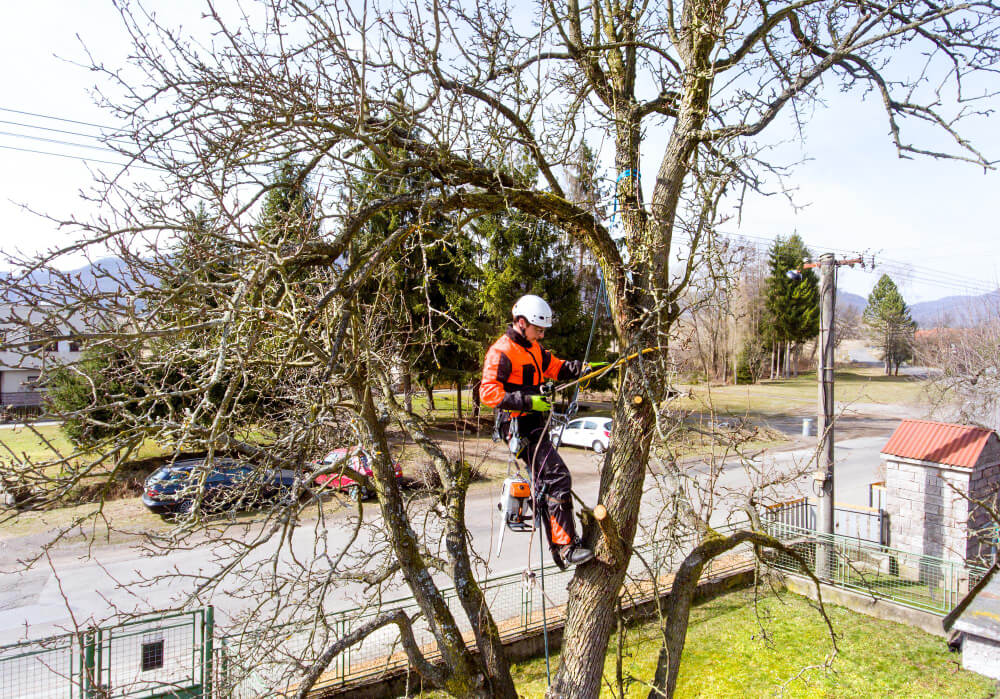
When people hear Tree Pruning & Crown Shaping, they sometimes picture decorative work. In wildfire mitigation, pruning is a tactical operation. Lower limbs are often removed to reduce the chance that a surface fire climbs into the crown. Dead branches are cut out because they ignite more readily and drop embers or burning fragments. In some cases, selective thinning improves spacing within the crown and reduces the amount of combustible material packed into one place.
That said, there is a balance to maintain. Poor pruning can leave a tree stressed, sunburned, or structurally weaker. Excessive interior thinning can encourage epicormic growth on some species, and topping is almost always the wrong move. Topped trees respond with weakly attached shoots, increased maintenance needs, and a canopy architecture that often becomes more hazardous over time. Good pruning for wildfire mitigation is species-aware, proportionate, and aimed at reducing ignition pathways without crippling the tree.
I once walked a property where a homeowner had “fire-pruned” a row of pines by removing nearly every interior branch they could reach from a ladder. The result looked open, but the trees were left with lion-tailed branch ends, heavy end weight, and little meaningful separation from the roof. They had spent time and money, but the actual wildfire posture of the house barely improved. The better approach would have been focused crown lifting to a defensible height, deadwood removal, roof clearance, and cleanup of the deep needle mat below.
Stump Removal & Grinding is not cosmetic in high-risk areas
After removals, stumps are often treated as a lower priority. Sometimes that is reasonable. In other cases, Stump Removal & Grinding supports the mitigation plan in several practical ways. First, it clears space for ongoing maintenance, which matters if crews need to mow, rake, or create cleaner noncombustible zones near structures. Second, it reduces trip hazards on evacuation paths and work routes. Third, it can limit unwanted regrowth in species that sucker aggressively and quickly rebuild dense fuel near buildings.
Grinding is not a magic fix by itself, and the remaining chips must be managed sensibly. A thick pile of dry wood chips against the foundation is not what anyone wants in a fire-prone setting. Placement, depth, and distance matter. In some projects, chips are hauled away from the immediate building perimeter and reused farther out where they are less likely to contribute to structure ignition concerns. Again, the theme is not one service in isolation, but integration.
When support systems help, and when they do not
Tree Cable and Bracing can be part of a wildfire mitigation strategy, though this is usually a secondary measure rather than a primary fire treatment. Support systems make sense when a valuable tree has a structural defect that can be mitigated, the tree is otherwise suitable to retain, and preserving it offers site benefits without unacceptable wildfire risk. A classic example is a mature shade tree with a split-prone union over a driveway or near a building, where support and corrective pruning reduce failure potential.
What support systems do not do is make a highly unsuitable tree safe for retention simply because the owner is attached to it. If the species is wrong for the location, the crown sits directly over the roof, dead material is extensive, and the surrounding fuel bed is unmanaged, cables are not the answer. Too many people hear “bracing” and assume it substitutes for sound judgment. It does not.
Emergency Tree Services after wind, lightning, or fire
Wildfire mitigation is ideally proactive, but real life tends to be messier. Storms split stems. Lightning strips bark and compromises roots. Small fires scorch crowns and leave uncertain residual strength. In those moments, Emergency Tree Services become essential, not only to remove immediate hazards but also to reassess the property’s fire posture before the next weather event.
Post-incident trees can be deceptive. A partially burned tree may remain standing for months before failing. A root plate damaged by heat can lose anchorage gradually. A cracked leader that shifted in strong wind may not fall right away, but it has already changed the calculus. After any major event, trees close to buildings deserve a fresh evaluation. Delaying that inspection often leads to avoidable failures at the worst possible time, usually during the next bout of wind.
A simple field rule helps: if the event changed the tree’s structure, root environment, or canopy color, it changed the risk profile too. That is the moment to bring in trained eyes rather than waiting for obvious collapse.
What a defensible perimeter usually includes
The specific dimensions vary by region, code, and site conditions, but effective perimeters tend to share a few characteristics. The area nearest the building is kept lean, clean, and easy to maintain. Trees that remain are spaced and pruned with the structure in mind. Overhangs are addressed. Surface fuel buildup is controlled. Access routes are kept passable for residents and response crews.
When I review properties that perform well under wildfire planning standards, I usually see these elements in Tree service place:
- branches are kept clear of roofs, chimneys, vents, and overhead utility conflicts
- lower limbs are pruned where needed to reduce ladder fuels, with cuts tailored to species and tree health
- dead or declining trees near structures are prioritized for Dangerous Tree Assessment and Removal
- litter under retained trees is maintained, not allowed to accumulate season after season
- driveway and gate clearance support safe entry, exit, and equipment access
None of that sounds dramatic, but it is the unglamorous maintenance that often separates resilient properties from vulnerable ones.
Edge cases that require judgment
Some properties do not fit standard playbooks. Historic homes may sit under legacy trees that define the site Tree Pruning & Crown Shaping and cannot be removed lightly. Mountain lots may rely on tree cover for slope stability and erosion control. Riparian corridors may have environmental constraints that limit the kind of work allowed. Urban-wildland interface neighborhoods often add another complication, where one owner’s clean perimeter meets a neighbor’s neglected vegetation.
In those cases, wildfire mitigation becomes a negotiation between risk reduction and site constraints. You may retain a major tree but prune and monitor it more aggressively. You may remove a group of small trees instead of one mature specimen because the younger stand is creating denser fuel continuity. You may phase work over two or three seasons to avoid overexposure of the site and to spread cost. This is where experience matters. The best decisions are rarely the loudest ones.
Another edge case involves privacy screening. Homeowners often hesitate to thin or remove vegetation because they fear losing visual separation from the road or adjacent houses. That concern is legitimate. The solution is usually not to ignore fire risk, but to redesign the screen with less combustible plantings, smarter spacing, and hardscape breaks. A dense wall of flammable vegetation right against a deck may feel private until ember cast turns it into a fuse.
What property owners should ask before hiring
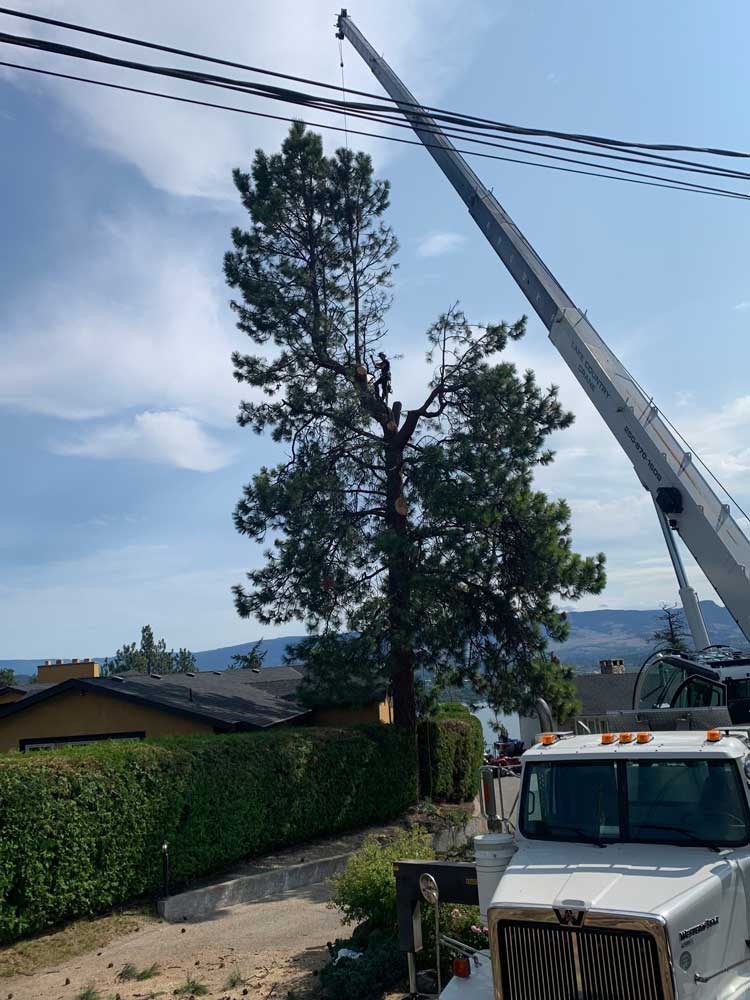
Not every tree crew approaches wildfire work with the same level of discipline. Some are excellent removers but weak on site planning. Some are fine pruners but do not understand how ember exposure changes priorities around structures. Before authorizing work, owners should make sure the contractor can explain not just what they want to cut, but why it matters for fire behavior and structural safety.
A few questions reveal a lot:
- how will you decide which trees to remove, retain, or prune near the structure
- how will debris, chips, and slash be handled so the site is actually safer after the work
- do you assess tree structure, species suitability, and site factors such as slope and roof proximity
- what follow-up maintenance will this perimeter need over the next one to three years
- when is a Certified Arborist Consultation recommended before work begins
Competent answers tend to be specific. Vague promises like “we’ll open it up” are not enough when the stakes involve life safety, access, and property loss.
The work after the work
One of the hardest messages for owners to hear is that wildfire mitigation is not a one-time purchase. Trees keep growing. Limbs break. Needles fall. Seedlings appear where removals opened light. Gutters refill. A well-treated property can drift back toward risk if no one tends it.
Maintenance intervals depend on species, climate, and exposure, but annual review is a practical baseline for many sites, with extra attention before peak fire season and after major wind events. On some properties, the most important yearly task is not another big pruning job. It is simply consistent housekeeping under the trees and around the structure. Small neglect compounds faster than people expect.
This is also where documentation helps. After a mitigation project, owners benefit from a written scope of what was done, what remains under observation, and what should be revisited in the next cycle. That record becomes especially useful when properties change hands, tenants rotate, or an insurance inspection raises questions.
A safer perimeter still needs a living landscape
There is a persistent myth that safety and beauty pull in opposite directions. In reality, the best fire-conscious landscapes are often the most coherent. Trees are healthier because they are not overcrowded. Views are better because canopies are managed with purpose. Access is cleaner. Maintenance is simpler. The building sits in the landscape with intention rather than being swallowed by it.
That does not happen through panic cutting or bare-earth thinking. It happens through measured, professional work: Tree Removal Services where removal is justified, Tree Pruning & Crown Shaping where structure and spacing can be improved, Stump Removal & Grinding where the site needs to function better, Emergency Tree Services when damage changes the equation, and Certified Arborist Consultation to tie the decisions together. Add Tree Cable and Bracing only where retention is truly appropriate, and use Dangerous Tree Assessment and Removal to deal honestly with specimens that no longer belong near buildings.
Wildfire Mitigation Tree Services are ultimately about giving a structure a fighting chance. They reduce the ways fire can arrive, climb, and linger. They help residents evacuate, responders access the site, and maintenance stay manageable through dry seasons. Most of all, they replace guesswork with strategy. On properties where trees and buildings share tight space, that strategy is what turns a vulnerable perimeter into a defensible one.
Name: Ace Tree Services Ltd.
Address: 4656 Wallace Hill Rd, Kelowna, BC V1W 4C2, Canada
Phone: 250-212-9593
Website: https://acetree.ca/
Email: [email protected]
Hours:
Sunday: Closed
Monday: 7:00 AM–5:00 PM
Tuesday: 7:00 AM–5:00 PM
Wednesday: 7:00 AM–5:00 PM
Thursday: 7:00 AM–5:00 PM
Friday: 7:00 AM–5:00 PM
Saturday: 7:00 AM–5:00 PM
Time zone: Pacific Time
Open-location code / Plus code: RHF8+8G Kelowna, British Columbia, Canada
Map/listing URL: https://www.google.com/maps/search/?api=1&query=Google&query_place_id=ChIJxRVIBx2LfVMRNRSkp6-IC0U
Embed iframe:
Socials:
https://www.facebook.com/p/Ace-Tree-Services-61585901931447/
Ace Tree Services Ltd. provides professional tree care from its Kelowna location on Wallace Hill Road.
The official website lists tree removal, stump removal and grinding, tree pruning and crown shaping, emergency tree services, certified arborist consultation, dangerous tree assessment and removal, tree cabling and bracing, and wildfire mitigation.
Ace Tree Services serves homeowners, businesses, and property owners in Kelowna and throughout the Okanagan Valley.
The company’s official site highlights ISA Certified Arborist support, local Okanagan experience, and fully insured tree service work.
Customers can contact Ace Tree Services for planned tree maintenance, high-risk removals, storm-related tree concerns, pruning, stump grinding, and arborist consultation needs.
The supplied public listing address is 4656 Wallace Hill Rd, Kelowna, BC V1W 4C2, near rural and residential service areas in southeast Kelowna.
For tree services in Kelowna and the Okanagan, call 250-212-9593, email [email protected], or visit https://acetree.ca/
The public map listing uses plus code RHF8+8G Kelowna, British Columbia, Canada and can help customers find Ace Tree Services Ltd. near Wallace Hill Road.
Popular Questions About Ace Tree Services Ltd.
What does Ace Tree Services Ltd. do?
Ace Tree Services Ltd. provides tree removal, stump removal and grinding, tree pruning and crown shaping, emergency tree service, certified arborist consultation, dangerous tree assessment and removal, tree cabling and bracing, and wildfire mitigation.
Where is Ace Tree Services Ltd. located?
Ace Tree Services Ltd. is listed at 4656 Wallace Hill Rd, Kelowna, BC V1W 4C2, Canada.
What phone number should customers call?
Customers can call Ace Tree Services Ltd. at 250-212-9593.
What is the email address for Ace Tree Services Ltd.?
The supplied email address is [email protected].
What are Ace Tree Services Ltd.’s hours?
The supplied listing hours show Monday through Saturday from 7:00 AM to 5:00 PM, with Sunday closed, Pacific Time. The official website lists 7:00 AM to 5:00 PM, Monday through Friday, so customers should confirm Saturday availability before booking.
Does Ace Tree Services Ltd. provide emergency tree service?
Yes. The official website lists emergency tree services, including emergency tree removal, dangerous tree assessment, emergency stabilization, and limb or branch cleanup.
Does Ace Tree Services Ltd. offer arborist consultations?
Yes. The official services page lists certified arborist consultation as one of the company’s Okanagan tree services.
Does Ace Tree Services Ltd. provide stump grinding?
Yes. The official services page lists stump removal and grinding as a service.
What areas does Ace Tree Services Ltd. serve?
The official website states that Ace Tree Services serves Kelowna and the Okanagan Valley.
How do I contact Ace Tree Services Ltd.?
Call 250-212-9593, email [email protected], visit https://acetree.ca/, or use the listed social profile: Facebook.
Landmarks Near Kelowna, BC
Wallace Hill Road: The road listed for Ace Tree Services Ltd. and a practical reference point for the company’s Kelowna location.
East Kelowna: A nearby rural and residential area where tree maintenance, pruning, removals, and wildfire mitigation can be important for property owners.
Myra-Bellevue Provincial Park: A major outdoor landmark southeast of Kelowna and a useful reference for the surrounding hillside and forested areas.
Gallagher’s Canyon: A nearby Kelowna community with residential properties, mature trees, and landscape maintenance needs.
Kettle Valley: A southeast Kelowna neighborhood with homes, parks, and landscaped properties.
Mission Creek Greenway: A well-known natural corridor in Kelowna and a local reference point for tree-lined recreation areas.
Orchard Park Shopping Centre: A major Kelowna retail landmark and citywide reference point.
Downtown Kelowna: A central business and residential district within Ace Tree Services’ broader Kelowna service area.
Okanagan Lake: A major regional landmark running through Kelowna and the surrounding Okanagan Valley.
Mission Creek Regional Park: A recognizable Kelowna park and natural landmark with extensive trees and trails.
Rutland: A large Kelowna community with residential and commercial properties that may need tree service support.
Glenmore: A Kelowna neighborhood with homes, parks, and established trees.
Lower Mission: A residential and lake-adjacent Kelowna area where pruning, tree health, and property safety can matter for homeowners.
Kelowna International Airport: A major transportation landmark north of central Kelowna.
West Kelowna: A nearby Okanagan community across the lake and a practical regional service reference.
For tree removal, stump grinding, pruning, crown shaping, emergency tree service, arborist consultation, dangerous tree assessment, cabling and bracing, or wildfire mitigation near these Kelowna and Okanagan landmarks, contact Ace Tree Services Ltd. at 250-212-9593, email [email protected], or visit https://acetree.ca/