Why Certified Arborist Consultation Matters for Large Trees
Large trees change a property in ways smaller plantings never can. They cast meaningful shade, shape the look of a street, soften wind, and give a home or commercial site a sense of permanence. They also carry weight, literally and financially. When a mature tree develops structural defects, overextends toward a roofline, loses limbs in a storm, or begins declining near a driveway or play area, the decision is rarely simple. That is where Certified Arborist Consultation earns its place.
With large trees, the real question is usually not “Should we cut it down?” It is “What is actually happening here, what level of risk is acceptable, and what is the best response?” A trained arborist brings a disciplined process to that question. That process matters because tree care is not guesswork, and large-tree work is not casual yard maintenance. Industry guidance makes that plain: pruning and removal, especially on large trees, can be dangerous and should be handled by people trained and equipped to work safely in trees.
That point is easy to overlook until a mature maple leans over a garage, a codominant stem begins to split, or a windstorm leaves a long, heavy limb hanging over a sidewalk. The stakes become immediate. A rushed decision can remove a valuable tree unnecessarily. A delayed decision can leave a known hazard standing longer than it should. A certified arborist helps narrow the gap between panic and procrastination.
Large trees rarely fit simple answers
One of the most common mistakes property owners make is assuming that visible size tells the whole story. A big tree can look intimidating and still be stable enough to retain with monitoring and targeted work. Another can appear leafy and vigorous, yet hide structural weakness that changes the risk picture entirely. Large trees demand judgment because they combine biology, physics, site use, and time.
A proper consultation is not just a quick glance from the driveway. It is a trained evaluation of what can be observed, how defects relate to likely failure, what targets could be hit, and which treatments might reduce risk to a level the owner can accept. Industry risk guidance describes this as a systematic process to identify, analyze, and evaluate risk, then recommend measures to achieve an acceptable level of risk. That wording matters. It acknowledges something experienced tree professionals say often, even if clients do not love hearing it: there is no completely safe tree. Some level of risk always exists.
That reality is especially important with mature trees near homes, schools, parking areas, patios, or utility corridors. If the only standard were zero risk, many large trees would disappear unnecessarily. Certified consultation helps avoid that all-or-nothing mindset. The goal is not to promise perfect safety. The goal is to make an informed decision and, where appropriate, reduce risk without overreacting.
Certification is not a marketing flourish
The value of an ISA Certified Arborist is not just the title. Certification reflects training in the art and science of tree care, successful completion of a comprehensive exam, continuing education to maintain the credential, and adherence to a Code of Ethics. For large trees, those pieces matter.
Tree care has technical depth. A person evaluating a mature tree should understand pruning objectives, branch attachment, structural defects, and the practical consequences of intervention. They should also recognize the limits of intervention. Not every defect can be corrected. Not every tree should be retained. Not every tree that frightens a homeowner is actually the highest-risk tree on the property.
Continuing education matters because tree care is not static. Professionals who maintain credentials are expected to keep learning. The Code of Ethics matters because consultation often involves decisions with emotional and financial weight. A client may want reassurance. A contractor may see billable work. A certified arborist is expected to ground recommendations in professional judgment rather than convenience or sales pressure.
That distinction becomes very clear on properties where a large tree has sentimental value. Families often want to save a tree planted by a parent or grandparent, even when the canopy has become uneven or the trunk shows obvious stress. In other cases, owners are ready to remove a tree simply because leaves, needles, or surface roots create maintenance headaches. A good arborist does not default to sentiment, and does not default to removal either. They assess, explain, and recommend.
What a consultation can clarify before saws ever start
A useful consultation often answers more than one question at once. It can reveal whether the tree needs Tree Pruning & Crown Shaping, whether Tree Cable and Bracing could help support a structural issue, whether the site calls for Dangerous Tree Assessment and Removal, or whether full Tree Removal Services are actually the most defensible choice.
Here are five areas a strong consultation often clarifies:
- the tree’s observable condition and major structural concerns
- likely targets if a part or whole tree fails
- whether pruning, reduction, or structural support may reduce risk
- whether removal is warranted now or monitoring is reasonable
- how any work should be prioritized, especially after storms
That may sound straightforward, but the value is in the distinctions. A homeowner might describe a tree as “dying” when the actual issue is a single compromised leader. Another may ask for “just a trim” when the concern is not aesthetics at all but a weak attachment over a bedroom. Still another may request immediate removal of a tree that can remain with selective work and periodic review. Large trees often sit at the intersection of appearance, safety concerns, budget, and timing. Consultation sorts those competing pressures into something workable.
Pruning a large tree is not the same as making it smaller
People often use the word pruning to mean any cutting in the canopy. In practice, the type of cut and the reason for it matter tremendously. Industry pruning guidance covers crown reduction, directional pruning, crown raising, and proper branch removal and reduction cuts, while warning against improper techniques such as topping or leaving stubs.
For large trees, that distinction can be the difference between a treatment that respects structure and one that creates future problems. Topping may make a tree look smaller for the moment, but it is not a thoughtful substitute for Tree Pruning & Crown Shaping. Likewise, random shortening without regard to branch structure can undermine the very safety benefit the owner hoped to gain.
A certified arborist can explain whether pruning is being proposed for clearance, risk reduction, load reduction on a specific limb, or long-term structural management. Those are not interchangeable aims. A tree close to a roofline may need directional pruning in one area and reduction in another. A tree over a walkway may need crown raising. A storm-damaged tree may need removal of broken or hanging wood first, with follow-up pruning later once the remaining structure can be evaluated more clearly.
This is where consultation prevents expensive mistakes. Once large branches are removed, they cannot be put back. Poor cuts can change tree form for years. A good arborist will tell you when pruning can help, when it will not solve the real issue, and when the request is driven more by fear than by actual tree structure.
When removal is the right call
For some large trees, preservation is not a responsible recommendation. The challenge is that removal should follow assessment, not assumption. Dangerous Tree Assessment and Removal requires a disciplined look at risk, not just a reaction to size, age, or species reputation.
A large tree may be a candidate for removal because the combination of defects, likely failure points, and nearby targets creates a level of risk the owner cannot reasonably accept. It may also be a candidate because prior poor pruning has compromised its structure beyond practical correction. Sometimes the issue is not one catastrophic defect but a pattern of decline and recurring failures that changes the balance over time.
The phrase Tree Removal Services can sound straightforward, but on large trees it rarely is. Removal may involve controlled lowering of limbs, rigging, and careful sequencing to protect the site. Industry materials on arboricultural work include rigging techniques and controlled lowering of pruned limbs, which speaks to the complexity of handling heavy wood in confined spaces. Consultation matters before that work begins because it establishes why removal is being done, what can be retained if anything, and how the work should be staged.
After removal, another issue appears that many owners do not think about early enough: the stump. Stump Removal & Grinding may be an important part of restoring usable space, preventing trip hazards, or preparing for replanting or hardscape work. A certified arborist can help the owner think through whether stump grinding is part of the immediate plan or a separate later step.
Structural support can buy time, but it is not magic
Some large trees develop structural problems that are serious but not automatically terminal. In those cases, Tree Cable and Bracing may be part of a reasonable mitigation https://ricardosngs437.tearosediner.net/consult-a-certified-arborist-for-long-term-tree-health strategy. The key word is “part.” Support systems do not erase defects. They may reduce movement or help support vulnerable structure, but they belong inside a broader judgment about the tree, the site, and the owner’s tolerance for ongoing management.
This is one of the most misunderstood areas in large-tree care. Owners sometimes hear that a tree can be cabled and assume the problem is solved permanently. That is not how a careful arborist frames it. Structural support is a treatment option that may help reduce risk under certain conditions. It typically works best when paired with appropriate pruning and a plan for future review.
A mature tree with codominant stems over a frequently used area is a good example of where consultation matters. One person may insist it must come down immediately. Another may suggest simply thinning the canopy. A certified arborist may see a third path: selective pruning, structural support, and monitoring, if the overall risk level and site conditions support that recommendation. That is the kind of nuanced decision-making large trees require.
Emergency response is where prior consultation pays off
The value of professional assessment becomes even clearer after severe weather. Emergency Tree Services are not just about speed. They are about making fast decisions without making bad ones.
When a storm tears out a major limb or leaves a tree partially uprooted, homeowners understandably want immediate answers. Can it be saved? Is it safe to approach? Should the whole thing come down tonight? In those moments, a certified arborist provides more than labor. They provide triage.
Emergency tree work is part of the broader standards framework used in arboriculture, including guidance related to emergency service restoration. That matters because storm conditions create a high-pressure environment where improvisation can go very wrong. A hanging limb under tension, a cracked union, or a root plate that has shifted can turn a familiar backyard tree into a dangerous work site.
There is also a quieter benefit to earlier consultation. When a large tree has been assessed before a storm season, the owner is often better prepared. They know which trees have known defects, which limbs have been flagged for future pruning, and which trees already sit close to their acceptable risk threshold. In practice, that can shorten decision-making during an emergency. You are not evaluating from scratch while the weather is still moving through.
Fire exposure changes the conversation
In areas where wildfire risk is part of property planning, large trees require another layer of judgment. FireSmart Tree Services may include decisions about spacing, pruning, removing vulnerable material, or reducing conditions that could increase fire behavior around a structure. Here again, consultation matters because blanket rules rarely fit every site.
A mature tree can be an asset and a management challenge at the same time. Owners may be tempted to remove all larger vegetation close to structures, or to leave everything untouched because the canopy provides shade and privacy. A certified arborist can help sort that out within the scope of practical tree care: what pruning may make sense, what removal may be warranted, and where the owner should think about the property as a system rather than as isolated trees.
For large trees, the details matter. The branch architecture, the proximity to buildings, the amount of lower growth, and the role of the tree in the overall landscape all influence the conversation. Professional consultation helps keep those decisions tied to observable conditions rather than anxiety or assumptions.
The cost of skipping the consult
Many property owners first call for help only after someone has already offered a simple answer. A landscaper says the tree should be topped. A neighbor says it looks dangerous. A storm chaser offers immediate removal. Someone else says to leave it alone because it has “always been that way.” Large trees deserve more than opinions gathered over a fence.
Skipping consultation often leads to one of three outcomes. The first is over-pruning, where too much canopy is removed in the name of safety or sunlight. The second is delayed action, where a known concern lingers because nobody wants to make the hard call. The third is unnecessary removal, where a manageable issue becomes a lost tree because no one explored alternatives.
In practical terms, consultation often saves money by improving the sequence of decisions. If removal is truly warranted, it prevents spending on cosmetic pruning first. If the tree can be retained, it prevents paying for drastic work that weakens the structure or creates repeat maintenance. If the issue is urgent, it identifies that clearly. If the issue can wait, it says that too. Clarity has real value.
What to ask before approving work on a large tree
A good consultation should leave the owner with a clear understanding of the problem, the options, and the reasoning behind the recommendation. If the discussion stays vague, or if every problem somehow leads to the same expensive service, that should raise concern.
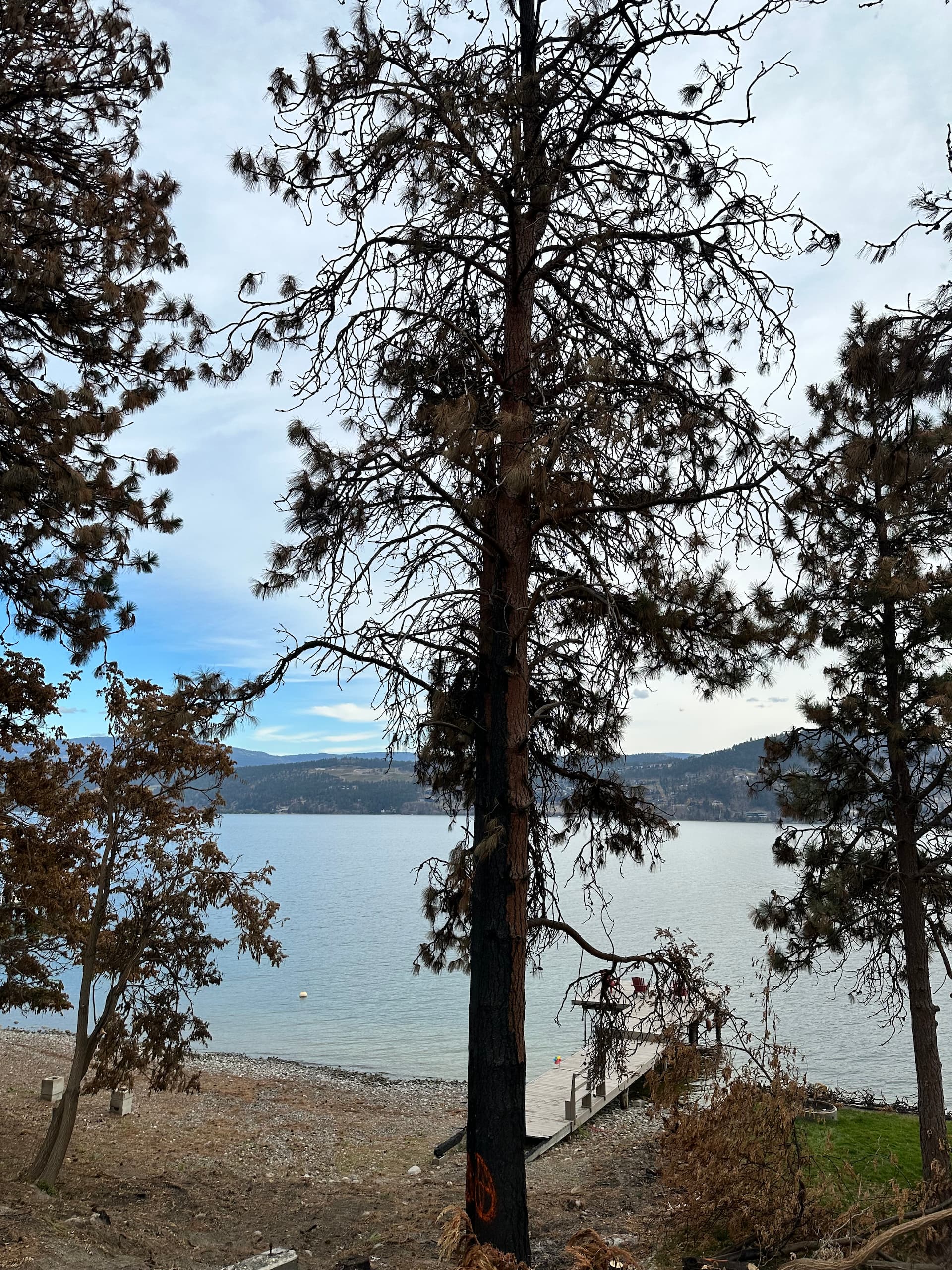
These questions usually lead to a more useful conversation:
- what specific defects or conditions are driving your recommendation
- what targets matter most if this tree or a major limb fails
- can risk be reduced with pruning or support, or is removal the better choice
- if the tree is retained, what follow-up or monitoring should be expected
- if removal is needed, should stump grinding be part of the same plan
Notice that none of those questions ask for a guarantee. A serious arborist will not promise that a tree can never fail. What they can do is explain the observed condition, the likely concerns, and the available treatments in a way that helps the owner make a defensible decision.
Why large trees demand professional judgment, not just equipment
It is easy to be impressed by ropes, saws, lifts, and trucks. On a big removal or storm job, equipment is clearly part of the picture. But with large trees, judgment usually matters before machinery does.
The arborist’s role begins with diagnosis and recommendation. Is the tree structurally compromised? Is the issue concentrated in one section Tree Pruning & Crown Shaping of the crown? Does the tree need crown reduction, directional pruning, support, monitoring, or removal? Is the concern urgent, seasonal, or mostly aesthetic? These are professional questions, and getting them right shapes everything that follows.
That is why Certified Arborist Consultation should come early, especially for mature trees near occupied spaces. It frames the work correctly. It helps homeowners understand that risk can sometimes be reduced rather than simply feared. It helps commercial property managers document a rational basis for action. It helps families protect trees worth keeping, and remove trees that no longer can be kept responsibly.
A large tree is a long-term presence. The decisions made around it should feel proportionate to that fact. When the canopy is high, the limbs are heavy, and the targets below are real, consultation is not an extra. It is the part that keeps every later step, whether Tree Pruning & Crown Shaping, Tree Cable and Bracing, Emergency Tree Services, Dangerous Tree Assessment and Removal, Tree Removal Services, or Stump Removal & Grinding, anchored in professional judgment rather than guesswork.
Name: Ace Tree Services Ltd.
Address: 4656 Wallace Hill Road, Kelowna, BC
Phone: 250-212-9593
Website: https://acetree.ca/
Hours:
Monday: 7:00 AM–5:00 PM
Tuesday: 7:00 AM–5:00 PM
Wednesday: 7:00 AM–5:00 PM
Thursday: 7:00 AM–5:00 PM
Friday: 7:00 AM–5:00 PM
Saturday: 7:00 AM–5:00 PM
Sunday: Closed
Emergency tree services: 24/7 emergency service is listed.
Open-location code / Plus code: RHF8+8G Kelowna, British Columbia, Canada
Map/listing URL: https://www.google.com/maps/place/Ace+Tree+Services+Ltd./@49.8232606,-119.4337283,563m/data=!3m1!1e3!4m6!3m5!1s0x537d8b1d074815c5:0x450b88afa7a41435!8m2!3d49.8232606!4d-119.4337283!16s%2Fg%2F11ydkpnh22
Embed iframe:
Socials: https://www.facebook.com/people/Ace-Tree-Services/61585901931447/
https://m.yelp.com/biz/ace-tree-services-kelowna
Ace Tree Services Ltd. provides professional tree service for residential, commercial, and municipal customers in Kelowna and across the Okanagan Valley.
The company’s listed services include tree removal, stump removal and grinding, tree pruning and crown shaping, emergency tree services, certified arborist consultation, dangerous tree assessment, tree cable and bracing, and wildfire mitigation.
Ace Tree Services works with homeowners, businesses, property managers, and public-sector clients that need safe, practical tree care in the Kelowna area.
The official site highlights ISA-certified arborists, insurance, and experience handling both routine and complex tree service situations.
Customers can contact Ace Tree Services for tree care planning, hazard concerns, emergency tree cleanup, pruning needs, stump grinding, or advice about trees near homes, fences, driveways, and landscaping.
Ace Tree Services lists regular work hours from 7:00 AM to 5:00 PM Monday through Friday, with 24/7 emergency tree service available for urgent situations.
For tree service in Kelowna, call 250-212-9593 or visit https://acetree.ca/
The public map listing places Ace Tree Services Ltd. in Kelowna and can help customers find directions to the Wallace Hill Road area.
Popular Questions About Ace Tree Services Ltd.
What services does Ace Tree Services Ltd. provide?
Ace Tree Services Ltd. provides tree removal, stump removal and grinding, tree pruning and crown shaping, emergency tree services, certified arborist consultation, dangerous tree assessment and removal, tree cable and bracing, and wildfire mitigation.
Where is Ace Tree Services Ltd. located?
The official website lists Ace Tree Services Ltd. at 4656 Wallace Hill Road, Kelowna, BC.
What areas does Ace Tree Services Ltd. serve?
The official website describes Ace Tree Services as located in Kelowna and servicing the Okanagan.
What phone number should customers call?
Customers can call Ace Tree Services Ltd. at 250-212-9593.
What are Ace Tree Services Ltd.’s regular hours?
The official website lists work hours as 7:00 AM to 5:00 PM, Monday through Friday. Saturday and Sunday regular hours are not listed and should be confirmed directly.
Does Ace Tree Services Ltd. offer emergency tree service?
Yes. The official website lists 24/7 emergency services for urgent tree situations, including emergency tree removal, dangerous tree assessment, stabilization, and limb or branch cleanup.
Does Ace Tree Services Ltd. have certified arborists?
Yes. The official website states that Ace Tree Services has ISA-certified arborists.
Can Ace Tree Services Ltd. help with wildfire mitigation?
Yes. Wildfire mitigation is listed as one of the company’s tree services.
How do I contact Ace Tree Services Ltd.?
Call 250-212-9593 or visit https://acetree.ca/.
Landmarks Near Kelowna, BC
Wallace Hill Road: A local Kelowna road near the address listed for Ace Tree Services Ltd.
Okanagan Lake: A major Kelowna landmark near residential, commercial, and waterfront properties that may need tree pruning, removal, or hazard assessment.
Downtown Kelowna: A central area with homes, offices, rental properties, restaurants, and commercial sites that may need professional tree care.
Mission / Lower Mission: A well-known Kelowna area with mature landscaping, residential properties, and lake-adjacent homes.
South East Kelowna: A rural and residential area with larger properties, orchards, and tree-care needs that can include pruning, removals, and wildfire mitigation.
Crawford: A residential area near the southeast side of Kelowna where homeowners may need tree trimming, hazard assessment, and stump grinding.
Kettle Valley: A hillside residential neighborhood where tree condition, slope, wind exposure, and defensible-space planning can matter for property owners.
Myra-Bellevue Provincial Park: A major outdoor landmark near southeast Kelowna and a useful point of orientation for nearby properties.
Gallagher’s Canyon: A residential and golf community near southeast Kelowna where tree maintenance and wildfire-conscious vegetation management can be practical concerns.
Orchard Park Shopping Centre: A major central Kelowna retail landmark and reference point for customers traveling across the city.
Highway 97: A major Kelowna corridor connecting neighborhoods, commercial properties, and service routes throughout the region.
Kelowna City Park: A recognizable central landmark near downtown neighborhoods and lakefront properties.
Glenmore: A Kelowna neighborhood with residential and commercial properties that may need pruning, storm cleanup, and general tree care.
Rutland: A large residential and commercial area where customers may need tree removal, pruning, stump grinding, or arborist consultation.
Black Mountain: A hillside community where slope, wind, wildfire exposure, and access can influence tree service planning.
For tree service near these Kelowna landmarks, contact Ace Tree Services Ltd. at 250-212-9593 or visit https://acetree.ca/