When Emergency Tree Services May Be Needed After Severe Weather
Severe weather changes a property fast. A yard that looked stable the day before can become uncertain after high winds, heavy snow, ice buildup, or a violent storm cell moves through. Trees are resilient, but they are not immune to sudden structural stress. Limbs split under load. Root systems shift in saturated ground. Stems crack in ways that are not always obvious from the driveway.
That is the point when routine tree care ends and Emergency Tree Services may need to begin.
The challenge after a storm is that damage does not always look dramatic. A tree does not have to be flat on the ground to be dangerous. In practice, some of the highest-risk situations involve partial failures, hanging limbs, fresh cracks, or trees that are leaning toward a target after the soil has softened and the root plate has started to move. Those are conditions that call for judgment, training, and the right equipment, not a quick do-it-yourself cleanup.
Tree work is inherently hazardous, especially when a tree has already been compromised. Industry guidance is clear on that point. Pruning or removing trees, particularly large ones, is dangerous work and should be handled by people trained to do it safely. After severe weather, the risks increase because the wood can be under tension, the canopy can be unstable, and what appears settled may still be shifting.
Storm damage is not always obvious
After a storm, most people notice the obvious mess first, branches on the lawn, leaves packed into gutters, maybe a fence panel down. What often gets missed is the tree that still looks mostly intact but has lost part of its structural integrity.
A mature tree can absorb a surprising amount of force, which is one reason people sometimes underestimate storm damage. They assume that because the tree is still standing, it must be safe. That is not always true. A fresh longitudinal crack in the trunk, a split at a major union, or a canopy limb suspended high overhead can turn into a second failure long after the rain stops.
This is where a Dangerous Tree Assessment and Removal decision becomes important. The phrase sounds dramatic, but the real work is measured and systematic. Risk assessment in arboriculture is not guesswork. It is a process of identifying the defect or damage, understanding what might fail, considering what the tree could hit, and recommending a practical response to bring risk down to a more acceptable level.
That response is not always removal. Sometimes the right move is restricted access to the area until a proper inspection can happen. Sometimes careful Tree Pruning & Crown Shaping can remove failed or overextended limbs and restore a more stable structure. In other cases, the damage is too severe, and Tree Removal Services are the safest option.
The situations that often require an urgent call
Not every broken branch is an emergency. A small limb in the back corner of a lot can usually wait for scheduled service. The threshold changes when there is immediate danger to people, structures, access routes, or utilities, or when the tree itself is unstable enough that more failure is likely.
The following situations commonly justify prompt Emergency Tree Services:
- A tree or large limb has fallen onto or is suspended over a home, driveway, garage, or regularly used walkway.
- A cracked or split trunk has developed after wind, snow, or ice loading.
- The root plate is lifting, or the tree has begun leaning suddenly after saturated soil or wind exposure.
- Large broken limbs are hanging in the canopy, sometimes called hangers, and could drop without warning.
- Access for vehicles or safe entry and exit from the property is blocked by storm-damaged trees.
Each of these conditions introduces a different kind of risk. A suspended limb may fail vertically with little warning. A newly leaning tree may indicate root failure, which is often a whole-tree problem rather than a branch problem. A split trunk can hold for hours or days, then separate suddenly under its own weight. The common thread is uncertainty. When the structure of a tree is no longer predictable, urgency rises.
Why trained assessment matters after severe weather
One of the most useful things a property owner can do after a storm is pause before cutting. That may sound counterintuitive when debris is everywhere, but storm-damaged trees often behave differently than healthy trees under planned pruning conditions. Wood can be pinched, twisted, or loaded. Branches can spring when released. A cut made in the wrong place or sequence can trigger exactly the movement a person was hoping to avoid.
This is why a Certified Arborist Consultation has real value after severe weather. An ISA Certified Arborist has demonstrated knowledge in the art and science of tree care, passed a comprehensive exam, and must continue education to maintain that credential. Just as important, certification reflects a professional framework for evaluating trees rather than reacting to appearances alone.
On damaged sites, the best arborists are not simply asking, “Can this be cut?” They are asking, “What is likely to fail next? What is the target? Can risk be reduced without unnecessary intervention? Is this a candidate for mitigation, or has the structure been compromised beyond a reasonable margin of safety?”
That distinction matters because there is no such thing as a completely safe tree. Some level of risk exists with every tree. Good tree care is about evaluating that risk honestly and reducing it appropriately, not defaulting to the most aggressive option every time weather causes damage.
Removal is sometimes necessary, but not always the first answer
Storms do lead to removals, and in certain cases they should. If a trunk is badly split, if the root system has clearly failed, or if a tree has already struck a structure and remains unstable, Tree Removal Services may be the only defensible path. The same is true when the canopy damage is so extensive that the remaining structure no longer has a sound framework.
At the same time, removal should not be automatic just because a tree lost a large limb. Many storm-damaged trees can be stabilized, pruned, or monitored instead of being taken down immediately. That is where experience matters. Poor decisions in the aftermath of severe weather often fall into two camps. The first is waiting too long on a genuinely hazardous tree. The second is removing a recoverable tree because the damage looked worse than it was.
A practical example is a tree with a broken scaffold limb but an otherwise intact trunk and root system. If the break can be properly managed and the canopy rebalanced with good pruning cuts, the tree may continue to provide value for years. By contrast, a tree with visible root plate movement and a lean toward a home may have much less dramatic canopy damage but a much more serious failure profile.
What proper pruning looks like after a storm
Storm cleanup often gets mistaken for indiscriminate cutting. Good post-storm pruning is more deliberate than that. It focuses on removing damaged tissue, reducing defective branch weight where appropriate, and preserving as much long-term structure as is reasonable.
Tree Pruning & Crown Shaping has a role after severe weather, but only when it is done with restraint and sound technique. Arboricultural guidance emphasizes proper branch removal and reduction cuts, along with approaches like crown reduction and directional pruning where appropriate. It also warns against improper methods such as topping or leaving stubs.
That warning matters because panic often leads to bad cuts. Property owners want the tree “made safe,” and less qualified crews may respond by stripping large sections of the canopy or topping the crown. That can create new defects, poor regrowth, and a tree that is weaker in the long run. It may look tidier for a few weeks, but structurally it can be a step backward.
After a storm, good pruning work is rarely about making a tree perfectly symmetrical again. It is about making it stable enough to manage, while respecting the biology and structure that remain.
Structural support can be part of the answer
Not every damaged tree needs to stand on its own unaided. In selected cases, Tree Cable and Bracing can help reduce the chance of further structural failure. This is not a universal remedy, and it is not a way to justify keeping every compromised tree, but it is a recognized treatment within arboriculture.
Support systems are most useful when a tree has a specific structural weakness that can be mitigated and when the rest of the tree is worth preserving. After severe weather, that might apply to a tree with a weak union or a canopy configuration that would benefit from load sharing once damaged limbs have been addressed. The decision should come from a careful inspection rather than optimism.
The important point is that support systems are part of a broader toolbox. Emergency work is not always a choice between “leave it alone” and “remove it completely.” seasonal tree pruning In some situations, pruning plus structural support provides a reasonable middle ground.
The hidden danger of hanging limbs and partial failures
Among the most deceptive storm hazards are partial failures. A large limb may break and remain lodged in the canopy, supported by smaller branches or tangled wood fibers. From the ground, it can look still and harmless. In reality, it may be one vibration, one gust, or one release point away from dropping.
Experienced crews treat these situations with caution because the forces involved are difficult to read from below. Controlled lowering and rigging techniques exist for this kind of work, and they are part of professional tree care for a reason. A damaged limb rarely follows the path people imagine when gravity, tension, and side loading all interact at once.
This is one area where homeowners often underestimate risk. They see a branch that “almost came down” and assume it can be pulled free with a rope or trimmed from a ladder. That is exactly how injuries happen. The branch that did not fall during the storm may still be storing energy. Once disturbed, it can move violently.
When the stump becomes part of the recovery plan
Emergency response usually focuses on the standing tree or fallen debris, but the work does not always end there. If a tree must be removed because of storm failure, the remaining stump can become the next practical issue. A high stump in a damaged yard is more than unattractive. It can interfere with repairs, landscaping, access, and replanting.
That is where Stump Removal & Grinding enters the conversation. It is not always an emergency service in the same sense as removing a dangerous hanging stem, but it often becomes part of the post-storm recovery sequence. If equipment access is already mobilized and the site is being restored, stump grinding may be the logical follow-up once immediate hazards are addressed.
The timing depends on conditions. When the priority is making the site safe, stump work can wait. When reconstruction, grading, or replacement planting needs to happen soon, it may be worth coordinating early.
Fire risk can increase after weather damage too
Severe weather and fire risk are often discussed separately, but in some settings they overlap. Damaged trees, broken limbs, and accumulated woody debris can add to the fuel load on a property. That does not mean every storm-damaged site becomes a fire hazard overnight, but it does mean cleanup has a broader safety role in fire-prone regions.
FireSmart Tree Services may be relevant after storms where damaged material remains close to structures or where cleanup is part of a larger defensible-space strategy. The principle is straightforward. A storm can leave behind not just a structural hazard overhead, but also concentrated debris on the ground. Addressing one without considering the other misses part of the picture.
This is another area where judgment matters. Not all woody debris needs to be stripped from every landscape, and not every damaged tree is a fire problem. Still, when a property already sits in an area where vegetation management matters, post-storm tree work can be a good time to align cleanup with longer-term risk reduction.
What property owners should do right after the storm
The first hours after severe weather are usually chaotic. People want to clear driveways, check roofs, and make the property usable again. That urgency is understandable, but caution matters more.
A sensible first response looks like this:
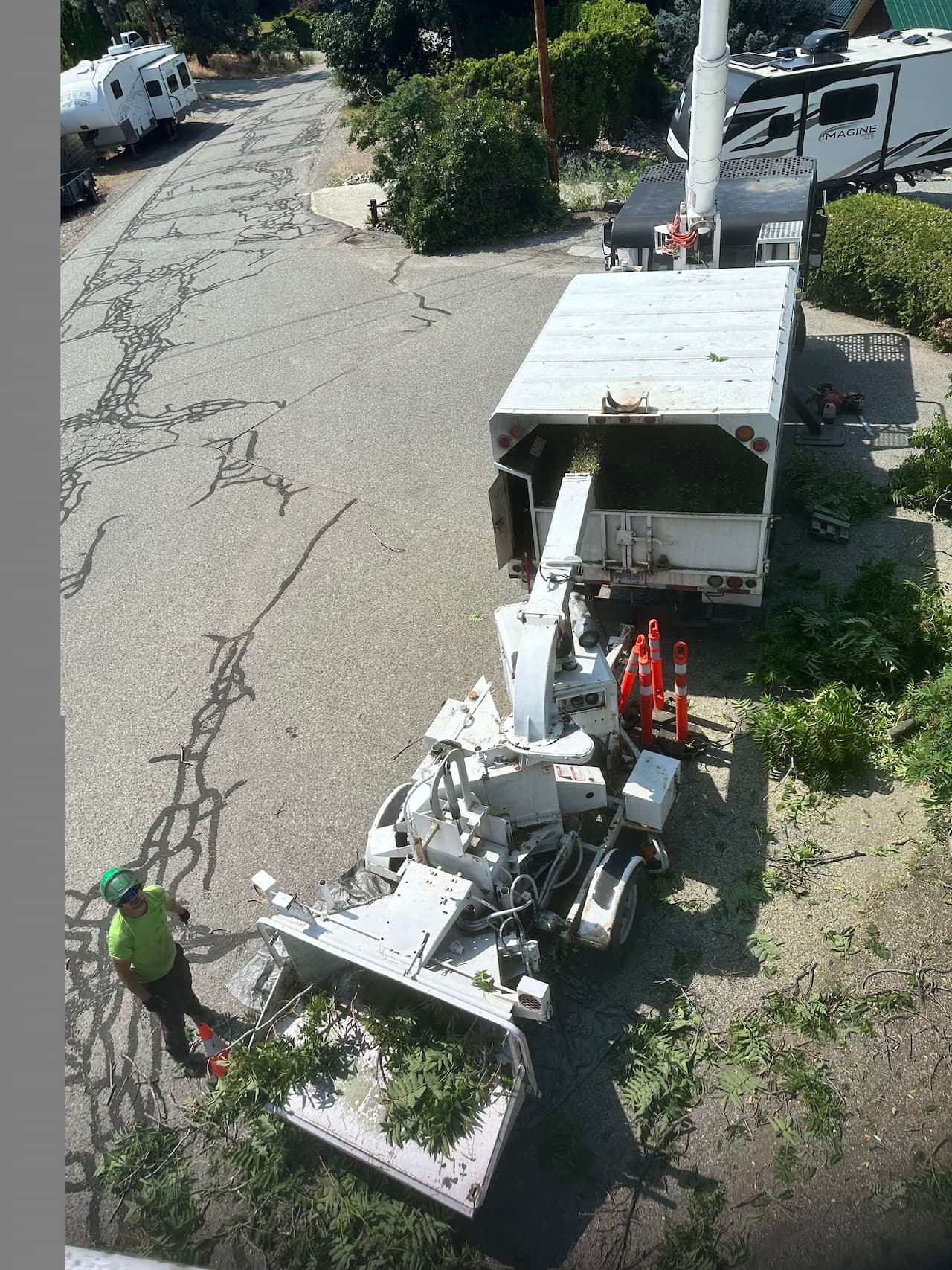
- Stay out from under broken or hanging limbs, and keep children and pets away from damaged trees.
- Do not attempt pruning or removal from a ladder, roof, or near unstable wood.
- Visually note sudden lean, trunk cracks, lifted soil near roots, or branches resting on structures.
- Take photos from a safe distance if you need documentation for planning or insurance discussions.
- Arrange a professional inspection when damage involves large trees, uncertain stability, or occupied areas.
This is not overcautious advice. It reflects the reality that storm-damaged trees often fail in secondary stages. The first failure may have happened during the storm. The second can happen during cleanup, when someone assumes the danger has passed.
The value of measured decision-making
One thing seasoned arborists learn quickly is that urgency and haste are not the same. Emergency Tree Services should move promptly, but the actual decision-making needs to stay calm. A rushed cut on a stressed tree can escalate the problem. A rushed recommendation can remove a tree that could have been retained safely, or preserve one that should not remain near a target.
This is where the best service providers stand out. They combine speed with method. They assess the site, identify what presents immediate risk, decide what can wait, and sequence the work accordingly. Sometimes that means first removing suspended material over an entry path, then returning for detailed pruning or structural support. Sometimes it means advising that a tree be removed now and a nearby tree be reassessed later when conditions are clearer.
That kind of staging is normal in professional tree care. Emergency response is not one task. It is often a chain of decisions, starting with hazard reduction and ending with longer-term site recovery.
Long-term care after the immediate emergency
After the obvious danger is gone, a second phase begins. This is the phase many property owners overlook because the crisis seems over. Yet a tree that survives a storm may still need follow-up attention months later.
A damaged canopy may need corrective pruning once the full extent of dieback or recovery becomes clearer. A tree that remained standing after wind exposure may need a fresh assessment if lean, soil disturbance, or structural weaknesses persist. Trees adjacent to the one that failed may also deserve a closer look, especially if they share age, exposure, or site conditions.
This is another reason a Certified Arborist Consultation is worth considering beyond the first emergency visit. Storms do not just reveal damage. They reveal weaknesses in the broader landscape. A tree that failed may have been the obvious problem, but neighboring trees can have similar form, similar defects, or similar exposure patterns.
The goal is not to create alarm around every mature tree on a property. It is to move from reactive cleanup toward informed management. That might mean selective Tree Pruning & Crown Shaping, monitoring specific trees over time, or planning future Tree Removal Services where risk cannot be reduced enough by pruning alone.
Severe weather exposes the difference between cleanup and arboriculture
Anyone can drag brush to the curb. Storm recovery for trees is something more specific. It asks whether a tree is safe to retain, whether it can be restored intelligently, and whether the work being done now will reduce or increase future risk.
That is the dividing line between debris removal and actual arboricultural care.
A property owner does not need to become a tree risk expert overnight. What matters is recognizing when the situation has moved beyond ordinary yard work. If a storm leaves behind a hanging limb, a split trunk, a shifted root plate, blocked access, or a tree threatening a structure, the issue is no longer cosmetic. It is a safety problem. In those moments, Emergency Tree Services are not about convenience. They are about trained assessment, safe execution, and choosing the least drastic response that still addresses the real risk.
Some storms leave only scattered branches. Others expose defects that were already there and turn manageable trees into urgent hazards. Knowing the difference is what protects people, property, and the trees that still have a sound future.
Name: Ace Tree Services Ltd.
Address: 4656 Wallace Hill Road, Kelowna, BC
Phone: 250-212-9593
Website: https://acetree.ca/
Hours:
Monday: 7:00 AM–5:00 PM
Tuesday: 7:00 AM–5:00 PM
Wednesday: 7:00 AM–5:00 PM
Thursday: 7:00 AM–5:00 PM
Friday: 7:00 AM–5:00 PM
Saturday: 7:00 AM–5:00 PM
Sunday: Closed
Emergency tree services: 24/7 emergency service is listed.
Open-location code / Plus code: RHF8+8G Kelowna, British Columbia, Canada
Map/listing URL: https://www.google.com/maps/place/Ace+Tree+Services+Ltd./@49.8232606,-119.4337283,563m/data=!3m1!1e3!4m6!3m5!1s0x537d8b1d074815c5:0x450b88afa7a41435!8m2!3d49.8232606!4d-119.4337283!16s%2Fg%2F11ydkpnh22
Embed iframe:
Socials: https://www.facebook.com/people/Ace-Tree-Services/61585901931447/
https://m.yelp.com/biz/ace-tree-services-kelowna
Ace Tree Services Ltd. provides professional tree service for residential, commercial, and municipal customers in Kelowna and across the Okanagan Valley.
The company’s listed services include tree removal, stump removal and grinding, tree pruning and crown shaping, emergency tree services, certified arborist consultation, dangerous tree assessment, tree cable and bracing, and wildfire mitigation.
Ace Tree Services works with homeowners, businesses, property managers, and public-sector clients that need safe, practical tree care in the Kelowna area.
The official site highlights ISA-certified arborists, insurance, and experience handling both routine and complex tree service situations.
Customers can contact Ace Tree Services for tree care planning, hazard concerns, emergency tree cleanup, pruning needs, stump grinding, or advice about trees near homes, fences, driveways, and landscaping.
Ace Tree Services lists regular work hours from 7:00 AM to 5:00 PM Monday through Friday, with 24/7 emergency tree service available for urgent situations.
For tree service in Kelowna, call 250-212-9593 or visit https://acetree.ca/
The public map listing places Ace Tree Services Ltd. in Kelowna and can help customers find directions to the Wallace Hill Road area.
Popular Questions About Ace Tree Services Ltd.
What services does Ace Tree Services Ltd. provide?
Ace Tree Services Ltd. provides tree removal, stump removal and grinding, tree pruning and crown shaping, emergency tree services, certified arborist consultation, dangerous tree assessment and removal, tree cable and bracing, and wildfire mitigation.
Where is Ace Tree Services Ltd. located?
The official website lists Ace Tree Services Ltd. at 4656 Wallace Hill Road, Kelowna, BC.
What areas does Ace Tree Services Ltd. serve?
The official website describes Ace Tree Services as located in Kelowna and servicing the Okanagan.
What phone number should customers call?
Customers can call Ace Tree Services Ltd. at 250-212-9593.
What are Ace Tree Services Ltd.’s regular hours?
The official website lists work hours as 7:00 AM to 5:00 PM, Monday through Friday. Saturday and Sunday regular hours are not listed and should be confirmed directly.
Does Ace Tree Services Ltd. offer emergency tree service?
Yes. The official website lists 24/7 emergency services for urgent tree situations, including emergency tree removal, dangerous tree assessment, stabilization, and limb or branch cleanup.
Does Ace Tree Services Ltd. have certified arborists?
Yes. The official website states that Ace Tree Services has ISA-certified arborists.
Can Ace Tree Services Ltd. help with wildfire mitigation?
Yes. Wildfire mitigation is listed as one of the company’s tree services.
How do I contact Ace Tree Services Ltd.?
Call 250-212-9593 or visit https://acetree.ca/.
Landmarks Near Kelowna, BC
Wallace Hill Road: A local Kelowna road near the address listed for Ace Tree Services Ltd.
Okanagan Lake: A major Kelowna landmark near residential, commercial, and waterfront properties that may need tree pruning, removal, or hazard assessment.
Downtown Kelowna: A central area with homes, offices, rental properties, restaurants, and commercial sites that may need professional tree care.
Mission / Lower Mission: A well-known Kelowna area with mature landscaping, residential properties, and lake-adjacent homes.
South East Kelowna: A rural and residential area with larger properties, orchards, and tree-care needs that can include pruning, removals, and wildfire mitigation.
Crawford: A residential area near the southeast side of Kelowna where homeowners may need tree trimming, hazard assessment, and stump grinding.
Kettle Valley: A hillside residential neighborhood where tree condition, slope, wind exposure, and defensible-space planning can matter for property owners.
Myra-Bellevue Provincial Park: A major outdoor landmark near southeast Kelowna and a useful point of orientation for nearby properties.
Gallagher’s Canyon: A residential and golf community near southeast Kelowna where tree maintenance and wildfire-conscious vegetation management can be practical concerns.
Orchard Park Shopping Centre: A major central Kelowna retail landmark and reference point for customers traveling across the city.
Highway 97: A major Kelowna corridor connecting neighborhoods, commercial properties, and service routes throughout the region.
Kelowna City Park: A recognizable central landmark near downtown neighborhoods and lakefront properties.
Glenmore: A Kelowna neighborhood with residential and commercial properties that may need pruning, storm cleanup, and general tree care.
Rutland: A large residential and commercial area where customers may need tree removal, pruning, stump grinding, or arborist consultation.
Black Mountain: A hillside community where slope, wind, wildfire exposure, and access can influence tree service planning.
For tree service near these Kelowna landmarks, contact Ace Tree Services Ltd. at 250-212-9593 or visit https://acetree.ca/