Tree Pruning & Crown Shaping: Why Proper Technique Counts
Tree Pruning & Crown Shaping sounds straightforward until you stand beneath a mature tree and look up. Every branch carries weight, history, and consequence. A cut made in the right place can improve structure, reduce certain risks, and help a tree fit its setting more gracefully. A cut made in the wrong place can leave a stub, invite decay, distort growth, or push a manageable problem toward Tree Removal Services much sooner than anyone wanted.
That is why proper technique counts so much. Pruning is not just about making a tree smaller or tidier. It is part biology, part risk management, and part judgment. It asks what the tree needs, what the site demands, and what level of risk is acceptable around a home, driveway, business, or public area. Those are not identical questions, and experienced arborists know the difference matters.
Industry guidance supports that careful approach. Pruning and removal, especially on large trees, can be dangerous work and should be handled by people who are trained and properly equipped. The same body of guidance also makes another important point that homeowners sometimes find surprising: there is no completely safe tree. Some degree of risk always exists. The goal is not perfection. The goal is to identify concerns systematically, reduce risk where it makes sense, and avoid unnecessary intervention.
Pruning is a technical practice, not cosmetic guessing
People often call for pruning because something feels off. Maybe a limb hangs over a roof, the canopy looks uneven, lower branches interfere with access, or a storm left deadwood in the crown. Those are valid reasons to ask for help. The mistake is assuming that all trimming is essentially the same.
Proper pruning relies on understanding how a tree responds to cuts. Arborists are trained in methods such as crown raising, crown reduction, and directional pruning. Those terms are not interchangeable. Crown raising deals with vertical clearance by removing or shortening lower branches. Crown reduction aims to reduce height or spread in a more controlled way, typically by cutting back to suitable lateral growth rather than leaving random stubs. Directional pruning steers growth away from conflicts and preserves a more stable structure.
When those methods are applied with care, the tree usually retains a more natural form. When they are ignored, the result is often topping, stub cuts, or an unbalanced canopy. That can create future defects instead of solving present ones.
A lot of the value in Tree Pruning & Crown Shaping comes from restraint. Skilled arborists are not trying to remove as much material as possible. They are trying to make the fewest cuts that accomplish a defined objective. That might be improved clearance, reduced end weight on a specific limb, better spacing between competing stems, or selective removal of damaged wood after a weather event. Precision is the point.
What crown shaping is really meant to do
Crown shaping is sometimes misunderstood as sculpting a tree into a preferred silhouette. In practice, professional crown shaping should respect the tree’s natural habit and structural limitations. The best work often looks almost invisible from the street. The canopy still appears like itself, only cleaner, more balanced, and more appropriate for the space.
For example, a tree near a building may need selective reduction on one side to maintain clearance while preserving enough foliage and structure elsewhere to avoid a lopsided result. A tree over a sidewalk may need crown raising for passage without stripping the trunk excessively. A storm-stressed tree may need careful removal of damaged branches and some reduction work to manage future load distribution. These are not cosmetic choices alone. They involve a blend of form, function, and risk reduction.
That is where professional judgment earns its keep. A tree can look “full” and still have weak attachments, overextended limbs, or growth patterns that deserve attention. Another can look irregular yet be structurally acceptable for its setting. Appearance tells only part of the story.
The hidden cost of bad cuts
Improper pruning tends to create problems that are not obvious on day one. A stub may seem harmless immediately after work is done, but a poor cut can interfere with the tree’s ability to compartmentalize injury effectively. Topping may produce a short-term reduction in height, yet it often leaves a tree with a disfigured crown and a need for repeated corrective work. Removing too much in the wrong places can shift weight distribution and create long-term maintenance issues.
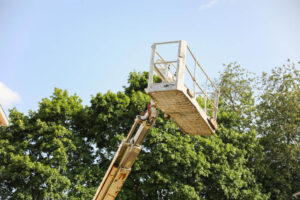
There is also the practical issue of future expense. Poor pruning can lead to repeated service calls, additional risk mitigation, or eventually Dangerous Tree Assessment and Removal if the tree declines or develops serious structural concerns. Homeowners sometimes think they saved money by hiring the cheapest trimming crew. A few seasons later, they are paying again to correct preventable damage, remove compromised limbs, grind a stump, and start over.
That sequence is more common than it should be. It is one reason a Certified Arborist Consultation is worth seeking before major cuts are made. Certification matters because it reflects formal training in the art and science of tree care, successful completion of a comprehensive exam, ongoing education, and adherence to a professional code of ethics. It does not mean every situation is simple, but it does mean the person advising on your tree should understand accepted practices and current guidance.
Risk reduction is not the same as fear-driven cutting
One of the most useful ideas in modern arboriculture is that risk should be assessed systematically, not emotionally. A tree with a dead branch over a driveway may need prompt attention. A tree with an unusual lean may need closer inspection before anyone decides on removal. A tree near a target such as a home, parked vehicles, or a busy entrance will be judged differently from the same tree in an open, low-use area.
That does not mean every concern calls for removal. In fact, pruning is often one of several tools used to reduce risk without taking down the tree. Structural support systems such as Tree Cable and Bracing may also be part of the picture in selected cases. The key is evaluation first, action second.
A good dangerous-tree discussion is usually more nuanced than homeowners expect. The conversation may include the tree’s visible condition, the location of potential targets, whether specific limbs can be reduced or removed, and whether support systems are appropriate. It may also include the honest statement that some risk remains even after treatment. That honesty is a sign of professionalism, not uncertainty.
Why safety changes the whole job
It is easy to focus on the tree and forget the work itself is hazardous. Large-tree pruning and removal are dangerous tasks. Climbing, rigging, saw work aloft, and controlled lowering of limbs all demand training and proper equipment. That is not marketing language. It is one of the clearest points established in arboricultural guidance.
On routine residential jobs, the difference between a casual cutter and a trained crew often shows up in how the work is planned. Are limbs being lowered in a controlled way when there is a roof, fence, or landscaped area beneath them? tree structural bracing Is the crew making informed decisions about access and drop zones? Do they understand branch removal and reduction cuts, or are they simply cutting wherever it seems convenient? The answers affect both tree health and human safety.
The public often notices safety most clearly during Emergency Tree Services. After storms, there is pressure to act quickly. Roads are blocked, driveways are inaccessible, and damaged canopies can leave homeowners anxious. Speed matters, but storm work is exactly when rushed decisions become most dangerous. Broken tops, hanging limbs, and split leaders can behave unpredictably. Emergency response should still be grounded in sound arboricultural practice and safe work methods.
Topping still causes trouble
Among the most persistent bad practices in tree care, topping remains near the top of the list. People request it because they want a tree dramatically shorter, more open, or less imposing. Crews offer it because it is easy to sell visually. Cut the top off and the change is immediate.
The problem is that topping ignores how proper crown reduction is supposed to work. Industry guidance recognizes crown reduction and directional pruning, not random heading cuts that leave large stubs and destroy the natural architecture of the crown. The result is often a harsh silhouette and a cycle of vigorous, poorly arranged regrowth that demands future correction.
That is why a professional conversation about size management should be specific. If a tree is outgrowing its site, can selective crown reduction achieve the needed clearance while preserving structure? If not, is the tree simply wrong for the space? Sometimes the honest answer is that repeated severe cutting will never become good pruning. At that point, Tree Removal Services may be a more defensible long-term choice than subjecting the tree to repeated damaging work.
Good pruning starts with a defined objective
Before a single branch is cut, the purpose should be clear. Without that, pruning becomes random editing.
A sound work plan usually aims at one or more of the following:
- remove dead, damaged, or broken wood
- improve clearance through crown raising or directional pruning
- reduce the length or spread of selected limbs through proper crown reduction
- address certain structural concerns as part of a broader risk management plan
- restore order after storm damage while preserving as much sound structure as practical
Those goals sound simple, but each one leads to different cuts. Clearance pruning over a walkway is not the same as reducing end weight on a lateral over a house. Post-storm correction is not the same as routine maintenance. Tree work gets better when the objective is narrow and explicit.
The role of inspection and consultation
The most reliable pruning decisions are made after careful inspection, not from a quick glance out the truck window. A Certified Arborist Consultation gives the client something more valuable than a price, a reasoned explanation of what the tree needs and what it does not.
That consultation may result in less work than the customer expected. Sometimes a tree that looks untidy only needs selective pruning rather than a heavy reduction. Sometimes a tree that seems threatening can be managed with targeted cuts and monitoring. In other cases, the assessment points toward Dangerous Tree Assessment and Removal because pruning would not address the underlying issue adequately.
This is also where structural support options may come into the conversation. Tree Cable and Bracing are not universal remedies, but arborists are trained to understand structural support systems and the kinds of mitigation measures that may reduce risk in suitable situations. When a support system is recommended, it should be part of an overall management strategy rather than a shortcut around sound pruning.
Storm damage, urgency, and judgment
After a storm, homeowners often want one reassuring phrase: “It’s fine” or “It has to go.” Real life is not always that neat. Emergency Tree Services exist because wind, snow, and impact damage can create immediate hazards, but emergency response still depends on judgment.
A tree with a partially failed limb over a driveway may need immediate removal of that limb and further inspection of the remaining canopy. Another may need only damaged wood removed and the crown rebalanced within reason. Sometimes emergency work is only the first phase, making the site safe enough for a more complete assessment later.
This is also where pruning technique becomes visible to clients. Controlled lowering, careful rigging, and deliberate cut placement protect structures and preserve the portions of the tree worth keeping. A panic response with indiscriminate cutting can turn salvageable damage into permanent structural loss.
Removal is sometimes the better answer
A professional article on pruning should say this plainly: not every tree should be pruned into compliance. Some defects, site conflicts, or risk conditions are not solved by crown shaping. The pressure to “save the tree” can be just as unhelpful as the impulse to remove everything that looks inconvenient.
When an arborist recommends Tree Removal Services, it should be because the tree’s condition, location, or risk profile no longer makes pruning a reasonable standalone solution. That is especially true where significant targets are present and the ability to reduce risk to an acceptable level is limited. Once a tree is removed, Stump Removal & Grinding may be part of completing the site so the area can be reused or replanted.
There is a practical side to this that clients appreciate. Straight talk saves money and frustration. A tree that requires repeated severe intervention, never looks right afterward, and still presents ongoing concern may be a poor candidate for continued preservation. Good arborists do not remove trees casually, but they also do not pretend every tree can be shaped into a safe, sustainable fit.
Fire-prone areas demand a slightly different lens
In regions where wildfire planning matters, FireSmart Tree Services can influence pruning priorities. The principles still center on proper technique, but the objective may shift toward reducing certain fire-related vulnerabilities around structures while maintaining tree health and site function.
That does not justify crude cutting. Fire-focused work still benefits from selective, knowledgeable pruning rather than excessive canopy stripping or arbitrary reductions. The same core lesson applies: technique matters because the tree has to live with the cuts, and the property has to live with the result.
What homeowners should ask before approving the work
Clients do not need to become arborists, but a few pointed questions can separate thoughtful care from guesswork.
- What is the specific objective of this pruning?
- Will the work use crown reduction, crown raising, directional pruning, or another defined method?
- Is a Certified Arborist Consultation part of the evaluation?
- Are there risk concerns that should be discussed separately from routine pruning?
- If pruning will not solve the issue well, what are the alternatives?
Those questions encourage clarity. They also tend to improve proposals. A contractor who can explain the purpose of the cuts, the limitations of the work, and the reason a tree should be pruned or removed is usually working from a more professional foundation than someone who promises to “take a lot off and make it safe.”
The best pruning often looks modest
Homeowners sometimes feel underwhelmed when the best work is done. They expected a dramatic transformation. Instead, the arborist removed deadwood, shortened selected laterals, improved clearance, and made the crown look more balanced without gutting it. That modest result is often the mark of a disciplined hand.
Trees do not benefit from theatrical trimming. They benefit from informed restraint, sound cut selection, and respect for their structure. Proper Tree Pruning & Crown Shaping is not a one-size-fits-all service. It is a measured response to the tree in front of you, the space around it, and the risk you are trying to manage.
When that standard is met, pruning supports both appearance and function. When it is not, the effects can linger for years, in weakened structure, repeated maintenance, unnecessary removals, and avoidable expense. Technique counts because trees are long-lived organisms, and every cut writes part of their future.
Name: Ace Tree Services Ltd.
Address: 4656 Wallace Hill Road, Kelowna, BC
Phone: 250-212-9593
Website: https://acetree.ca/
Hours:
Monday: 7:00 AM–5:00 PM
Tuesday: 7:00 AM–5:00 PM
Wednesday: 7:00 AM–5:00 PM
Thursday: 7:00 AM–5:00 PM
Friday: 7:00 AM–5:00 PM
Saturday: 7:00 AM–5:00 PM
Sunday: Closed
Emergency tree services: 24/7 emergency service is listed.
Open-location code / Plus code: RHF8+8G Kelowna, British Columbia, Canada
Map/listing URL: https://www.google.com/maps/place/Ace+Tree+Services+Ltd./@49.8232606,-119.4337283,563m/data=!3m1!1e3!4m6!3m5!1s0x537d8b1d074815c5:0x450b88afa7a41435!8m2!3d49.8232606!4d-119.4337283!16s%2Fg%2F11ydkpnh22
Embed iframe:
Socials: https://www.facebook.com/people/Ace-Tree-Services/61585901931447/
https://m.yelp.com/biz/ace-tree-services-kelowna
Ace Tree Services Ltd. provides professional tree service for residential, commercial, and municipal customers in Kelowna and across the Okanagan Valley.
The company’s listed services include tree removal, stump removal and grinding, tree pruning and crown shaping, emergency tree services, certified arborist consultation, dangerous tree assessment, tree cable and bracing, and wildfire mitigation.
Ace Tree Services works with homeowners, businesses, property managers, and public-sector clients that need safe, practical tree care in the Kelowna area.
The official site highlights ISA-certified arborists, insurance, and experience handling both routine and complex tree service situations.
Customers can contact Ace Tree Services for tree care planning, hazard concerns, emergency tree cleanup, pruning needs, stump grinding, or advice about trees near homes, fences, driveways, and landscaping.
Ace Tree Services lists regular work hours from 7:00 AM to 5:00 PM Monday through Friday, with 24/7 emergency tree service available for urgent situations.
For tree service in Kelowna, call 250-212-9593 or visit https://acetree.ca/
The public map listing places Ace Tree Services Ltd. in Kelowna and can help customers find directions to the Wallace Hill Road area.
Popular Questions About Ace Tree Services Ltd.
What services does Ace Tree Services Ltd. provide?
Ace Tree Services Ltd. provides tree removal, stump removal and grinding, tree pruning and crown shaping, emergency tree services, certified arborist consultation, dangerous tree assessment and removal, tree cable and bracing, and wildfire mitigation.
Where is Ace Tree Services Ltd. located?
The official website lists Ace Tree Services Ltd. at 4656 Wallace Hill Road, Kelowna, BC.
What areas does Ace Tree Services Ltd. serve?
The official website describes Ace Tree Services as located in Kelowna and servicing the Okanagan.
What phone number should customers call?
Customers can call Ace Tree Services Ltd. at 250-212-9593.
What are Ace Tree Services Ltd.’s regular hours?
The official website lists work hours as 7:00 AM to 5:00 PM, Monday through Friday. Saturday and Sunday regular hours are not listed and should be confirmed directly.
Does Ace Tree Services Ltd. offer emergency tree service?
Yes. The official website lists 24/7 emergency services for urgent tree situations, including emergency tree removal, dangerous tree assessment, stabilization, and limb or branch cleanup.
Does Ace Tree Services Ltd. have certified arborists?
Yes. The official website states that Ace Tree Services has ISA-certified arborists.
Can Ace Tree Services Ltd. help with wildfire mitigation?
Yes. Wildfire mitigation is listed as one of the company’s tree services.
How do I contact Ace Tree Services Ltd.?
Call 250-212-9593 or visit https://acetree.ca/.
Landmarks Near Kelowna, BC
Wallace Hill Road: A local Kelowna road near the address listed for Ace Tree Services Ltd.
Okanagan Lake: A major Kelowna landmark near residential, commercial, and waterfront properties that may need tree pruning, removal, or hazard assessment.
Downtown Kelowna: A central area with homes, offices, rental properties, restaurants, and commercial sites that may need professional tree care.
Mission / Lower Mission: A well-known Kelowna area with mature landscaping, residential properties, and lake-adjacent homes.
South East Kelowna: A rural and residential area with larger properties, orchards, and tree-care needs that can include pruning, removals, and wildfire mitigation.
Crawford: A residential area near the southeast side of Kelowna where homeowners may need tree trimming, hazard assessment, and stump grinding.
Kettle Valley: A hillside residential neighborhood where tree condition, slope, wind exposure, and defensible-space planning can matter for property owners.
Myra-Bellevue Provincial Park: A major outdoor landmark near southeast Kelowna and a useful point of orientation for nearby properties.
Gallagher’s Canyon: A residential and golf community near southeast Kelowna where tree maintenance and wildfire-conscious vegetation management can be practical concerns.
Orchard Park Shopping Centre: A major central Kelowna retail landmark and reference point for customers traveling across the city.
Highway 97: A major Kelowna corridor connecting neighborhoods, commercial properties, and service routes throughout the region.
Kelowna City Park: A recognizable central landmark near downtown neighborhoods and lakefront properties.
Glenmore: A Kelowna neighborhood with residential and commercial properties that may need pruning, storm cleanup, and general tree care.
Rutland: A large residential and commercial area where customers may need tree removal, pruning, stump grinding, or arborist consultation.
Black Mountain: A hillside community where slope, wind, wildfire exposure, and access can influence tree service planning.
For tree service near these Kelowna landmarks, contact Ace Tree Services Ltd. at 250-212-9593 or visit https://acetree.ca/