Tree Pruning & Crown Shaping: What Proper Pruning Aims to Achieve
Tree pruning is often misunderstood as a cosmetic service, something done to make a yard look tidy or to keep branches away from a roofline. Appearance does matter, but good pruning has a more serious purpose. It is a deliberate part of tree care, aimed at managing structure, reducing certain risks, improving clearance, and supporting a tree’s long-term function without creating unnecessary damage.
That distinction matters. A thoughtful pruning cut and a careless one may look similar from the ground for a week or two. A few seasons later, the difference becomes obvious. One tree closes over cuts well, keeps a balanced crown, and continues to grow with fewer problems. The other throws weak new shoots, carries decay into oversized wounds, or develops a shape that invites future failure.
In practice, Tree Pruning & Crown Shaping sits in the middle ground between neglect and overreaction. A tree is not always best left entirely alone, and it is not improved by aggressive cutting simply because it has become inconvenient. Proper pruning aims to solve a real problem, or prevent one, while preserving as much healthy structure as possible.
Pruning is a management decision, not just a cutting job
People sometimes speak about pruning as if the act itself were the service. In professional arboriculture, the cutting is only one part of the job. The real work starts with assessment. Before anyone reaches for a saw, there should be a clear reason for every major cut and a clear understanding of what that cut will do to the tree’s structure.
That is one reason a Certified Arborist Consultation can be so valuable. Arborists are trained in the art and science of tree care, and that training shapes how they look at a crown. They are not simply asking, “What can be removed?” They are asking, “What should remain, what load is this branch carrying, what defect is present, and what outcome are we trying to achieve?”
The answer changes from tree to tree. A broad-crowned maple near a driveway presents one set of issues. A conifer carrying storm damage presents another. A mature tree with historic value may justify conservative intervention and close monitoring, while a tree with significant defects over a high-use area may require a very different conversation that edges into Dangerous Tree Assessment and Removal.
Proper pruning starts there, with purpose.
What healthy crown shaping is actually trying to do
Crown shaping is not the same thing as sculpting a tree into an abstract form. In professional use, the idea is more restrained. The goal is to guide the crown so it develops and functions in a sound way for its species, age, and setting.
A useful way to think about crown shaping is that it tries to improve the relationship between the tree’s structure and its environment. That may mean reducing interference with a building, creating clearance over a path, moderating the extension of a long lateral limb, or correcting growth that is likely to become problematic later. It can also mean preserving a more natural outline rather than chasing artificial symmetry.
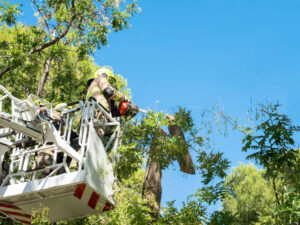
Trees are not manufactured objects. They respond to previous cuts, weather exposure, available light, site disturbance, and competition from nearby trees. So a “perfectly even” crown is not always the right goal. In fact, forcing visual symmetry can lead to poor cuts and unnecessary branch removal. A better standard is structural sense. Does the crown distribute weight reasonably well? Are cuts being made at appropriate points? Is the tree being left with enough leaf area and enough sound scaffold structure to keep functioning?
Those questions are far more important than whether the tree looks uniformly rounded from every angle.
The main outcomes proper pruning seeks
A well-pruned tree is not simply smaller. It is better managed. The intended outcomes usually fall into a handful of categories:
- improved structure and branch arrangement
- reduced likelihood of certain failures or conflicts
- clearance from buildings, roads, or pedestrian areas
- retention of the tree where removal is not yet necessary
- a crown form that fits the site more appropriately
Those outcomes often overlap. A single pruning job may lighten the end weight on a long branch, remove dead or damaged wood, and improve clearance over a walkway all at once. The point is not to remove as much as possible. The point is to make cuts that accomplish specific goals with the least disruption.
Structural improvement is usually the quiet success
The most successful pruning work is often not dramatic. It does not always produce a before-and-after photo that shocks the client. Sometimes the work looks subtle because it was designed to be subtle.
Structural improvement is one of the clearest examples. Certain branch patterns are more likely to create future problems, especially when a crown develops long, poorly supported lateral limbs or when growth extends unevenly over a target area. Pruning can reduce some of that strain by selectively shortening or removing parts of the crown using sound branch removal or reduction cuts.
This is very different from topping or making stub cuts. Improper techniques create larger problems than they solve. They can leave the tree trying to respond to severe stress with weakly attached regrowth, poor closure, and disordered architecture. A tree that has been topped may look “controlled” for a short period, but in many cases it becomes harder to manage later because the new growth is vigorous and structurally inferior.
A properly reduced branch, by contrast, is managed with attention to where the cut is made and how the remaining branch will carry load and continue growth. That sort of judgment is at the heart of professional pruning.
Risk reduction has limits, but it matters
One of the more difficult conversations in tree care involves risk. Property owners often want certainty. They ask whether pruning will make a tree safe. The honest answer is that no tree can be made completely risk-free. Some level of risk always exists. Wind, snow load, hidden defects, site changes, and species characteristics all play a role.
That does not mean pruning is pointless. It means the goal is risk reduction, not a guarantee.
This is where a systematic approach matters. Tree risk assessment is a process of identifying, analyzing, and evaluating risk, then recommending measures that can bring it to a more acceptable level. In some situations, pruning is one of those measures. Shortening overextended branches, removing damaged limbs, or reducing conflicts with structures may lower the likelihood or consequence of failure.
In other situations, pruning is not enough. A tree may have defects or conditions that shift the discussion toward Dangerous Tree Assessment and Removal. There is a professional obligation to recognize that boundary. Good arborists do not keep pruning a tree that should really be removed, and they do not recommend Tree Removal Services when a more moderate intervention will do the job.
That balance is important because overreaction is expensive and often unnecessary, while underreaction can leave people and property exposed to avoidable hazards.
Clearance pruning is practical, but it still needs restraint
A large share of pruning requests start with clearance. Branches are brushing the house, shading a sign, crowding a driveway, or hanging too low over a walkway. These are real concerns, and managing them is a legitimate part of tree care.
The mistake is assuming that clearance pruning is simple because the goal is obvious. In reality, clearance work can be where poor practices do the most lasting harm. If too much is stripped from one side of the tree, the crown can become unbalanced. If cuts are made back to arbitrary points, the tree may respond with problematic regrowth. If the lower crown is over-raised, the tree can lose form and become more exposed.
A better approach is selective. Instead of carving away large sections indiscriminately, proper pruning considers the branch hierarchy and removes or reduces only what is necessary to create functional space. That may preserve a more natural crown line while still solving the access or clearance issue.
This matters especially around homes. It is easy to chase light, views, or roof clearance too aggressively and create a tree that now has a different set of structural issues. A measured plan usually ages better.
Storm damage changes the conversation
After a storm, people often want immediate action, and for good reason. Broken tops, split branches, and partially attached limbs can create urgent hazards. Emergency Tree Services exist for exactly these situations, but emergency pruning should not be confused with ordinary aesthetic shaping.
The first aim after storm damage is to stabilize the immediate hazard. That may involve controlled lowering of limbs, removing hanging branches, or clearing access. The conditions can be dangerous, particularly in large trees, and this is not work for untrained hands. Pruning or removing large trees is hazardous work that should be handled by people trained and equipped to work safely in trees.
Once the immediate danger has been addressed, a second question follows: can the tree be retained with corrective pruning, or has the damage changed the decision entirely? Some storm-damaged trees respond well to careful restructuring. Others move into the territory of Dangerous Tree Assessment and Removal because the damage is too severe or too poorly located.
That distinction cannot be made well from urgency alone. It requires assessment, judgment, and often a willingness to say that saving the tree is not responsible.
Crown reduction is not the same thing as indiscriminate size cutting
When property owners say they want a tree “cut back,” they may mean several different things. Sometimes they want shorter branch tips away from a roof. Sometimes they want less end weight on a long limb. Sometimes they simply feel the tree is too large for the space.
Crown reduction, done properly, is a recognized pruning approach. It involves reducing the length or spread of selected branches using appropriate reduction cuts. The goal is not to shear the outside of the canopy into a smaller shell. It is to shorten specific structural elements while preserving a functional crown.
That distinction is where many jobs go wrong. Indiscriminate size cutting can make a tree look smaller for a season, but it often destroys branch architecture and triggers poor regrowth. Proper reduction, by contrast, works with the tree’s form. It may not produce the most dramatic visual change on day one, but it generally respects the tree’s biology and structure far better.
The best reduction work also knows when to stop. If a tree truly exceeds the site and meaningful reduction would require severe cutting, pruning may no longer be the right answer. That is when broader options, including Tree Removal Services and eventual replacement, may deserve discussion.
Young trees and mature trees need different judgment
One of the easiest ways to tell whether a pruning plan is thoughtful is to look at whether age has been considered. Young trees and mature trees do not benefit from the same type of intervention.
A younger tree often offers a chance to guide developing structure before defects become expensive or hazardous. Small, well-placed cuts can influence how the future crown is built. The work tends to be preventive, not dramatic.
A mature tree is different. It has a large existing framework, a long history, and less margin for severe intervention. Removing large live branches from an older tree can create substantial wounds and alter load paths in ways that are not always helpful. With mature trees, good pruning is often more conservative. It may focus on selective reduction, deadwood management, and specific structural concerns rather than broad reshaping.
That difference is part of why blanket rules fail. The same amount of pruning that is reasonable in one age class may be harmful in another.
Sometimes support systems are part of the pruning plan
There are cases where pruning alone does not fully address a structural concern. A tree may have a form worth preserving but include a branch arrangement that would benefit from added support. That is where Tree Cable and Bracing can become part of the discussion.
Support systems are not substitutes for sound pruning. They are complementary tools. Pruning may reduce the load on a weak union or an overextended limb, while cabling or bracing may help limit movement or support the structure. The right combination depends on the tree’s condition, the targets beneath it, and whether the overall risk can be reduced to an acceptable level.
Again, this requires judgment rather than habit. Not every weak-looking branch needs hardware, and not every support system justifies preserving a tree indefinitely. The point is to match the treatment to the actual problem.
Site context matters more than most people expect
A tree in an open field and the same species over a garage do not get managed the same way. The crown may be similar, but the targets are not. That alone changes the pruning conversation.
Site use matters. Occupancy matters. The value of the tree matters. Access matters. Exposure to wind matters. Even the future plans for the property can matter. A tree being pruned near a frequently used entry path is judged differently from one over a fenced corner of a large lot.
This is also why pruning can connect to services that seem unrelated at first glance. If a tree cannot be retained responsibly, Tree Removal Services may become necessary. If the tree is removed, Stump Removal & Grinding may be the final step in restoring the site for replanting, hardscape work, or safer access. In higher-risk landscapes, especially where wildfire planning is part of property management, FireSmart Tree Services can shape how pruning priorities are set near structures and access routes.
None of this makes pruning less important. It makes it more contextual. Good pruning is never just about the branch. It is about the branch in that place, over that target, under those conditions.
Common signs that a tree needs a professional look
Property owners do not need to diagnose stump and tree removal every issue themselves, but a few patterns should prompt a closer assessment:
- storm-damaged, hanging, or cracked limbs
- branches contacting structures or obstructing access
- a crown that appears heavily one-sided or overextended
- visible deadwood in a large mature tree
- recurring concern about whether the tree is becoming hazardous
These signs do not always mean the tree is dangerous or that major cutting is needed. They do mean the tree deserves informed attention, preferably through a Certified Arborist Consultation rather than guesswork.
What proper pruning does not aim to achieve
Sometimes the clearest way to understand pruning is to define what it is not trying to do.
Proper pruning is not supposed to eliminate every conceivable risk. It is not supposed to force a large species into a tiny space forever. It is not supposed to create a smooth outer shell by clipping every branch to the same plane. It is not supposed to compensate for poor species selection by repeatedly wounding the tree year after year.
It is also not a substitute for removal when removal is warranted. There are trees that can be managed through careful pruning, crown reduction, monitoring, or Tree Cable and Bracing. There are also trees where those measures only delay an inevitable decision without adequately reducing risk.
Knowing the difference is part of professional responsibility.
Why the quality of cuts and handling matters
From the ground, people often focus on what was removed. Professionals also focus on how it was removed. Branch removal and reduction cuts matter. Controlled lowering matters. Safe access and work positioning matter. In large trees especially, the mechanics of the work are inseparable from the quality of the result.
Poor handling can damage bark, tear branch collars, shock the remaining crown, or create injuries that become bigger problems later. Good pruning takes more time because it is not just about speed. It is about leaving the tree in a condition that supports recovery and ongoing function.
This is one reason large-tree pruning should never be treated casually. The work can be dangerous, and the consequences of mistakes are not minor. A branch that fails during cutting can injure workers, damage property, or turn a manageable tree into one that now requires removal.
A well-pruned tree should still look like itself
There is a useful test for finished pruning work. The tree should still look like the same species, with the same essential habit, just better managed. It should not look skinned, flattened, lopsided, or abruptly reduced in a way that calls attention to the cutting rather than the tree.
That does not mean every pruning result is visually subtle. Storm restoration, clearance demands, and risk mitigation can all require visible change. But even then, proper pruning tends to preserve coherence. The crown still makes sense.
That is the deeper aim of Tree Pruning & Crown Shaping. It is not to impose a rigid form. It is to guide structure, address specific conflicts, reduce certain risks where possible, and help a tree occupy its space more responsibly. Sometimes that means a few precise cuts. Sometimes it means a larger intervention tied to Emergency Tree Services, structural support, or a broader risk management decision. Sometimes it means recognizing that pruning has reached its practical limit and another service is more appropriate.
Done well, pruning respects both the tree and the site. It solves real problems without creating a new set of hidden ones. That is what proper pruning aims to achieve, and it is why the best work in this field is defined less by how much was cut and more by how sound the judgment was behind every cut that remained.
Name: Ace Tree Services Ltd.
Address: 4656 Wallace Hill Road, Kelowna, BC
Phone: 250-212-9593
Website: https://acetree.ca/
Hours:
Monday: 7:00 AM–5:00 PM
Tuesday: 7:00 AM–5:00 PM
Wednesday: 7:00 AM–5:00 PM
Thursday: 7:00 AM–5:00 PM
Friday: 7:00 AM–5:00 PM
Saturday: 7:00 AM–5:00 PM
Sunday: Closed
Emergency tree services: 24/7 emergency service is listed.
Open-location code / Plus code: RHF8+8G Kelowna, British Columbia, Canada
Map/listing URL: https://www.google.com/maps/place/Ace+Tree+Services+Ltd./@49.8232606,-119.4337283,563m/data=!3m1!1e3!4m6!3m5!1s0x537d8b1d074815c5:0x450b88afa7a41435!8m2!3d49.8232606!4d-119.4337283!16s%2Fg%2F11ydkpnh22
Embed iframe:
Socials: https://www.facebook.com/people/Ace-Tree-Services/61585901931447/
https://m.yelp.com/biz/ace-tree-services-kelowna
Ace Tree Services Ltd. provides professional tree service for residential, commercial, and municipal customers in Kelowna and across the Okanagan Valley.
The company’s listed services include tree removal, stump removal and grinding, tree pruning and crown shaping, emergency tree services, certified arborist consultation, dangerous tree assessment, tree cable and bracing, and wildfire mitigation.
Ace Tree Services works with homeowners, businesses, property managers, and public-sector clients that need safe, practical tree care in the Kelowna area.
The official site highlights ISA-certified arborists, insurance, and experience handling both routine and complex tree service situations.
Customers can contact Ace Tree Services for tree care planning, hazard concerns, emergency tree cleanup, pruning needs, stump grinding, or advice about trees near homes, fences, driveways, and landscaping.
Ace Tree Services lists regular work hours from 7:00 AM to 5:00 PM Monday through Friday, with 24/7 emergency tree service available for urgent situations.
For tree service in Kelowna, call 250-212-9593 or visit https://acetree.ca/
The public map listing places Ace Tree Services Ltd. in Kelowna and can help customers find directions to the Wallace Hill Road area.
Popular Questions About Ace Tree Services Ltd.
What services does Ace Tree Services Ltd. provide?
Ace Tree Services Ltd. provides tree removal, stump removal and grinding, tree pruning and crown shaping, emergency tree services, certified arborist consultation, dangerous tree assessment and removal, tree cable and bracing, and wildfire mitigation.
Where is Ace Tree Services Ltd. located?
The official website lists Ace Tree Services Ltd. at 4656 Wallace Hill Road, Kelowna, BC.
What areas does Ace Tree Services Ltd. serve?
The official website describes Ace Tree Services as located in Kelowna and servicing the Okanagan.
What phone number should customers call?
Customers can call Ace Tree Services Ltd. at 250-212-9593.
What are Ace Tree Services Ltd.’s regular hours?
The official website lists work hours as 7:00 AM to 5:00 PM, Monday through Friday. Saturday and Sunday regular hours are not listed and should be confirmed directly.
Does Ace Tree Services Ltd. offer emergency tree service?
Yes. The official website lists 24/7 emergency services for urgent tree situations, including emergency tree removal, dangerous tree assessment, stabilization, and limb or branch cleanup.
Does Ace Tree Services Ltd. have certified arborists?
Yes. The official website states that Ace Tree Services has ISA-certified arborists.
Can Ace Tree Services Ltd. help with wildfire mitigation?
Yes. Wildfire mitigation is listed as one of the company’s tree services.
How do I contact Ace Tree Services Ltd.?
Call 250-212-9593 or visit https://acetree.ca/.
Landmarks Near Kelowna, BC
Wallace Hill Road: A local Kelowna road near the address listed for Ace Tree Services Ltd.
Okanagan Lake: A major Kelowna landmark near residential, commercial, and waterfront properties that may need tree pruning, removal, or hazard assessment.
Downtown Kelowna: A central area with homes, offices, rental properties, restaurants, and commercial sites that may need professional tree care.
Mission / Lower Mission: A well-known Kelowna area with mature landscaping, residential properties, and lake-adjacent homes.
South East Kelowna: A rural and residential area with larger properties, orchards, and tree-care needs that can include pruning, removals, and wildfire mitigation.
Crawford: A residential area near the southeast side of Kelowna where homeowners may need tree trimming, hazard assessment, and stump grinding.
Kettle Valley: A hillside residential neighborhood where tree condition, slope, wind exposure, and defensible-space planning can matter for property owners.
Myra-Bellevue Provincial Park: A major outdoor landmark near southeast Kelowna and a useful point of orientation for nearby properties.
Gallagher’s Canyon: A residential and golf community near southeast Kelowna where tree maintenance and wildfire-conscious vegetation management can be practical concerns.
Orchard Park Shopping Centre: A major central Kelowna retail landmark and reference point for customers traveling across the city.
Highway 97: A major Kelowna corridor connecting neighborhoods, commercial properties, and service routes throughout the region.
Kelowna City Park: A recognizable central landmark near downtown neighborhoods and lakefront properties.
Glenmore: A Kelowna neighborhood with residential and commercial properties that may need pruning, storm cleanup, and general tree care.
Rutland: A large residential and commercial area where customers may need tree removal, pruning, stump grinding, or arborist consultation.
Black Mountain: A hillside community where slope, wind, wildfire exposure, and access can influence tree service planning.
For tree service near these Kelowna landmarks, contact Ace Tree Services Ltd. at 250-212-9593 or visit https://acetree.ca/