Tree Pruning & Crown Shaping: Understanding Raising and Reduction
Tree pruning looks simple from the ground. A few cuts here, a few limbs there, and the canopy appears tidier by the afternoon. In practice, good pruning is one of the more technical parts of tree care. The shape of the crown affects clearance, weight distribution, light penetration, storm performance, and the tree’s long-term structure. Small decisions made with a handsaw or chainsaw can influence a tree for years.
Among the most misunderstood pruning objectives are crown raising and crown reduction. Homeowners often use the words loosely, and even experienced property managers sometimes ask for one when they really need the other. That matters, because the two approaches solve different problems and place different demands on the tree. Done well, they can improve function and reduce risk. Done poorly, they can produce weak regrowth, sunscald, decay, or a crown that looks stripped and unnatural.
This is where Tree Pruning & Crown Shaping moves beyond cosmetics. Pruning is not just about making a tree look balanced. It is about matching the biology of the tree to the site, the use of the space below it, and the realistic level of risk a property owner can accept. No tree is completely without risk. The practical goal is not perfection. It is thoughtful reduction of avoidable problems without causing unnecessary damage.
What crown shaping is actually trying to accomplish
When arborists talk about crown shaping, they are usually referring to selective pruning that improves the form or function of the canopy. The purpose may be structural, aesthetic, practical, or risk-related. A street-side maple might need more clearance over a sidewalk. A mature conifer may need selective reduction away from a roofline. A broad shade tree over a driveway may need weight managed at the ends of long limbs. In each case, the cuts should support the tree’s natural architecture rather than fight it.
That distinction is important. Healthy trees do not benefit from arbitrary trimming. The strongest pruning plans work with the species’ growth habit. Some trees tolerate moderate reduction better than others. Some recover from lower branch removal with little issue. Others react poorly if too much live foliage is removed from the lower canopy. A good pruning plan accounts for this, which is one reason a Certified Arborist Consultation is often the right first step when the tree is large, mature, or near targets such as homes, garages, driveways, or play areas.
Experience also teaches restraint. Clients occasionally ask for dramatic lifting because they want a cleaner view under the canopy, or heavy shortening because a tree feels too large for the yard. Sometimes those requests are reasonable. Sometimes they would leave the tree stressed, exposed, or unstable in appearance. Professional judgment lives in that gap between what is wanted and what the tree can sustain.
Crown raising, creating clearance without hollowing out the tree
Crown raising means removing or reducing lower branches to provide clearance beneath the canopy. The need may be straightforward. Branches can obstruct pedestrians, vehicles, lawn equipment, signage, sightlines, or building access. On residential properties, the request often comes after a branch starts brushing a roof, blocking a window, or hanging too low over a path.
The phrase sounds simple, but the work is rarely as basic as cutting off every low branch. Lower limbs do more than occupy space. They contribute to photosynthesis, trunk taper, and overall balance. On younger trees in particular, stripping the lower crown too aggressively can create a leggy, top-heavy form. It can also leave the trunk and major scaffold limbs more exposed to sun and weather than they were before.
Good crown raising is selective. Sometimes a branch is removed entirely. Sometimes it is shortened back to an appropriate lateral so the limb still contributes to the crown while no longer interfering with clearance. In many cases, the best result comes from staging the work over time rather than taking all desired clearance in a single visit. That is especially true where lower branches are still playing an important structural role.
There is also a visual component that matters more than people expect. Poor crown raising leaves a tree looking like a lollipop, with all the foliage perched too high and too far from the trunk. The canopy may satisfy a clearance request, but it often loses grace and can become more exposed to wind movement. A well-raised crown still looks connected to the trunk, not detached from it.
In commercial settings, crown raising often serves practical operations. Delivery access, parking circulation, pedestrian routes, and visibility all come into play. On those sites, the pressure to remove low growth can be strong. The better practice is to define the actual clearance needed and prune to that target, rather than chasing an exaggerated under-canopy height that the tree was never meant to maintain.
Crown reduction, shortening with purpose
Crown reduction is professional tree removal a different tool entirely. Instead of lifting the bottom of the canopy, reduction shortens selected branches or portions of the crown to decrease height, spread, or end weight. It is often used where a tree has outgrown its space, where long limbs extend toward a structure, or where branch weight needs to be moderated.
Reduction is one of the most technically demanding pruning operations because it depends on correct cut placement. The point is not to shear the outside of the tree into a smaller outline. The point is to shorten branches back to suitable laterals so the canopy remains functional and natural in form. When reduction is done poorly, it drifts into topping or crude heading cuts, both of which create problems. Stub cuts and indiscriminate shortening leave the tree with poor wound closure, weakly attached regrowth, and an appearance that often declines quickly.
A proper reduction should look almost invisible to an untrained eye from a distance. The tree appears a bit smaller, a bit more contained, and often a bit lighter at the ends, but not butchered. That subtlety is part of the craft. It takes time to move through a crown selectively, identify where shortening helps, and preserve a coherent branch structure.
The situations that call for reduction vary. A mature tree leaning over a roofline may not need removal if selective shortening can create more workable separation. A long lateral over a driveway may carry too much weight at the tip and benefit from reduction back to stronger interior growth. In some cases, reduction can be part of a Dangerous Tree Assessment and Removal discussion, where the arborist determines whether risk can be lowered through pruning or whether the defects are too significant and Tree Removal Services are the better choice.
That last point deserves emphasis. Reduction is not a cure-all. It can mitigate certain concerns, but it cannot make every compromised tree safe enough to keep. There are cases where the structural condition, site conflict, or level of exposure is such that retaining the tree is no longer prudent.
Raising versus reduction, knowing which problem you are solving
A lot of bad pruning starts with a fuzzy objective. The client says the tree is “too big,” but the real issue is blocked access below the canopy. Or the client asks to “lift it up,” but the true concern is a heavy limb extending toward a house. Crown raising and crown reduction are not interchangeable, and using the wrong one can leave the original problem unsolved.
If the need is ground clearance, raising may be appropriate. If the issue is branch spread, tip weight, or overall canopy reach toward a target, reduction is often the better fit. Sometimes both are warranted, but even then they should be balanced. A tree that is simultaneously over-raised and over-reduced often ends up looking sparse and stressed.
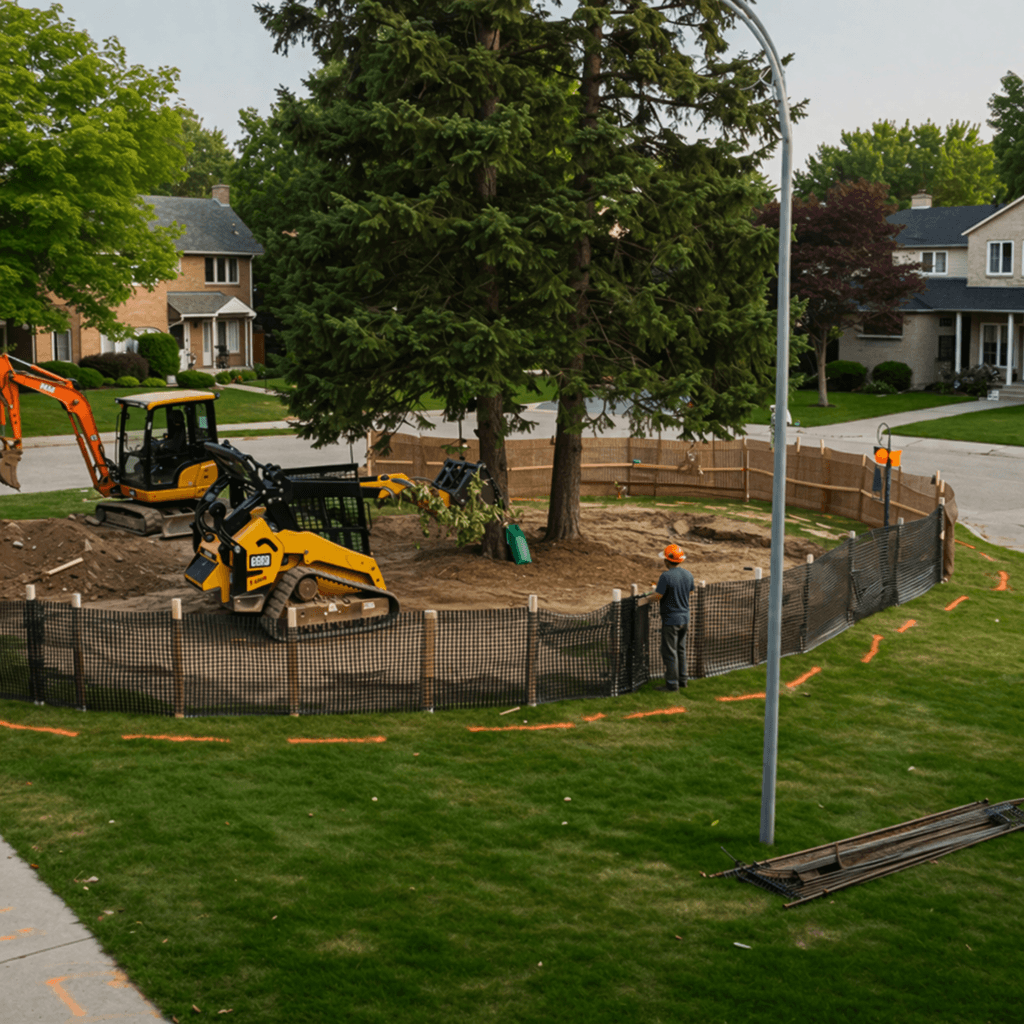
The best site visits usually begin with a simple question: what is the conflict? Not what shape do you want, but what practical problem are you trying to fix? Once that becomes clear, the pruning goal usually follows.
Why topping is not reduction
Property owners still encounter old advice that tells them to cut a tree back hard when it gets too large. That approach persists because it creates an immediate visual change. The tree looks smaller that day. What it often creates later is a crown full of vigorous, poorly attached shoots and large pruning wounds that do not support the tree’s long-term health or structure.
Reduction pruning is not topping. Real reduction follows branch structure and shortens to laterals that can assume the terminal role. Topping ignores that architecture. The difference is not semantic. It is the difference between pruning that respects how a tree grows and cutting that simply forces a temporary size change.
This is one reason homeowners should be wary of low-bid trimming that promises dramatic size reduction in a few hours. Fast, heavy cuts can produce a striking before-and-after photo. They can also set the tree up for a long cycle of corrective work, repeated regrowth, and, in some cases, eventual removal.
Safety is part of the pruning conversation
Any discussion of pruning large trees should include safety. Working aloft with cutting tools, ropes, rigging, and live branches is hazardous. The danger increases around structures, traffic areas, or storm-damaged wood. Industry guidance is clear on this point: pruning and removing trees, especially large trees, can be dangerous work and should be handled by trained, properly equipped professionals.
That applies even when the task sounds modest. Lowering a limb over a greenhouse, reducing weight above a deck, or removing a cracked branch after a storm can require controlled rigging and careful sequencing. A homeowner may see one branch. A trained crew sees forces, swing paths, attachment points, and possible failure zones.
This is where Emergency Tree Services overlap with pruning in a very real way. After wind or snow events, a tree may need immediate attention not because it has failed completely, but because damaged limbs are hanging, split, or partially attached. In those cases, the work may involve risk reduction through selective pruning, temporary stabilization, or a decision to move directly to removal if the damage is too severe.
The role of assessment before the saw starts
Pruning should not begin with the first cut. It should begin with assessment. A competent arborist looks at species, age class, structure, visible defects, the site below and around the tree, and the objective of the work. That is the essence of a systematic tree risk process, identifying concerns, thinking through their implications, and recommending measures that bring risk to a more acceptable level.
Sometimes the recommendation is straightforward. The canopy needs minor raising over a walkway. Sometimes it is nuanced. A co-dominant stem may warrant selective reduction, or perhaps Tree Cable and Bracing in addition to pruning, if the structure is worth retaining and the defects are manageable. Structural support systems are not a substitute for good pruning, but in the right context they can be part of a broader management plan.
And sometimes the recommendation is restraint. Trees do not always need immediate intervention. A canopy may look dense without being problematic. A low limb may feel inconvenient but still be serving a useful role. A professional assessment often saves owners from paying for unnecessary work that gives them little practical benefit.
How pruning fits with removal, grinding, and broader site management
Not every tree can be shaped into compatibility with its site. There are times when Tree Removal Services are the more honest answer, especially when structural defects, repeated failures, severe site conflict, or unacceptable exposure make retention a poor long-term choice. A good arborist does not jump to removal, but neither do they preserve a tree at all costs when the risks or limitations are clear.
When removal is necessary, the work often extends beyond the trunk and canopy. Stump Removal & Grinding becomes part of the next decision. Some owners leave the stump for budget or landscape reasons. Others want the area replanted, regraded, or made usable again. That is not pruning, of course, but it often sits in the same project conversation, especially after a tree has been deemed unsuitable for retention.
There is also an overlooked benefit to honest recommendations. Clients tend to trust pruning advice more when they know the arborist is willing to say, “This tree should stay,” just as readily as, “This tree should go.” Good tree care is not about prescribing the same service every time. It is about matching the intervention to the condition.
Fire exposure changes the pruning conversation
In fire-prone regions, crown management can become part of FireSmart Tree Services planning. The goal in those settings is not decorative thinning. It is reducing pathways for fire spread and managing vegetation in a way that supports defensible space strategies. The exact approach depends heavily on the property, the species present, and local guidance, but lower branch management and thoughtful separation from structures are often part of the discussion.
That does not mean every tree should be heavily limbed up. Over-pruning can create its own issues. The point is to make deliberate choices based on site conditions rather than broad assumptions. A tree beside a home, a stand at the property edge, and a specimen in a moist, sheltered interior yard do not always need the same treatment.
What property owners should expect from a sound pruning visit
A good pruning visit usually feels more measured than many people expect. There is discussion before the work starts. The crew confirms objectives, reviews access, and looks at the tree from more than one angle. Once in the canopy, the cuts are selective rather than frantic. The final result often looks cleaner and more balanced without shouting that major surgery just happened.
The quality shows up in details. Branches are removed or shortened for a reason. The canopy still looks like the species it came from. There are no random stubs projecting from major limbs. Clearance goals are met, but not at the cost of stripping the tree into an unnatural outline.
Clients can help the process by asking practical questions:
- What specific problem is the pruning meant to solve?
- Are you recommending crown raising, crown reduction, or a mix of both?
- Is the tree structurally sound enough for pruning to be worthwhile?
- Would a Certified Arborist Consultation change the scope or timing of the work?
- Is there any reason to consider support systems or removal instead?
Those questions tend to sharpen the plan quickly. They also reveal whether the proposal is based on tree biology and site function, or just on producing a dramatic visual change.
Common edge cases that deserve judgment, not formulas
Young trees often tempt owners into premature crown raising. The lower branches can interfere with mowing, and the trunk looks more impressive if the canopy starts higher. Yet those lower limbs are often helping the tree develop taper and vigor. Removing too many too soon can slow establishment and weaken future form.
Mature trees near buildings pose the opposite challenge. Owners may wait until branches are fully over the roof and then ask for aggressive reduction all at once. A staged approach is sometimes wiser, especially when the tree has not been pruned for years. Moderation can preserve function while still improving clearance and reducing end weight.
Storm-damaged trees are another category where caution matters. A branch may appear to be the only issue, but hidden cracks, bark inclusions, or root disturbance may shift the recommendation. That is why post-storm pruning decisions often intersect with Emergency Tree Services and Dangerous Tree Assessment and Removal rather than routine maintenance.
Then there are trees with sentimental value. Those can be the hardest conversations on a property. People understandably want to keep a long-standing shade tree or a tree planted by a family member. Sometimes pruning and support measures can extend retention. Sometimes they cannot. The most professional advice is clear-eyed and compassionate at the same time.
The shape you keep for the future
The real measure of pruning is not how the tree looks an hour after the crew leaves. It is how the tree responds over the next seasons, whether the original conflict stays solved, and whether the structure remains coherent as growth resumes. Crown raising and crown reduction are both valuable tools, but only when the objective is clear and the execution respects the tree’s form.
Well-shaped trees do not usually call attention to the pruning itself. They simply fit their space better. The walkway is clear. The roof has breathing room. The branch tips carry less leverage. The canopy still reads as natural. That quiet success is the hallmark of skilled Tree Pruning & Crown Shaping.
When a tree is large, old, storm-affected, or close to meaningful targets, the smartest move is often to slow down and get the diagnosis right. A careful Certified Arborist Consultation can separate a pruning job from a structural support project, an urgent hazard response, or a necessary removal. And that distinction matters, because the best tree work is not defined by how much gets cut. It is defined by how well the action matches the tree, the site, and the problem at hand.
Name: Ace Tree Services Ltd.
Address: 4656 Wallace Hill Road, Kelowna, BC
Phone: 250-212-9593
Website: https://acetree.ca/
Hours:
Monday: 7:00 AM–5:00 PM
Tuesday: 7:00 AM–5:00 PM
Wednesday: 7:00 AM–5:00 PM
Thursday: 7:00 AM–5:00 PM
Friday: 7:00 AM–5:00 PM
Saturday: 7:00 AM–5:00 PM
Sunday: Closed
Emergency tree services: 24/7 emergency service is listed.
Open-location code / Plus code: RHF8+8G Kelowna, British Columbia, Canada
Map/listing URL: https://www.google.com/maps/place/Ace+Tree+Services+Ltd./@49.8232606,-119.4337283,563m/data=!3m1!1e3!4m6!3m5!1s0x537d8b1d074815c5:0x450b88afa7a41435!8m2!3d49.8232606!4d-119.4337283!16s%2Fg%2F11ydkpnh22
Embed iframe:
Socials: https://www.facebook.com/people/Ace-Tree-Services/61585901931447/
https://m.yelp.com/biz/ace-tree-services-kelowna
Ace Tree Services Ltd. provides professional tree service for residential, commercial, and municipal customers in Kelowna and across the Okanagan Valley.
The company’s listed services include tree removal, stump removal and grinding, tree pruning and crown shaping, emergency tree services, certified arborist consultation, dangerous tree assessment, tree cable and bracing, and wildfire mitigation.
Ace Tree Services works with homeowners, businesses, property managers, and public-sector clients that need safe, practical tree care in the Kelowna area.
The official site highlights ISA-certified arborists, insurance, and experience handling both routine and complex tree service situations.
Customers can contact Ace Tree Services for tree care planning, hazard concerns, emergency tree cleanup, pruning needs, stump grinding, or advice about trees near homes, fences, driveways, and landscaping.
Ace Tree Services lists regular work hours from 7:00 AM to 5:00 PM Monday through Friday, with 24/7 emergency tree service available for urgent situations.
For tree service in Kelowna, call 250-212-9593 or visit https://acetree.ca/
The public map listing places Ace Tree Services Ltd. in Kelowna and can help customers find directions to the Wallace Hill Road area.
Popular Questions About Ace Tree Services Ltd.
What services does Ace Tree Services Ltd. provide?
Ace Tree Services Ltd. provides tree removal, stump removal and grinding, tree pruning and crown shaping, emergency tree services, certified arborist consultation, dangerous tree assessment and removal, tree cable and bracing, and wildfire mitigation.
Where is Ace Tree Services Ltd. located?
The official website lists Ace Tree Services Ltd. at 4656 Wallace Hill Road, Kelowna, BC.
What areas does Ace Tree Services Ltd. serve?
The official website describes Ace Tree Services as located in Kelowna and servicing the Okanagan.
What phone number should customers call?
Customers can call Ace Tree Services Ltd. at 250-212-9593.
What are Ace Tree Services Ltd.’s regular hours?
The official website lists work hours as 7:00 AM to 5:00 PM, Monday through Friday. Saturday and Sunday regular hours are not listed and should be confirmed directly.
Does Ace Tree Services Ltd. offer emergency tree service?
Yes. The official website lists 24/7 emergency services for urgent tree situations, including emergency tree removal, dangerous tree assessment, stabilization, and limb or branch cleanup.
Does Ace Tree Services Ltd. have certified arborists?
Yes. The official website states that Ace Tree Services has ISA-certified arborists.
Can Ace Tree Services Ltd. help with wildfire mitigation?
Yes. Wildfire mitigation is listed as one of the company’s tree services.
How do I contact Ace Tree Services Ltd.?
Call 250-212-9593 or visit https://acetree.ca/.
Landmarks Near Kelowna, BC
Wallace Hill Road: A local Kelowna road near the address listed for Ace Tree Services Ltd.
Okanagan Lake: A major Kelowna landmark near residential, commercial, and waterfront properties that may need tree pruning, removal, or hazard assessment.
Downtown Kelowna: A central area with homes, offices, rental properties, restaurants, and commercial sites that may need professional tree care.
Mission / Lower Mission: A well-known Kelowna area with mature landscaping, residential properties, and lake-adjacent homes.
South East Kelowna: A rural and residential area with larger properties, orchards, and tree-care needs that can include pruning, removals, and wildfire mitigation.
Crawford: A residential area near the southeast side of Kelowna where homeowners may need tree trimming, hazard assessment, and stump grinding.
Kettle Valley: A hillside residential neighborhood where tree condition, slope, wind exposure, and defensible-space planning can matter for property owners.
Myra-Bellevue Provincial Park: A major outdoor landmark near southeast Kelowna and a useful point of orientation for nearby properties.
Gallagher’s Canyon: A residential and golf community near southeast Kelowna where tree maintenance and wildfire-conscious vegetation management can be practical concerns.
Orchard Park Shopping Centre: A major central Kelowna retail landmark and reference point for customers traveling across the city.
Highway 97: A major Kelowna corridor connecting neighborhoods, commercial properties, and service routes throughout the region.
Kelowna City Park: A recognizable central landmark near downtown neighborhoods and lakefront properties.
Glenmore: A Kelowna neighborhood with residential and commercial properties that may need pruning, storm cleanup, and general tree care.
Rutland: A large residential and commercial area where customers may need tree removal, pruning, stump grinding, or arborist consultation.
Black Mountain: A hillside community where slope, wind, wildfire exposure, and access can influence tree service planning.
For tree service near these Kelowna landmarks, contact Ace Tree Services Ltd. at 250-212-9593 or visit https://acetree.ca/