Tree Pruning & Crown Shaping Tips for Healthier, Safer Trees
A well-pruned tree looks effortless, but the work behind that result is anything but casual. Good pruning improves structure, reduces risk, preserves clearance, and supports long-term health. Bad pruning, even when done with good intentions, can shorten a tree’s life, invite decay, and create the very hazards a homeowner hoped to avoid.
After years of looking at storm-damaged canopies, split leaders, lion-tailed limbs, and old topping cuts that never should have happened, one pattern stands out. Most tree problems do not begin with dramatic failures. They begin with small decisions, made too late or made without a clear goal. A branch is cut because it looks crowded. A crown is thinned because more light seems better. A large limb is removed from one side of the tree without considering balance, load, or wound size. The tree survives, then struggles, then becomes expensive.
Tree Pruning & Crown Shaping is most effective when it starts with the species, age, site, and purpose of the tree. An ornamental maple near a patio needs a different approach than a mature live oak over a driveway, and both require different judgment than a pine in a fire-prone area. That is why thoughtful pruning is not just yard maintenance. It is risk management, plant health care, and, in many cases, a way to postpone or avoid more drastic work such as Dangerous Tree Assessment and Removal.
What pruning should accomplish
The best pruning jobs are often the least noticeable. You can stand back, look at the tree, and think it simply belongs there. The crown feels balanced. The trunk line is clear. The branch spacing makes sense. Nothing looks forced.
Healthy pruning usually aims to do one or more of four things: remove dead or defective wood, improve branch structure, provide safe clearance, and shape the crown without compromising the tree’s natural form. That last part matters. Every species carries itself differently. A crape myrtle should not be handled like an elm, and a spruce should never be made to mimic a shade tree with an artificially raised canopy.
One of the most common mistakes is treating pruning as cosmetic trimming. Trees are not hedges. Each cut changes energy distribution, exposure, and future growth. When cuts are too aggressive, the tree often responds with weakly attached sprouts, increased sunscald risk, and greater stress. I have seen mature shade trees lose a third of their canopy in one visit, then spend years trying to recover through dense epicormic growth that became a new hazard.
The difference between pruning and crown shaping
People often use the terms interchangeably, but they are not quite the same.
Pruning is the broader practice. It includes deadwood removal, structural correction, clearance pruning, storm damage cleanup, and selective reduction. Crown shaping is more refined. It focuses on the architecture of the canopy, how limbs are distributed, how weight is carried, and how the crown presents visually and mechanically over time.
On younger trees, crown shaping can be especially valuable. Early guidance helps establish one dominant leader where appropriate, improves branch spacing, and reduces the chance of included bark at major unions. This is one of those quiet investments that pays off a decade later. A little corrective work on a young tree can prevent major limb failure when that tree reaches 30 or 40 feet.
On mature trees, crown shaping is usually gentler. The goal is not to redesign the tree. It is to work with what is already there, easing end weight, reducing interference, and preserving structural integrity. Mature trees have less tolerance for large wounds and abrupt canopy changes.
Timing matters more than many people realize
Trees do not read calendars, but seasons still matter. The right timing depends on species, climate, pest pressure, and the objective of the cut.
Winter pruning works well for many deciduous trees because branch structure is easier to see and dormant conditions often reduce immediate stress. That said, winter is not a universal answer. Some species bleed sap heavily, which is often more cosmetic than harmful, but can still concern property owners. Others are vulnerable to specific diseases if pruned during active insect vectors or humid periods.
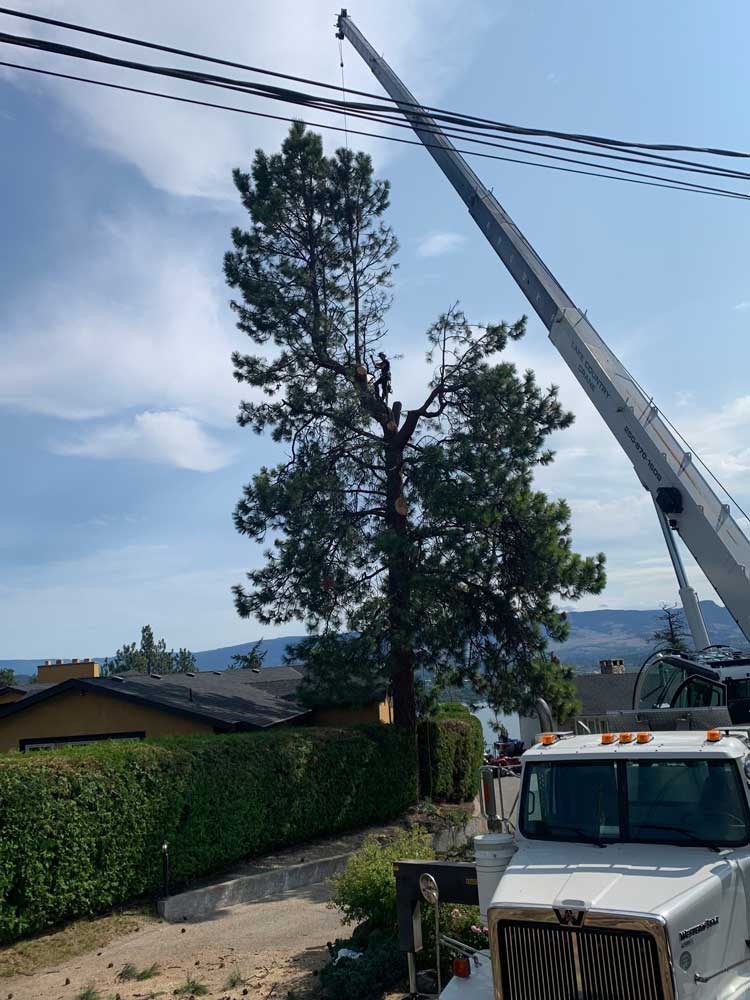
Spring pruning has to be approached with care. Removing too much foliage just as the tree is expending stored energy for leaf-out can reduce vigor. Summer pruning can be useful for slowing growth or making fine structural adjustments, especially after a flush has hardened off. Late summer and early fall are trickier in some regions because cuts may stimulate growth at the wrong time or coincide with disease pressure.
Storm damage does not wait for ideal timing, of course. Emergency Tree Services often involve removing broken, hanging, or split limbs immediately to protect people and property. In those cases, safety comes first, then restorative pruning later if the tree is a viable candidate.
How much is too much
There is no single percentage that fits every species and condition, but aggressive canopy removal in one visit is a common source of decline. A healthy young tree may tolerate more than an older specimen under drought stress. A vigorous species may rebound faster than a slow-growing one. Site conditions matter too. Compacted soil, root disturbance, heat, and poor irrigation all reduce resilience.
As a working rule, moderation wins. If a tree needs major correction, phased pruning over multiple seasons is often better than one severe intervention. This takes patience, which not every client loves, but it usually protects the tree. I have had conversations with homeowners who wanted immediate sunlight over a patio, only to realize that removing too much canopy from one side of a tree could increase the risk of failure in the next wind event.
That is where a Certified Arborist Consultation adds real value. An experienced arborist can tell the difference between a tree Ace Tree Services Ltd. Dangerous Tree Assessment and Removal that needs selective reduction and one that has reached the point where Tree Removal Services are the safer option. Not every tree can or should be saved through pruning alone.
The cuts that help, and the cuts that harm
A proper pruning cut respects the branch collar. That swollen area at the base of the branch contains specialized tissue that helps seal the wound. Cut too far out and you leave a stub that dies back and invites decay. Cut too close, flush with the trunk, and you damage the tree’s natural defense zone.
This detail sounds minor until you inspect a mature tree with decades of old flush cuts. Those wounds often become entry points for decay organisms. Add a little moisture, a little stress, and enough time, and what looked tidy years ago can become a structural problem hidden behind new growth.
Topping is still one of the most harmful practices in residential tree care. It removes large sections of the crown indiscriminately, leaves oversized wounds, and triggers weak sprouting. The result is not a safer tree. It is usually an uglier, more hazardous one after the regrowth reaches size. I have seen topped trees produce dense, fast shoots that snapped out in summer thunderstorms because they never developed strong attachments.
Lion-tailing is another issue. When inner lateral growth is stripped and foliage remains only at the ends of long branches, the branch becomes poorly balanced. End weight increases, movement intensifies, and failure risk can rise. It also reduces the shaded interior of the canopy, which can stress bark and alter how the tree manages heat.
Signs a tree needs attention now
Some trees can wait for the next maintenance cycle. Others should be inspected promptly. A leaning tree is not automatically dangerous, but a recent lean with root plate lifting is a serious concern. A dead branch over a play area is different from a dead branch in the back corner of a large property. Context matters.
Here are five signs that warrant a closer look:
- Cracks at major branch unions or along the trunk
- Hanging, broken, or dead limbs over occupied areas
- Dense sprout growth after past topping or storm damage
- Included bark where co-dominant stems press tightly together
- Sudden canopy thinning, dieback, or a noticeable change in leaf size
These are not automatic removal sentences, but they are good reasons to schedule a professional assessment. Sometimes the answer is selective pruning. Sometimes Tree Cable and Bracing can help support a valuable tree with a weak union. Sometimes the safest path is Dangerous Tree Assessment and Removal, especially when decay is advanced or targets below are high value.
Young tree training is where the smartest pruning starts
The most cost-effective pruning often happens early. A young tree with a trunk diameter of two to four inches is easier to guide than a mature tree with heavy scaffold limbs. The cuts are smaller, the response is faster, and the future benefits are significant.
Good early training encourages sound structure. That usually means selecting a central leader when the species calls for one, spacing primary branches vertically, and reducing or removing competing stems before they become large enough to create codominant problems. It also means resisting the urge to over-clean the interior. Young trees need foliage to build strength and feed growth.
I once looked at a row of newly planted street trees that had been “shaped” to look mature. The lower temporary branches were removed too soon, the canopies were over-raised, and the trunks had little taper. Within a few years, several developed poor wind stability and sun damage. Temporary lower branches may not look elegant, but they help a young tree thicken its trunk and protect bark during establishment.
Mature trees require restraint
Older trees are less forgiving. They have larger wounds, slower closure, and more consequences when weight distribution changes abruptly. The goal with a mature crown is often selective reduction, deadwood removal, and risk mitigation, not beautification for its own sake.
Reducing the end weight on long lateral limbs can make sense when a branch extends over a roof, driveway, or neighboring fence. But reduction cuts need to be made back to laterals large enough to assume the growth role, not just to random interior stubs. This is one place where pruning either reflects real experience or exposes a lack of it.
Mature trees with historic over-pruning often need a multi-year plan. First remove immediate hazards. Then evaluate canopy density, decay progression, and response growth. In some cases, supplemental support systems such as Tree Cable and Bracing buy time and preserve a tree of high landscape value. In other cases, the structure is too compromised to justify retention.
Clearance, visibility, and the temptation to overdo it
A lot of pruning requests begin with a practical need. Branches scrape a roof. A sidewalk feels crowded. A driveway lacks clearance for delivery vehicles. Sight lines at a street corner are blocked. These are all valid concerns, but solving them well requires precision.
Raising a canopy too aggressively often creates long bare trunks and weakly loaded upper limbs. Clearing a structure by a few feet can be enough. It does not require gutting half the tree. Similarly, reducing branches away from a service line is not the same as shearing the entire side into a flat face. Utility pruning is its own discipline, and when private trees conflict with lines, coordination matters.
One useful test is to ask what minimum clearance actually solves the problem. For a pedestrian path, that may be quite modest. For truck access, it may be substantially more. The answer affects how much live growth can remain, and that determines how well the tree holds up after the work.
Storms, wildfire, and regional risk
Pruning decisions change in storm-prone and fire-prone landscapes. In areas exposed to high winds, structural defects deserve more attention. Long overextended limbs, included bark unions, and dense end weight can turn a manageable defect into a failure during a storm. Emergency Tree Services after severe weather often reveal which trees had hidden weaknesses and which simply suffered bad luck.
In fire-adapted regions, Wildfire Mitigation Tree Services become part of the conversation. Crown shaping alone does not make a property fire-safe, but it can reduce ladder fuels, improve spacing between crowns where appropriate, and remove dead material that contributes to ember ignition. The work has to be balanced, though. Over-thinning a canopy can change wind patterns and increase heat exposure at the site. Wildfire mitigation is not just about cutting more. It is about cutting with a clear defensible-space strategy.
When pruning leads to removal
There is a point where pruning is no longer the right tool. A tree with extensive root loss, significant trunk decay, repeated major scaffold failures, or severe lean toward a high-value target may not be a good candidate for restoration. This is where honest advice matters. Recommending Tree Removal Services is not a failure of arboriculture. Sometimes it is the responsible choice.
Removal also brings follow-up decisions. If the stump remains in place, it can interfere with replanting, mowing, and future landscape work. Stump Removal & Grinding is often the practical next step, especially if the area will be replanted or used for turf, hardscape, or drainage improvements. The scope depends on future use. A shallow grind may be adequate for surface restoration, while deeper work may be needed if a new tree is going in nearby.
Questions worth asking before any pruning job
Before any saw starts, it helps to clarify the objective. A client who says, “I want this tree trimmed,” may mean one of several things. They may want less shade, more clearance, better shape, lower storm risk, or simply reassurance that the tree is healthy. Those are different goals, and they call for different cuts.
A short planning conversation should cover these points:
- What is the main reason for pruning, health, safety, clearance, or appearance
- Is the tree young and trainable, or mature and less tolerant of heavy cuts
- Are there defects that call for support systems, monitoring, or removal
- Does timing matter because of species, weather, pests, or flowering cycles
- What level of change is acceptable now versus over several pruning cycles
That kind of discussion prevents disappointment and reduces unnecessary damage. It also surfaces hidden issues such as utility conflicts, root disturbance from recent construction, or an old topping history that changes expectations.
What homeowners can do, and what should stay professional
There is room for sensible homeowner care. Small dead twigs, minor clearance cuts on very small branches, and routine observation are all reasonable if done carefully and safely. But once ladders, chainsaws, rigging, or heavy limbs enter the picture, the risk rises fast.
Many of the worst failures I have seen did not start with the tree. They started with an unstable ladder, a cut made from the wrong side, or a limb released without accounting for swing and load. Trees store tension and compression in ways that surprise people. A branch can peel, kick, twist, or drop unpredictably, especially when decay is involved.
Professional crews bring more than equipment. They bring judgment about cut order, drop zones, weight distribution, and what not to touch until the area is secured. That matters on routine pruning jobs, and it matters even more when handling storm breaks, weak unions, or trees over structures.
A healthier crown is a more durable crown
The most valuable trees on a property are rarely the ones that got the most dramatic pruning. They are the ones that received measured care, at the right time, for the right reasons. Their crowns carry weight evenly. Their branch attachments are sound. Their wounds are small and defensible. They fit their space, and they keep fitting it as they age.
That is what good Tree Pruning & Crown Shaping should produce, not a tree that looks recently “worked on,” but a tree that looks stable, natural, and ready for the next season. When there is uncertainty, a Certified Arborist Consultation can sort out whether the tree needs structural pruning, monitoring, Tree Cable and Bracing, wildfire-focused adjustments, or a more serious plan involving Dangerous Tree Assessment and Removal.
Healthy trees are not created by cutting more. They are built by understanding where each cut leads five, ten, and twenty years from now.
Name: Ace Tree Services Ltd.
Address: 4656 Wallace Hill Rd, Kelowna, BC V1W 4C2, Canada
Phone: 250-212-9593
Website: https://acetree.ca/
Email: [email protected]
Hours:
Sunday: Closed
Monday: 7:00 AM–5:00 PM
Tuesday: 7:00 AM–5:00 PM
Wednesday: 7:00 AM–5:00 PM
Thursday: 7:00 AM–5:00 PM
Friday: 7:00 AM–5:00 PM
Saturday: 7:00 AM–5:00 PM
Time zone: Pacific Time
Open-location code / Plus code: RHF8+8G Kelowna, British Columbia, Canada
Map/listing URL: https://www.google.com/maps/search/?api=1&query=Google&query_place_id=ChIJxRVIBx2LfVMRNRSkp6-IC0U
Embed iframe:
Socials:
https://www.facebook.com/p/Ace-Tree-Services-61585901931447/
Ace Tree Services Ltd. provides professional tree care from its Kelowna location on Wallace Hill Road.
The official website lists tree removal, stump removal and grinding, tree pruning and crown shaping, emergency tree services, certified arborist consultation, dangerous tree assessment and removal, tree cabling and bracing, and wildfire mitigation.
Ace Tree Services serves homeowners, businesses, and property owners in Kelowna and throughout the Okanagan Valley.
The company’s official site highlights ISA Certified Arborist support, local Okanagan experience, and fully insured tree service work.
Customers can contact Ace Tree Services for planned tree maintenance, high-risk removals, storm-related tree concerns, pruning, stump grinding, and arborist consultation needs.
The supplied public listing address is 4656 Wallace Hill Rd, Kelowna, BC V1W 4C2, near rural and residential service areas in southeast Kelowna.
For tree services in Kelowna and the Okanagan, call 250-212-9593, email [email protected], or visit https://acetree.ca/
The public map listing uses plus code RHF8+8G Kelowna, British Columbia, Canada and can help customers find Ace Tree Services Ltd. near Wallace Hill Road.
Popular Questions About Ace Tree Services Ltd.
What does Ace Tree Services Ltd. do?
Ace Tree Services Ltd. provides tree removal, stump removal and grinding, tree pruning and crown shaping, emergency tree service, certified arborist consultation, dangerous tree assessment and removal, tree cabling and bracing, and wildfire mitigation.
Where is Ace Tree Services Ltd. located?
Ace Tree Services Ltd. is listed at 4656 Wallace Hill Rd, Kelowna, BC V1W 4C2, Canada.
What phone number should customers call?
Customers can call Ace Tree Services Ltd. at 250-212-9593.
What is the email address for Ace Tree Services Ltd.?
The supplied email address is [email protected].
What are Ace Tree Services Ltd.’s hours?
The supplied listing hours show Monday through Saturday from 7:00 AM to 5:00 PM, with Sunday closed, Pacific Time. The official website lists 7:00 AM to 5:00 PM, Monday through Friday, so customers should confirm Saturday availability before booking.
Does Ace Tree Services Ltd. provide emergency tree service?
Yes. The official website lists emergency tree services, including emergency tree removal, dangerous tree assessment, emergency stabilization, and limb or branch cleanup.
Does Ace Tree Services Ltd. offer arborist consultations?
Yes. The official services page lists certified arborist consultation as one of the company’s Okanagan tree services.
Does Ace Tree Services Ltd. provide stump grinding?
Yes. The official services page lists stump removal and grinding as a service.
What areas does Ace Tree Services Ltd. serve?
The official website states that Ace Tree Services serves Kelowna and the Okanagan Valley.
How do I contact Ace Tree Services Ltd.?
Call 250-212-9593, email [email protected], visit https://acetree.ca/, or use the listed social profile: Facebook.
Landmarks Near Kelowna, BC
Wallace Hill Road: The road listed for Ace Tree Services Ltd. and a practical reference point for the company’s Kelowna location.
East Kelowna: A nearby rural and residential area where tree maintenance, pruning, removals, and wildfire mitigation can be important for property owners.
Myra-Bellevue Provincial Park: A major outdoor landmark southeast of Kelowna and a useful reference for the surrounding hillside and forested areas.
Gallagher’s Canyon: A nearby Kelowna community with residential properties, mature trees, and landscape maintenance needs.
Kettle Valley: A southeast Kelowna neighborhood with homes, parks, and landscaped properties.
Mission Creek Greenway: A well-known natural corridor in Kelowna and a local reference point for tree-lined recreation areas.
Orchard Park Shopping Centre: A major Kelowna retail landmark and citywide reference point.
Downtown Kelowna: A central business and residential district within Ace Tree Services’ broader Kelowna service area.
Okanagan Lake: A major regional landmark running through Kelowna and the surrounding Okanagan Valley.
Mission Creek Regional Park: A recognizable Kelowna park and natural landmark with extensive trees and trails.
Rutland: A large Kelowna community with residential and commercial properties that may need tree service support.
Glenmore: A Kelowna neighborhood with homes, parks, and established trees.
Lower Mission: A residential and lake-adjacent Kelowna area where pruning, tree health, and property safety can matter for homeowners.
Kelowna International Airport: A major transportation landmark north of central Kelowna.
West Kelowna: A nearby Okanagan community across the lake and a practical regional service reference.
For tree removal, stump grinding, pruning, crown shaping, emergency tree service, arborist consultation, dangerous tree assessment, cabling and bracing, or wildfire mitigation near these Kelowna and Okanagan landmarks, contact Ace Tree Services Ltd. at 250-212-9593, email [email protected], or visit https://acetree.ca/