Tree Pruning & Crown Shaping: Common Goals and Common Mistakes
Tree Pruning & Crown Shaping is often discussed as if it were mostly about appearance. In practice, appearance is only one part of the job, and sometimes not even the main one. Good pruning can support clearance, reduce specific defects, guide a tree away from a structure or utility conflict, and improve how the crown is distributed. Poor pruning can create a worse problem than the one it was meant to solve.
That gap between intention and result is where most mistakes happen. A homeowner wants more light, so too much canopy comes off at once. A property manager wants a tree “cleaned up,” and the crew leaves stubs throughout the crown. Someone sees a long limb over a driveway and asks for it to be cut back hard, without understanding whether a proper reduction cut is even possible. The tree survives, but the structure is weakened, the form is spoiled, and the next round of maintenance becomes more expensive and more urgent.
Pruning is still one of the most useful tools in arboriculture. It just needs to be used with clear goals and good judgment. The work itself can also be dangerous, especially on large trees, which is why training, equipment, and technique matter so much. That is one reason a Certified Arborist Consultation has real value before saws ever come out of the truck.
What pruning and crown shaping are really trying to accomplish
When pruning is done well, the goal is specific. That sounds obvious, but vague instructions are at the root of many bad outcomes. “Make it smaller” or “thin it out” can mean almost anything. A better starting point is to identify what the tree needs to do differently after the work is done.
Sometimes the goal is crown raising, creating clearance under the canopy for pedestrians, vehicles, signs, or sightlines. Sometimes it is crown reduction, shortening select limbs by making proper reduction cuts back to suitable laterals, so the tree fits a tighter space or a lever arm is reduced on a long branch. In some settings, directional pruning helps guide growth away from a target or conflict. In utility-related work, those distinctions matter a great deal, because the wrong cut in the wrong place can set up a repeat conflict very quickly.
At other times, the goal is not space at all, but risk reduction. That requires more care than people expect. Risk is not a yes-or-no label. Tree risk assessment is a systematic process used to identify, analyze, and evaluate risk, then recommend measures that bring risk to an acceptable level. That language matters because there is no completely safe tree. Trees move, shed small material, respond to weather, and change over time. The job is to reduce unnecessary risk without overreacting and without removing benefits the tree still provides.
That is where pruning can be a strong middle-ground option. In some cases, a long end-weighted branch can be reduced. In others, a structural issue may be better addressed with Tree Cable and Bracing, or with pruning combined with structural support. In more serious cases, Dangerous Tree Assessment and Removal may be the responsible recommendation. The point is not that every concern leads to removal. It is that pruning should be selected because it fits the condition, not because it is cheaper than the alternatives or easier to explain.
There is also the visual side of crown shaping, and it matters more than some professionals admit. A tree that looks hacked invites distrust, even if the crew had good intentions. A well-shaped crown should still look like the tree it came from. It should not look stripped, symmetrical to a fault, or abruptly flattened on top. Good crown shaping respects the species’ natural habit and the tree’s structural reality. It is not topiary, and it is not cosmetic carving.
The most common goals property owners bring to a pruning job
In the field, requests tend to cluster around a handful of recurring needs. They are reasonable goals, but they require different methods.
- clearance from buildings, roofs, walkways, and driveways
- reduction of specific limb weight or reach over targets
- improved crown structure and distribution
- management of storm-damaged or broken branches
- visual refinement without damaging the tree’s long-term form
The trouble begins when all five are treated as if they call for the same cut pattern. They do not. Clearance under a crown is not the same as reducing overextended limbs. Visual refinement is not the same as storm cleanup. After storm damage, Emergency Tree Services may need to prioritize immediate hazards first, with corrective pruning or longer-term crown work scheduled later. Trying to finish every objective in one rushed visit often creates the very defects that will need attention in a year or two.
Why topping remains one of the costliest mistakes
Topping is still common because it delivers an immediate visual result. The tree is suddenly shorter. The roof is clear. The customer can see the change from the street. It feels decisive.
The problem is that topping is an improper technique. Arboricultural guidance has long warned against it, along with stub cuts. A topped tree is not properly reduced. It is abruptly headed back, often without regard to suitable laterals or natural branch architecture. That can leave the crown disfigured and structurally compromised. It also tends to shift the problem into the future rather than solve it. The owner may get quick clearance, but they also inherit a tree that is harder to manage and less predictable in form.
Stub cuts create their own trouble. When a branch is cut and a stub is left behind instead of using a proper branch removal or reduction cut, the wound does not align with how the tree naturally compartments damage and reorganizes growth. Even people who are not arborists can recognize the visual result after a few seasons. The branch tips become irregular, the interior of the crown starts to look cluttered, and the tree carries evidence of every shortcut taken on it.
There is also a hidden management cost. Trees that have been topped or badly stubbed often need more corrective work later. Some need follow-up pruning to deal with poor regrowth patterns or structural imbalance. Some progress into a different conversation entirely, one involving Dangerous Tree Assessment and Removal because the original mistake was repeated over multiple pruning cycles. That is one reason cheap pruning is often the most expensive tree care on the property.
Crown shaping is not the same thing as making a tree look smaller
This is one of the most persistent misunderstandings. A well-shaped crown may end up slightly smaller in one area, but the goal is not to force a tree into a generic compact outline. Good crown shaping distributes foliage and branch length in a way that suits the tree’s structure and the site constraints.
A practical example is a limb extending toward a building. If there is a suitable lateral branch for a proper reduction cut, that portion of the branch can be shortened while preserving a more natural branch line. The tree looks intentional afterward, not sheared. By contrast, if someone simply cuts all branch ends back to an arbitrary line, the crown may look “even” for a few weeks, but it no longer reflects sound pruning logic.
Another example appears after storm response. A crew doing Emergency Tree Services may need to remove broken material quickly and make the site safe. That stump grinding near me first phase is hazard management, not detailed shaping. Later, once the immediate risk is addressed, a second visit may focus on restoring a balanced crown where feasible. When people expect perfect aesthetics from emergency work, they often judge the first phase by the wrong standard. Safety first, refinement second, if the tree is still a good candidate to retain.
Common mistakes that come from good intentions
Many pruning errors start with understandable motives. Owners are trying to protect a home, reduce mess, or avoid complaints from tenants. The issue is not concern. The issue is using the wrong intervention for the concern.
One common mistake is asking for “maximum pruning” because it seems efficient. The assumption is that taking more off now means a longer interval before the next service. In reality, the tree’s condition and the work objective should determine the scope. Too much pruning in a single visit can leave the tree looking sparse and unbalanced, and it can remove options for better cuts later.
Another mistake is treating all long branches as dangerous. Length alone is not enough to judge risk. Risk assessment is systematic. It looks at the tree, the defect if any, the likelihood of failure, the targets, and what level of risk is acceptable. A long branch over a low-use area may warrant monitoring or selective reduction. A compromised branch over a constant target may need prompt action. Without that framework, people either ignore real problems or over-prune healthy structure.
A third mistake is delaying expert input until after the tree has already been badly altered. Once a crown has been topped or stripped, the range of good options narrows. That is why a Certified Arborist Consultation is often most valuable before work begins, especially on larger trees or high-value trees near structures.
When pruning is not enough
Some trees should not be “saved” through repeated aggressive pruning. This is a difficult conversation because pruning feels less final than removal, and in many cases it should be the first option considered. Still, there are situations where Tree Removal Services are the sounder recommendation.
If risk cannot be reduced to an acceptable level through pruning or structural support, removal may be warranted. If a tree has developed conditions that make retention impractical in the site, removal may be the more honest choice than a cycle of drastic cuts. In those cases, the work does not end when the tree is on the ground. Stump Removal & Grinding may be needed to restore grade, prepare for replanting, or eliminate a persistent obstacle in a maintained landscape.
The mistake here is not removal itself. The mistake is using pruning as a way to postpone an unavoidable decision without improving safety or tree condition. That tends to expose the client to repeated expense while leaving the underlying problem unresolved.
Structural support has a place, but it is not a shortcut
Tree Cable and Bracing can be part of a thoughtful management plan. Arboricultural training and exam materials recognize structural support systems as a legitimate treatment option in some cases, alongside pruning and risk evaluation. That matters because not every structural concern requires either drastic reduction or full removal.
Still, support systems are often misunderstood. They do not turn a compromised tree into a risk-free tree. No tree is completely safe. A support system may reduce risk or help manage a known structural weakness, especially when paired with selective pruning. It is a mitigation measure, not a magic shield. It also requires assessment and an understanding of what the support is intended to do.
I have seen clients gravitate toward support systems because they sound less invasive. Sometimes that instinct is right. Sometimes it is a way of avoiding a harder truth about the tree’s condition or the site. Good arboricultural judgment means being willing to say both yes and no to structural support, depending on the case.
The safety side of pruning is often underestimated
Tree work has a deceptively tidy public image. People see a truck, ropes, a chipper, and a cleaned-up site. What they do not always see is that pruning and removal, especially on large trees, are dangerous operations and should be done only by people trained and equipped to work safely in trees.
That safety issue intersects directly with crown shaping. A rushed crew may choose cuts based on ease of access rather than pruning value. A poorly planned job may remove the wrong limbs first, complicating rigging or controlled lowering later. Good crews think ahead about both the tree and the work sequence. On larger or more technical pruning jobs, rigging and controlled lowering are not just removal concepts. They are part of protecting the tree, the landscape, and the crew while achieving the intended pruning result.
This is one reason price-only buying often disappoints. Quality pruning is not only about where the saw goes. It is about planning, safe access, controlled execution, and the discipline to stop when the objective has been met rather than continue cutting because the crew is already in the tree.
What a better pruning conversation sounds like
The best pruning jobs usually begin with better questions. Not “How much can we take off?” but “What are we trying to solve?” Not “Can you make it safe forever?” but “What can we reasonably reduce, and what level of risk remains?” Not “Can you make it smaller everywhere?” but “Which part of the crown is creating the conflict?”
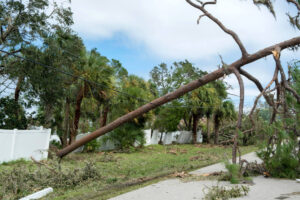
Those questions naturally lead to better recommendations. Sometimes the answer is selective pruning. Sometimes it is a combination of pruning and Tree Cable and Bracing. Sometimes the recommendation after a Dangerous Tree Assessment and Removal process is that the tree should come down. Sometimes Emergency Tree Services address the immediate hazard now, and a separate visit handles crown restoration later. That is how real tree care works. It is not one service repeated in every situation. It is a set of tools applied with judgment.
For clients in fire-prone areas, the same principle carries into FireSmart Tree Services. Even there, the goal should be specific and defensible, not indiscriminate canopy stripping. A fire-related objective still needs proper assessment and proper cuts. Otherwise the property owner trades one concern for a different kind of long-term damage.
Signs that a pruning plan is thoughtful rather than reactive
A good plan usually has a few recognizable traits. It explains the objective in plain language, ties the cuts to that objective, and acknowledges what pruning can and cannot accomplish.
- the purpose of the work is clear before climbing begins
- cuts are described in relation to structure, clearance, or risk, not vague appearance
- improper practices such as topping or stub cuts are ruled out
- alternatives such as support systems or removal are discussed when relevant
- the client understands that some level of tree risk always remains
That last point is especially important. Clients deserve honesty. Tree care should reduce avoidable problems, not promise certainty that no responsible professional can deliver.
Why certification matters more on complex trees
Many routine landscape tasks can be judged by surface appearance. Tree care often cannot. A tree can look neat after poor work, at least for a season. Certification matters because it reflects formal training in the art and science of tree care, a comprehensive examination, continuing education, and an ethical obligation to practice responsibly.
That does not mean every non-certified worker is careless or every certified professional is perfect. It does mean the client is more likely to get a decision-making process grounded in accepted arboricultural principles. On a simple job, that may just mean proper cuts and a cleaner crown line. On a difficult job, it may be the difference between preserving a valuable tree and setting up a much larger failure.
This is especially true where pruning overlaps with risk management. A limb over a target, a tree with storm damage, a tree being considered for structural support, a crown that has been previously topped, these are not jobs for guesswork. They call for assessment, prioritization, and a willingness to choose the least harmful effective option.
The long view
The most successful pruning work rarely looks dramatic the day it is finished. That can be frustrating for owners who expected a major visual transformation. But subtle, well-placed cuts often age better than aggressive ones. The tree keeps its natural character. The crown remains functional and coherent. Future maintenance is more manageable. The owner avoids the cycle of reaction, overcorrection, and repair.
That is the real measure of Tree Pruning & Crown Shaping. Not whether the canopy looks thinner from the curb this afternoon, but whether the work moved the tree and the site toward a more stable, more practical relationship. Good pruning solves a defined problem with restraint. Bad pruning solves a short-term concern by creating a long-term one.
When clients and arborists share that understanding, the results are usually better for everyone involved, the property, the budget, and most of all the tree.
Name: Ace Tree Services Ltd.
Address: 4656 Wallace Hill Road, Kelowna, BC
Phone: 250-212-9593
Website: https://acetree.ca/
Hours:
Monday: 7:00 AM–5:00 PM
Tuesday: 7:00 AM–5:00 PM
Wednesday: 7:00 AM–5:00 PM
Thursday: 7:00 AM–5:00 PM
Friday: 7:00 AM–5:00 PM
Saturday: 7:00 AM–5:00 PM
Sunday: Closed
Emergency tree services: 24/7 emergency service is listed.
Open-location code / Plus code: RHF8+8G Kelowna, British Columbia, Canada
Map/listing URL: https://www.google.com/maps/place/Ace+Tree+Services+Ltd./@49.8232606,-119.4337283,563m/data=!3m1!1e3!4m6!3m5!1s0x537d8b1d074815c5:0x450b88afa7a41435!8m2!3d49.8232606!4d-119.4337283!16s%2Fg%2F11ydkpnh22
Embed iframe:
Socials: https://www.facebook.com/people/Ace-Tree-Services/61585901931447/
https://m.yelp.com/biz/ace-tree-services-kelowna
Ace Tree Services Ltd. provides professional tree service for residential, commercial, and municipal customers in Kelowna and across the Okanagan Valley.
The company’s listed services include tree removal, stump removal and grinding, tree pruning and crown shaping, emergency tree services, certified arborist consultation, dangerous tree assessment, tree cable and bracing, and wildfire mitigation.
Ace Tree Services works with homeowners, businesses, property managers, and public-sector clients that need safe, practical tree care in the Kelowna area.
The official site highlights ISA-certified arborists, insurance, and experience handling both routine and complex tree service situations.
Customers can contact Ace Tree Services for tree care planning, hazard concerns, emergency tree cleanup, pruning needs, stump grinding, or advice about trees near homes, fences, driveways, and landscaping.
Ace Tree Services lists regular work hours from 7:00 AM to 5:00 PM Monday through Friday, with 24/7 emergency tree service available for urgent situations.
For tree service in Kelowna, call 250-212-9593 or visit https://acetree.ca/
The public map listing places Ace Tree Services Ltd. in Kelowna and can help customers find directions to the Wallace Hill Road area.
Popular Questions About Ace Tree Services Ltd.
What services does Ace Tree Services Ltd. provide?
Ace Tree Services Ltd. provides tree removal, stump removal and grinding, tree pruning and crown shaping, emergency tree services, certified arborist consultation, dangerous tree assessment and removal, tree cable and bracing, and wildfire mitigation.
Where is Ace Tree Services Ltd. located?
The official website lists Ace Tree Services Ltd. at 4656 Wallace Hill Road, Kelowna, BC.
What areas does Ace Tree Services Ltd. serve?
The official website describes Ace Tree Services as located in Kelowna and servicing the Okanagan.
What phone number should customers call?
Customers can call Ace Tree Services Ltd. at 250-212-9593.
What are Ace Tree Services Ltd.’s regular hours?
The official website lists work hours as 7:00 AM to 5:00 PM, Monday through Friday. Saturday and Sunday regular hours are not listed and should be confirmed directly.
Does Ace Tree Services Ltd. offer emergency tree service?
Yes. The official website lists 24/7 emergency services for urgent tree situations, including emergency tree removal, dangerous tree assessment, stabilization, and limb or branch cleanup.
Does Ace Tree Services Ltd. have certified arborists?
Yes. The official website states that Ace Tree Services has ISA-certified arborists.
Can Ace Tree Services Ltd. help with wildfire mitigation?
Yes. Wildfire mitigation is listed as one of the company’s tree services.
How do I contact Ace Tree Services Ltd.?
Call 250-212-9593 or visit https://acetree.ca/.
Landmarks Near Kelowna, BC
Wallace Hill Road: A local Kelowna road near the address listed for Ace Tree Services Ltd.
Okanagan Lake: A major Kelowna landmark near residential, commercial, and waterfront properties that may need tree pruning, removal, or hazard assessment.
Downtown Kelowna: A central area with homes, offices, rental properties, restaurants, and commercial sites that may need professional tree care.
Mission / Lower Mission: A well-known Kelowna area with mature landscaping, residential properties, and lake-adjacent homes.
South East Kelowna: A rural and residential area with larger properties, orchards, and tree-care needs that can include pruning, removals, and wildfire mitigation.
Crawford: A residential area near the southeast side of Kelowna where homeowners may need tree trimming, hazard assessment, and stump grinding.
Kettle Valley: A hillside residential neighborhood where tree condition, slope, wind exposure, and defensible-space planning can matter for property owners.
Myra-Bellevue Provincial Park: A major outdoor landmark near southeast Kelowna and a useful point of orientation for nearby properties.
Gallagher’s Canyon: A residential and golf community near southeast Kelowna where tree maintenance and wildfire-conscious vegetation management can be practical concerns.
Orchard Park Shopping Centre: A major central Kelowna retail landmark and reference point for customers traveling across the city.
Highway 97: A major Kelowna corridor connecting neighborhoods, commercial properties, and service routes throughout the region.
Kelowna City Park: A recognizable central landmark near downtown neighborhoods and lakefront properties.
Glenmore: A Kelowna neighborhood with residential and commercial properties that may need pruning, storm cleanup, and general tree care.
Rutland: A large residential and commercial area where customers may need tree removal, pruning, stump grinding, or arborist consultation.
Black Mountain: A hillside community where slope, wind, wildfire exposure, and access can influence tree service planning.
For tree service near these Kelowna landmarks, contact Ace Tree Services Ltd. at 250-212-9593 or visit https://acetree.ca/