Stump Removal & Grinding to Prevent Pests, Rot, and Regrowth
A tree can be gone in a morning, yet the stump can keep causing trouble for years. Homeowners often focus on the visible part of tree work, the trunk coming down, the limbs hauled away, the yard opened up again. What remains at ground level looks harmless enough at first. It is easy to treat a stump like a minor cosmetic issue, something to deal with later.
That assumption usually does not hold up well.
A neglected stump often becomes a moisture trap, a home for insects, and a source of persistent regrowth. In some yards it creates a mowing hazard. In others it sits close to foundations, walkways, fences, irrigation lines, or neighboring plants that now compete with decaying roots underground. I have seen perfectly tidy landscapes lose their clean finish because one old stump kept sending up shoots every spring, or because mushrooms and carpenter ants moved in and spread into adjacent wood structures.
Stump Removal & Grinding is not just a finishing touch after Tree Removal Services. In many cases, it is the part that prevents the next round of problems.
The trouble stumps create after the tree is gone
Fresh stumps behave differently depending on species, age, health, soil conditions, and where they sit on the property. An oak stump in well-drained soil can linger for years. A softer species in a damp side yard may begin to soften and decay much sooner. The timeline varies, but the pattern is familiar. Once the living canopy is gone, the stump and upper roots start to break down, and that process changes the surrounding environment.
Pests are often the first issue people notice. Beetles, ants, termites in some regions, wood borers, and fungal organisms all respond to decaying wood. Not every insect in a stump is a direct threat to a house or outbuilding, but the stump becomes a staging ground. Carpenter ants are a good example. They do not eat wood the way termites do, yet they tunnel into softened material and expand where moisture and decay already exist. If the stump sits near a deck, wood fence, shed base, or older trim, it can encourage activity exactly where you do not want it.
Rot is the second problem, and it extends beyond what you can see above grade. A stump rarely decays as a neat cylinder. The root flare and structural roots can hold moisture, soften the soil, and leave voids as they decompose. In lawn areas that can translate into uneven ground and sinking spots over time. Around patios, edging, or paver paths, old root systems can contribute to settlement. The issue is not always dramatic, but it is common enough that professionals factor it into site planning.
Regrowth is the third problem, and it can be surprisingly stubborn. Many species readily sprout from the stump or roots after the trunk has been cut. Bradford pear, tree of heaven, elm, poplar, willow, sweetgum, and some maples can be persistent. Homeowners will mow down the shoots for months, then wonder why they keep coming back thicker. That happens because the root system still contains stored energy. If the stump remains alive, it treats those shoots as a survival response.
This is where timing matters. The best moment to address a stump is usually soon after tree removal, when access is clear, equipment is already on site, and the area has not yet been replanted or hardscaped.
Grinding versus full stump removal
People often use these terms interchangeably, but they are not identical. A grinder shaves the stump below grade into chips and small woody debris. Full stump removal is more invasive. It involves pulling or excavating the stump and often a portion of the major root system from the ground.
In residential work, grinding is the more common choice. It is faster, less disruptive to surrounding soil, and usually sufficient for preventing surface pests, visible decay, and most regrowth issues. A well-executed grind takes the stump below finished grade enough that the area can be backfilled and restored. In many lawns, that means the spot disappears into the landscape within a season.
Full removal has its place. If a stump sits where a new foundation, retaining wall, driveway extension, pool, or major landscape feature will go, the remaining root mass can interfere with excavation and compaction. In those situations, a contractor may recommend extracting FireSmart tree trimming the stump entirely. The trade-off is more disturbance, more soil displacement, and often a higher repair burden afterward.
The decision is not purely about price. It is about what is being built next, how much root mass matters, and how sensitive the site is. A seasoned crew will look at grade, access width, nearby utilities, irrigation, mature planting beds, and the species involved before recommending one method over the other.
Why grinding often solves the pest problem
A fresh-cut stump is food and shelter. Once it is ground down below the surface, that concentrated block of wood is largely removed from the equation. There are still roots underground, of course, but the large exposed core where moisture lingers and insects gather is gone.
That matters most in three conditions. First, when the stump is close to structures with wood components. Second, when the property has a history of moisture problems. Third, when the removed tree was already diseased, decayed, or insect infested. In those cases, leaving a stump behind invites the problem to continue on-site.
One yard I walked a few years ago had two pine stumps near a wooden fence line. The homeowner delayed grinding because the stumps were “out of the way.” By late summer, the fence posts nearest those stumps had obvious deterioration at the base, and carpenter ant activity was visible under the cap boards. The stumps were not the sole cause, but they created ideal conditions. Once the stumps were ground out and the drainage corrected, the recurring ant issue diminished noticeably.
That kind of result is typical. Pest management around trees is rarely one single fix. It is about reducing habitat, moisture, and access points together.
Rot below the surface is not harmless just because it is hidden
A lot of homeowners are comfortable with a stump as long as it does not look bad. The problem is that underground decay changes the ground itself. As roots soften and collapse, small voids can form. In a lawn this may show up as a depression you notice when mowing after a wet season. In tighter landscapes, especially near walks and edging, the settling can become more than cosmetic.
Rot also changes how water moves through the area. Woody debris underground can hold moisture in pockets, while surrounding soil alternates between saturation and drying. That is not ideal if you plan to replant with shrubs, sod, or ornamental beds. Some species tolerate that instability; many do not.
There is also the matter of disease carryover. Not every tree disease survives in stump wood or roots in a way that threatens replacement plants, but some root pathogens can persist in soil or residual wood. That is one reason a Certified Arborist Consultation is valuable when a tree came down because of decline rather than storm damage. If the original tree had a root disease, canker issue, or significant decay fungus, the right next step may differ from a routine stump grind and replant.
An arborist can help answer the practical questions homeowners usually care about most: Is this just cleanup, or is there a site health issue? Can we plant another tree nearby, and if so, how close? Should we change species to avoid repeating the same problem?
The regrowth problem is more than a nuisance
A stump that keeps sprouting is not just annoying. It is a sign the root system is still active enough to push energy upward. Left alone, those shoots can create a shrub-like cluster that is far harder to manage cleanly. They may also emerge several feet from the stump along lateral roots, which catches people off guard. You remove the tree in one corner of the yard, then new shoots appear near the sidewalk or flower bed.
Grinding substantially reduces this problem because it removes the stump tissue that supports the most vigorous sprouting. Some species are still aggressive, and follow-up treatment may be warranted in certain cases. That is especially true with invasive or fast-colonizing trees. Here, judgment matters. Heavy-handed chemical use is not automatically the right answer. Site use, nearby plantings, and species behavior all matter.
If a tree has a known tendency to sucker aggressively, tell the crew before work begins. It helps to know whether they are grinding a mature maple that was storm-damaged or a tree of heaven that has been trying to spread across a fence line for years. The cleanup strategy can change.
When a stump should come out fast
There are situations where delay makes little sense. Some are safety related, some structural, some simply practical.
- The stump is close to a house, deck, fence, or detached building with wood elements.
- The removed tree had visible decay, insect activity, or a fungal fruiting body at the base.
- The area is being replanted, regraded, or converted to hardscape soon.
- The stump sits in a high-traffic lawn where mowing and foot traffic are constant.
- The species is known for vigorous stump sprouting or root suckering.
If any of those apply, prompt Stump Removal & Grinding usually saves trouble later.
How professionals approach the work
From the outside, stump grinding can look simple. A machine rolls in, the cutter wheel chews the wood down, and the chips are raked back. The reality is more technical. The best crews do a lot of decision-making before the grinder ever touches the stump.
Depth is one example. A shallow grind may be enough in a naturalized area where no one will mow. In a lawn, the grind generally needs to go lower so the site can be backfilled and leveled properly. If a client wants to replant in the exact footprint, deeper grinding or more thorough debris removal may be recommended. Near utilities, the operator has to control depth and lateral spread carefully.
Access is another factor. Narrow gates, slopes, wet soil, retaining walls, and ornamental stone can all limit machine size. That is where experience shows. A large machine is efficient, but not if it tears up irrigation and leaves rutting in a finished yard. Sometimes a smaller grinder is slower but produces a better overall result because it protects the site.
Root flare width matters too. Some stumps look small until you expose the buttress roots. If the tree had a broad flare, the grinding footprint can be much wider than the trunk diameter suggested. That is why reliable bids are often based on actual stump size at the ground, not just the diameter of the cut surface.
What homeowners often overlook before the crew arrives
The stump itself is only part of the job. Grade restoration, debris handling, and future use of the space deserve just as much attention. Grindings are bulky, and although they can be useful as mulch in some areas, they are not ideal as direct topsoil replacement if you want turf to establish quickly. Fresh wood chips tie up nitrogen as they decompose, and the area can settle if it is not backfilled properly.
A good plan accounts for what comes next. If you want lawn, the site usually needs excess chips removed or mixed with soil carefully, then topped with quality fill and seeded or sodded. If you want a planting bed, the strategy changes. If you intend to place a patio or path there later, that should be discussed before grinding depth is set.
This is also where Tree Removal Services and broader landscape planning intersect. The same crew or company may be handling removals, cleanup, and follow-up Tree Pruning & Crown Shaping on nearby trees to rebalance the canopy after one tree is lost. That matters more than people realize. Removing one mature tree changes light exposure, wind load, and visual balance in the yard. The stump is one piece of a larger shift on the property.
Emergency removals leave behind some of the worst stumps
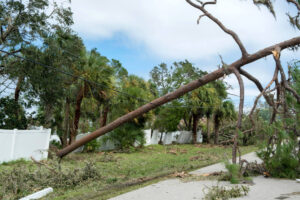
After storms, people understandably focus on immediate hazards. If a tree has split onto a driveway, broken over a roofline, or partially uprooted toward a power service, the priority is safe removal. Emergency Tree Services are built around speed, risk control, and access under pressure. In that context, stump work is often deferred, and that is reasonable.
But those emergency stumps are often the ones you should revisit sooner rather than later.
Storm-failed trees may have hidden decay, root plate instability, or extensive bark damage at the base. If the stump remains, it can continue to harbor moisture and pests, and it may also tell an important story about why the tree failed. In some cases, a Dangerous Tree Assessment and Removal process identifies neighboring trees with similar defects. A cracked codominant stem, root loss on one side, or fungal decay at the base of one tree often means another tree nearby deserves inspection too.
I have seen properties where a storm took one large limb, and the owner assumed it was bad luck. A closer look at the stump and nearby trees showed girdling roots, decay pockets, and poor branch structure across the group. The immediate cleanup solved the emergency. The follow-up arborist visit prevented the next one.
Stump work and the health of nearby trees
Tree roots share space. They compete for oxygen, water, and nutrients, and in some cases they graft or interact below ground in ways homeowners never see. That means stump decisions can affect nearby trees, especially in tight urban lots.
If the removed tree was intertwined with a valuable specimen next to it, aggressive excavation may cause unnecessary root injury. Grinding is often the better choice because it limits disturbance. On the other hand, if two stems were structurally dependent or one failure exposed instability in the other, the remaining tree may need support or corrective care.
That is where Tree Cable and Bracing sometimes enters the conversation. After a neighboring tree is removed, the wind profile across the site changes. A tree that was previously buffered may now take more direct exposure. If it has weak unions, long lateral limbs, or included bark, support systems may help manage risk while structural pruning develops a better canopy over time. Not every tree needs that, and support hardware is not a cure-all, but it is a useful tool when applied thoughtfully.
Likewise, Tree Pruning & Crown Shaping after removal can reduce end weight, improve branch spacing, and help adjacent trees adapt to changed conditions. Good pruning is not cosmetic clipping. It Tree Pruning & Crown Shaping is structural decision-making that takes years of growth patterns into account.
Fire risk and the overlooked role of old stumps
In fire-prone regions, people tend to think about ladder fuels, brush density, and overhanging branches first, and rightly so. Wildfire Mitigation Tree Services often focus on canopy spacing, removal of dead material, and reducing fuel continuity from ground to crown. Yet old stumps and woody debris matter too, especially when they sit among dry grasses, bark accumulations, or unmanaged plantings.
A decayed stump can collect fine fuels and sustain smoldering heat. It can also complicate defensible space maintenance by obstructing clean mowing and debris removal. On rural or semi-rural properties, grinding old stumps in strategic areas can make the ground layer easier to manage and reduce one more place where embers and dry material gather.
This is not the most urgent piece of wildfire mitigation, but on certain properties it is a sensible one, particularly along drive approaches, around outbuildings, and in transition zones near landscaped spaces.
Choosing the right provider matters more than the machine
Homeowners often shop stump work by price alone. That is understandable, especially after paying for tree removal. But the lowest quote sometimes reflects shortcuts in depth, cleanup, property protection, or insurance coverage.
A reliable provider should be clear about access requirements, likely grinding depth, whether surface roots are included, what happens to the chips, and how the area will be left. If utilities are a concern, they should say so. If the stump sits near a wall, irrigation main, gas line route, or septic component, that should be part of the conversation before work starts, not after the cutter wheel finds a problem.
These are the questions worth asking before approving the job:
- How deep will the stump be ground for the way I plan to use the area?
- Are major exposed roots included, and if not, which ones remain?
- Will grindings be removed, left in place, or partially backfilled?
- What access width and site protection do you need for the equipment?
- Does this stump or site condition warrant a Certified Arborist Consultation first?
Those answers tell you a lot about whether you are dealing with someone who sees the job as simple wood reduction or as part of responsible tree care.
A stump is small, but the consequences are not
By the time a tree is down, most people want the project behind them. That is fair. Tree work is noisy, disruptive, and rarely cheap. But stopping at the stump often leaves the job only half finished. What remains can attract pests, host rot, destabilize the surface over time, and push out a surprising amount of regrowth. In the wrong location, it can also interfere with future planting, construction, or fire-wise property maintenance.
Done properly, Stump Removal & Grinding closes the loop. It removes habitat for insects, reduces ongoing decay at the surface, limits the energy available for resprouting, and restores the site for whatever comes next. Sometimes that is lawn. Sometimes it is a planting bed. Sometimes it is simply peace of mind that one more hidden problem is no longer waiting underground.
The best tree care decisions usually look ordinary after the fact. No dramatic before-and-after, no flashy hardware, no obvious visible feature. Just a clean site, stable ground, healthier nearby trees, and fewer avoidable problems. That is exactly what good stump work is supposed to deliver.
Name: Ace Tree Services Ltd.
Address: 4656 Wallace Hill Rd, Kelowna, BC V1W 4C2, Canada
Phone: 250-212-9593
Website: https://acetree.ca/
Email: [email protected]
Hours:
Sunday: Closed
Monday: 7:00 AM–5:00 PM
Tuesday: 7:00 AM–5:00 PM
Wednesday: 7:00 AM–5:00 PM
Thursday: 7:00 AM–5:00 PM
Friday: 7:00 AM–5:00 PM
Saturday: 7:00 AM–5:00 PM
Time zone: Pacific Time
Open-location code / Plus code: RHF8+8G Kelowna, British Columbia, Canada
Map/listing URL: https://www.google.com/maps/search/?api=1&query=Google&query_place_id=ChIJxRVIBx2LfVMRNRSkp6-IC0U
Embed iframe:
Socials:
https://www.facebook.com/p/Ace-Tree-Services-61585901931447/
Ace Tree Services Ltd. provides professional tree care from its Kelowna location on Wallace Hill Road.
The official website lists tree removal, stump removal and grinding, tree pruning and crown shaping, emergency tree services, certified arborist consultation, dangerous tree assessment and removal, tree cabling and bracing, and wildfire mitigation.
Ace Tree Services serves homeowners, businesses, and property owners in Kelowna and throughout the Okanagan Valley.
The company’s official site highlights ISA Certified Arborist support, local Okanagan experience, and fully insured tree service work.
Customers can contact Ace Tree Services for planned tree maintenance, high-risk removals, storm-related tree concerns, pruning, stump grinding, and arborist consultation needs.
The supplied public listing address is 4656 Wallace Hill Rd, Kelowna, BC V1W 4C2, near rural and residential service areas in southeast Kelowna.
For tree services in Kelowna and the Okanagan, call 250-212-9593, email [email protected], or visit https://acetree.ca/
The public map listing uses plus code RHF8+8G Kelowna, British Columbia, Canada and can help customers find Ace Tree Services Ltd. near Wallace Hill Road.
Popular Questions About Ace Tree Services Ltd.
What does Ace Tree Services Ltd. do?
Ace Tree Services Ltd. provides tree removal, stump removal and grinding, tree pruning and crown shaping, emergency tree service, certified arborist consultation, dangerous tree assessment and removal, tree cabling and bracing, and wildfire mitigation.
Where is Ace Tree Services Ltd. located?
Ace Tree Services Ltd. is listed at 4656 Wallace Hill Rd, Kelowna, BC V1W 4C2, Canada.
What phone number should customers call?
Customers can call Ace Tree Services Ltd. at 250-212-9593.
What is the email address for Ace Tree Services Ltd.?
The supplied email address is [email protected].
What are Ace Tree Services Ltd.’s hours?
The supplied listing hours show Monday through Saturday from 7:00 AM to 5:00 PM, with Sunday closed, Pacific Time. The official website lists 7:00 AM to 5:00 PM, Monday through Friday, so customers should confirm Saturday availability before booking.
Does Ace Tree Services Ltd. provide emergency tree service?
Yes. The official website lists emergency tree services, including emergency tree removal, dangerous tree assessment, emergency stabilization, and limb or branch cleanup.
Does Ace Tree Services Ltd. offer arborist consultations?
Yes. The official services page lists certified arborist consultation as one of the company’s Okanagan tree services.
Does Ace Tree Services Ltd. provide stump grinding?
Yes. The official services page lists stump removal and grinding as a service.
What areas does Ace Tree Services Ltd. serve?
The official website states that Ace Tree Services serves Kelowna and the Okanagan Valley.
How do I contact Ace Tree Services Ltd.?
Call 250-212-9593, email [email protected], visit https://acetree.ca/, or use the listed social profile: Facebook.
Landmarks Near Kelowna, BC
Wallace Hill Road: The road listed for Ace Tree Services Ltd. and a practical reference point for the company’s Kelowna location.
East Kelowna: A nearby rural and residential area where tree maintenance, pruning, removals, and wildfire mitigation can be important for property owners.
Myra-Bellevue Provincial Park: A major outdoor landmark southeast of Kelowna and a useful reference for the surrounding hillside and forested areas.
Gallagher’s Canyon: A nearby Kelowna community with residential properties, mature trees, and landscape maintenance needs.
Kettle Valley: A southeast Kelowna neighborhood with homes, parks, and landscaped properties.
Mission Creek Greenway: A well-known natural corridor in Kelowna and a local reference point for tree-lined recreation areas.
Orchard Park Shopping Centre: A major Kelowna retail landmark and citywide reference point.
Downtown Kelowna: A central business and residential district within Ace Tree Services’ broader Kelowna service area.
Okanagan Lake: A major regional landmark running through Kelowna and the surrounding Okanagan Valley.
Mission Creek Regional Park: A recognizable Kelowna park and natural landmark with extensive trees and trails.
Rutland: A large Kelowna community with residential and commercial properties that may need tree service support.
Glenmore: A Kelowna neighborhood with homes, parks, and established trees.
Lower Mission: A residential and lake-adjacent Kelowna area where pruning, tree health, and property safety can matter for homeowners.
Kelowna International Airport: A major transportation landmark north of central Kelowna.
West Kelowna: A nearby Okanagan community across the lake and a practical regional service reference.
For tree removal, stump grinding, pruning, crown shaping, emergency tree service, arborist consultation, dangerous tree assessment, cabling and bracing, or wildfire mitigation near these Kelowna and Okanagan landmarks, contact Ace Tree Services Ltd. at 250-212-9593, email [email protected], or visit https://acetree.ca/