How Tree Removal Services Help Prepare a Site for New Construction
A construction site rarely starts as a blank canvas. More often, it begins as a living landscape with mature trees, volunteer growth, exposed roots, old stumps, leaning trunks, and low limbs stretching over the future footprint of a home, shop, driveway, utility trench, or retaining wall. Before excavation crews arrive and before concrete forms go in, someone has to make that ground workable, safe, and compliant. That is where professional Tree Removal Services become far more important than many property owners expect.
People sometimes picture tree removal as a simple matter of cutting down what is in the way. On active development sites, that view causes expensive mistakes. Removing the wrong tree can trigger permit problems. Keeping the wrong tree can interfere with grading, crack future pavement, block utility access, or create a fall hazard once equipment starts moving through the site. I have seen projects lose days because a builder assumed a stump could be handled later, only to discover that underground roots sat exactly where the foundation excavation needed to begin. I have also seen a well-planned tree crew save a schedule by clearing access lanes, protecting retained trees, and coordinating removals with survey and utility marking in a single sequence.
When done properly, site preparation through tree work is less about chainsaws and more about planning, timing, and risk control.
The site has to work before the building can happen
Every new construction project depends on access and usable space. Surveyors need clear lines. Engineers need accurate grading information. Excavators need room to swing and stage spoils. Concrete crews need stable, obstruction-free areas for forms and pumps. If the lot is crowded with trunks, root plates, overgrown canopies, or hidden stumps, the job slows down before it truly starts.
This is one reason experienced contractors often bring in a tree crew early, sometimes even before final mobilization. They want to know which trees can stay, which have to go, and which require protection measures. On a tight residential lot, one large oak leaning over the planned roofline may force a redesign of crane placement or material delivery. On a rural parcel, dense volunteer growth can conceal slope breaks, drainage paths, and old fence lines that matter to both design and permitting.
The goal is not simply to remove vegetation. The goal is to convert a wooded or partially wooded lot into a buildable site without creating new liabilities.
Early assessment prevents expensive surprises
The smartest tree work usually starts with a walk-through, not a saw cut. A Certified Arborist Consultation gives the project team a grounded view of what is actually on the property. Arborists identify species, measure size, evaluate health, note structural defects, and flag trees that may be legally protected or worth preserving. That information matters because construction decisions often ripple outward.
A healthy mature tree at the back of a lot may be worth retaining for shade, screening, or property value. A declining tree near the planned driveway may look manageable at first glance, but if it has internal decay or a compromised root flare, heavy equipment vibration can push it from marginal to dangerous. This is where Dangerous Tree Assessment and Removal earns its place in pre-construction planning. A tree that might stand for another five years in an undisturbed yard can become an immediate hazard once soil is cut away, compaction changes drainage, or nearby roots are severed.
On many sites, the most useful outcome of an arborist review is not a removal list. It is a retention plan. Builders need to know where no-go zones should be established around trees that are staying. They need to know whether fencing, root protection mats, or adjusted trench routing can save a specimen tree without compromising the structure. Those choices are easiest before equipment arrives.
Clearing the footprint, the access routes, and the work zones
Most owners focus on the future building footprint, but construction spreads beyond the foundation lines. Crews need haul paths, utility corridors, temporary staging, drainage swales, and sometimes room for cranes or concrete trucks. Tree Removal Services help prepare all of those secondary work areas.
A good removal contractor studies site logistics with the builder. They identify where trailers will sit, where spoil piles may go, how deliveries will enter and exit, and what overhead clearance is required. That last point gets overlooked constantly. A lot can https://donovanruio145.bearsfanteamshop.com/crane-assisted-tree-removal-services-for-large-trees appear open enough at ground level while low branches still block dump trucks, skid steers, or boom lifts. In those cases, Tree Pruning & Crown Shaping may be enough in selected areas. Strategic pruning can create equipment clearance, preserve desirable trees, and improve visibility without turning the entire lot into a barren opening.
On other sites, pruning is not enough. If root systems occupy the same space as footings, retaining walls, or underground plumbing runs, the tree itself becomes a conflict. Roots do not have to be directly under a foundation to create problems. Lateral roots may affect compaction, trap moisture, and continue decaying after the trunk is gone, leaving voids that matter under slabs or paved surfaces.
This is why experienced builders often prefer to address tree conflicts all at once rather than piecemeal. One coordinated clearing phase gives survey, grading, and excavation teams a stable starting point.
Stumps are not minor leftovers
If there is one issue that repeatedly disrupts early construction, it is the assumption that stumps can be dealt with later. They can, but later is when the delay gets expensive.
Stump Removal & Grinding matters because stumps interfere with grading accuracy, subgrade preparation, trenching, and hardscape placement. A shallow grind may work for lawn restoration, but new construction often requires more. If a stump sits within the foundation area or beneath planned pavement, crews may need full removal of the stump mass and major structural roots, followed by backfill and compaction. If the area is outside structural zones, grinding below grade may be adequate. The distinction matters.
I once walked a site where a detached garage slab kept being pushed back because two old stump locations had been ground just enough to disappear visually, but not enough to remove the root mass within the slab area. The excavator hit fibrous material during final prep, the inspector questioned the subgrade, and the crew had to reopen, excavate deeper, and import fill. What looked like a half-day shortcut became a week of lost momentum.
Stump strategy should match the planned use of the soil above it. Landscaped bed, lawn, structural fill area, driveway edge, footing line, and utility trench all demand different levels of removal.
Safety changes the moment construction begins
A tree that is acceptable in a quiet backyard can become a serious hazard once a site turns active. Heavy equipment, vibration, trenching, fill placement, and soil cuts all affect tree stability. Dead limbs that would have fallen harmlessly into grass can now strike workers, fencing, vehicles, or temporary power. A slight lean becomes more concerning when a crane will be working below it.
That is why Dangerous Tree Assessment and Removal is such a central part of construction readiness. Crews evaluate not just whether a tree is alive, but whether it can tolerate the coming changes around it. Compaction over root zones, Tree Pruning & Crown Shaping grade reductions near trunks, and excavation on one side of a root plate can all reduce stability. Some removals are driven by design conflicts, but many are driven by the simple reality that a construction environment is less forgiving.
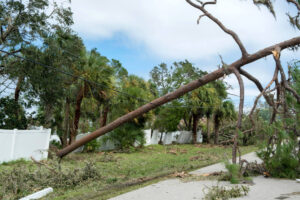
Emergency Tree Services also come into play more often than owners expect. A site may be partially cleared when a storm snaps a limb over the access road or uproots a weakened tree near temporary fencing. Waiting several days for standard scheduling can hold up deliveries, inspections, or concrete work. Responsive emergency service helps restore safe access quickly so the job can continue.
Not every tree needs to come down
There is a persistent misconception that preparing a site for new construction means wholesale clearing. On some parcels, especially those with wildfire exposure, dense overcrowding, or invasive growth, broad clearing may be justified. But many successful projects keep key trees and use selective management instead.
Tree Pruning & Crown Shaping is often part of that approach. Thoughtful pruning can lift canopies over driveways, improve separation from future structures, remove defective limbs, and reduce wind loading. On lots where a mature tree will frame the front elevation or shade a patio, careful crown work may preserve both aesthetics and function.
Tree Cable and Bracing can also be relevant when a valuable tree has a structural weakness but still offers strong reasons for retention. Builders sometimes assume any split leader or heavy lateral means automatic removal. In practice, some trees can be stabilized long enough to remain safe through construction and beyond, provided the defect is evaluated properly and the surrounding work is managed carefully. This is not a universal solution, and it should never be used to justify keeping a truly unstable tree in a high-risk location, but there are cases where support systems preserve a significant landscape asset without compromising the project.
The key is judgment. Preservation only works when the retained tree has a realistic chance of staying healthy and safe after construction is complete.
Utility work and root conflicts deserve special attention
Underground utilities create some of the most frustrating interactions between trees and new construction. Sewer lines, water service, electrical conduits, gas runs, and storm drainage often occupy the same corridors where roots have spread for decades. By the time trenches are marked, the lot may look straightforward on paper and much less straightforward in the field.
Professional tree crews help by removing trunks and surface obstacles before trenching, but the real value comes from understanding root impacts. Some roots can be pruned cleanly outside a critical structural area. Others indicate that the entire tree will become unstable if trenching proceeds as designed. That is where early arborist input saves trouble. A Certified Arborist Consultation can help the builder decide whether to shift the line, protect the tree, or remove it now rather than deal with failure later.
This also affects timing. If utility contractors show up before root conflicts are resolved, they are often forced to improvise in the field. Improvisation on a tight construction schedule usually means either damaged trees or compromised installation conditions, sometimes both.
Grading, drainage, and fire defensible space
Trees shape water movement more than people realize. Root systems hold soil, leaf litter retains moisture, and canopies change how rainfall hits the ground. When preparing a site for new construction, removal decisions should reflect the grading and drainage plan, not just the building footprint.
On steep or erosion-prone sites, taking out too much vegetation too quickly can expose bare soils at exactly the wrong moment. Sediment control measures then have to work harder, and washouts become more likely after heavy rain. In those conditions, a phased approach often makes sense. Remove the trees that block access and structural work first, retain stabilizing cover where possible, and coordinate final clearing with grading and erosion controls.
In fire-prone regions, Wildfire Mitigation Tree Services add another layer of planning. A new house tucked into a wooded lot cannot rely on appearance alone. Defensible space, crown spacing, ladder fuel reduction, and removal of dead or resinous material all affect long-term safety. During site prep, that may mean thinning stands rather than clear-cutting them, limbing up selected trees, and removing hazardous specimens close to the future structure. A well-designed wildfire mitigation plan supports both code compliance and insurability, while still preserving the character of the property.
Permits, boundaries, and neighbor relations
Tree work before construction intersects with local rules more often than owners expect. Municipalities may regulate removal by diameter, species, setback, or heritage status. Homeowners associations may add another layer. Wetland buffers, stream corridors, and easements can limit what can be cut and when.
This is another reason not to treat site clearing as a one-day side task. Tree Removal Services on construction sites should be aligned with surveys and permits. Removing a tree just over a property line or inside a protected zone can create disputes that outlast the build itself. The financial cost is one issue. The schedule impact is often worse.
Neighbor communication also matters on infill lots. Cranes, rigging, debris handling, noise, and temporary access may affect adjacent properties. A professional crew usually plans drop zones, equipment placement, and traffic control with much more care than an ad hoc operator. That professionalism tends to reduce claims for fence damage, lawn rutting, or debris scatter, all of which can sour a project before framing begins.
What a well-run pre-construction tree scope usually includes
The exact sequence depends on the site, but most effective projects include the same core elements:
- A site review that identifies removals, trees to preserve, access routes, and likely root or canopy conflicts.
- Coordination with surveys, utility marking, permits, and the grading or foundation plan.
- Removal of hazardous or conflicting trees, followed by the right level of stump work for the planned use of each area.
- Selective pruning, crown shaping, or support systems for retained trees that need clearance or stabilization.
- Final cleanup and verification that the site is ready for excavation, utility installation, and material access.
That sequence sounds simple on paper. In practice, each step affects the next trade. When it is done cleanly, the entire project feels easier.
Choosing the right contractor for construction-related tree work
Not every tree company is suited for pre-construction site preparation. Residential backyard removals and construction clearing overlap, but they are not identical. The best contractors understand grade stakes, utility markings, trucking needs, and scheduling pressure. They know the difference between grinding for appearance and removing for subgrade integrity. They understand when a retained tree needs protection fencing before other trades arrive.
If you are hiring for a project like this, pay attention to a few practical indicators:
- They ask for the site plan, not just the address.
- They discuss access, haul paths, and equipment staging before giving a final scope.
- They can explain when Stump Removal & Grinding is sufficient and when full removal is necessary.
- They are comfortable coordinating with arborists, builders, surveyors, and excavation crews.
- They address contingencies such as storm damage, schedule shifts, and Emergency Tree Services.
Those conversations tell you a lot. The right contractor talks in terms of sequence, safety, and soil conditions, not just how many trees can be dropped in a day.
The hidden value is schedule protection
Owners usually notice tree work as a line item, but builders notice it as schedule insurance. When access is open, hazards are addressed, stumps are handled properly, and retained trees are clearly protected, every downstream trade works with less friction. Survey crews move faster. Utility installers do not stop to argue over roots. Excavators do not uncover buried surprises where footings should go. Inspectors see a site that has been prepared deliberately rather than hacked into readiness.
That matters because construction delays are rarely caused by one dramatic failure. More often, they come from a stack of small preventable problems. A low limb that blocks a truck. A stump left in a driveway cut. A compromised tree that becomes unsafe after rain. A root mass discovered under planned flatwork. Each issue burns time, and time on a construction project is expensive.
Tree Removal Services, when handled professionally, remove those obstacles before they start multiplying. They create room for the project to proceed in the right order, under safer conditions, with fewer costly course corrections.
For new construction, that is the real job. Not simply taking trees down, but preparing the land so the build can begin with confidence.
Name: Ace Tree Services Ltd.
Address: 4656 Wallace Hill Rd, Kelowna, BC V1W 4C2, Canada
Phone: 250-212-9593
Website: https://acetree.ca/
Email: [email protected]
Hours:
Sunday: Closed
Monday: 7:00 AM–5:00 PM
Tuesday: 7:00 AM–5:00 PM
Wednesday: 7:00 AM–5:00 PM
Thursday: 7:00 AM–5:00 PM
Friday: 7:00 AM–5:00 PM
Saturday: 7:00 AM–5:00 PM
Time zone: Pacific Time
Open-location code / Plus code: RHF8+8G Kelowna, British Columbia, Canada
Map/listing URL: https://www.google.com/maps/search/?api=1&query=Google&query_place_id=ChIJxRVIBx2LfVMRNRSkp6-IC0U
Embed iframe:
Socials:
https://www.facebook.com/p/Ace-Tree-Services-61585901931447/
Ace Tree Services Ltd. provides professional tree care from its Kelowna location on Wallace Hill Road.
The official website lists tree removal, stump removal and grinding, tree pruning and crown shaping, emergency tree services, certified arborist consultation, dangerous tree assessment and removal, tree cabling and bracing, and wildfire mitigation.
Ace Tree Services serves homeowners, businesses, and property owners in Kelowna and throughout the Okanagan Valley.
The company’s official site highlights ISA Certified Arborist support, local Okanagan experience, and fully insured tree service work.
Customers can contact Ace Tree Services for planned tree maintenance, high-risk removals, storm-related tree concerns, pruning, stump grinding, and arborist consultation needs.
The supplied public listing address is 4656 Wallace Hill Rd, Kelowna, BC V1W 4C2, near rural and residential service areas in southeast Kelowna.
For tree services in Kelowna and the Okanagan, call 250-212-9593, email [email protected], or visit https://acetree.ca/
The public map listing uses plus code RHF8+8G Kelowna, British Columbia, Canada and can help customers find Ace Tree Services Ltd. near Wallace Hill Road.
Popular Questions About Ace Tree Services Ltd.
What does Ace Tree Services Ltd. do?
Ace Tree Services Ltd. provides tree removal, stump removal and grinding, tree pruning and crown shaping, emergency tree service, certified arborist consultation, dangerous tree assessment and removal, tree cabling and bracing, and wildfire mitigation.
Where is Ace Tree Services Ltd. located?
Ace Tree Services Ltd. is listed at 4656 Wallace Hill Rd, Kelowna, BC V1W 4C2, Canada.
What phone number should customers call?
Customers can call Ace Tree Services Ltd. at 250-212-9593.
What is the email address for Ace Tree Services Ltd.?
The supplied email address is [email protected].
What are Ace Tree Services Ltd.’s hours?
The supplied listing hours show Monday through Saturday from 7:00 AM to 5:00 PM, with Sunday closed, Pacific Time. The official website lists 7:00 AM to 5:00 PM, Monday through Friday, so customers should confirm Saturday availability before booking.
Does Ace Tree Services Ltd. provide emergency tree service?
Yes. The official website lists emergency tree services, including emergency tree removal, dangerous tree assessment, emergency stabilization, and limb or branch cleanup.
Does Ace Tree Services Ltd. offer arborist consultations?
Yes. The official services page lists certified arborist consultation as one of the company’s Okanagan tree services.
Does Ace Tree Services Ltd. provide stump grinding?
Yes. The official services page lists stump removal and grinding as a service.
What areas does Ace Tree Services Ltd. serve?
The official website states that Ace Tree Services serves Kelowna and the Okanagan Valley.
How do I contact Ace Tree Services Ltd.?
Call 250-212-9593, email [email protected], visit https://acetree.ca/, or use the listed social profile: Facebook.
Landmarks Near Kelowna, BC
Wallace Hill Road: The road listed for Ace Tree Services Ltd. and a practical reference point for the company’s Kelowna location.
East Kelowna: A nearby rural and residential area where tree maintenance, pruning, removals, and wildfire mitigation can be important for property owners.
Myra-Bellevue Provincial Park: A major outdoor landmark southeast of Kelowna and a useful reference for the surrounding hillside and forested areas.
Gallagher’s Canyon: A nearby Kelowna community with residential properties, mature trees, and landscape maintenance needs.
Kettle Valley: A southeast Kelowna neighborhood with homes, parks, and landscaped properties.
Mission Creek Greenway: A well-known natural corridor in Kelowna and a local reference point for tree-lined recreation areas.
Orchard Park Shopping Centre: A major Kelowna retail landmark and citywide reference point.
Downtown Kelowna: A central business and residential district within Ace Tree Services’ broader Kelowna service area.
Okanagan Lake: A major regional landmark running through Kelowna and the surrounding Okanagan Valley.
Mission Creek Regional Park: A recognizable Kelowna park and natural landmark with extensive trees and trails.
Rutland: A large Kelowna community with residential and commercial properties that may need tree service support.
Glenmore: A Kelowna neighborhood with homes, parks, and established trees.
Lower Mission: A residential and lake-adjacent Kelowna area where pruning, tree health, and property safety can matter for homeowners.
Kelowna International Airport: A major transportation landmark north of central Kelowna.
West Kelowna: A nearby Okanagan community across the lake and a practical regional service reference.
For tree removal, stump grinding, pruning, crown shaping, emergency tree service, arborist consultation, dangerous tree assessment, cabling and bracing, or wildfire mitigation near these Kelowna and Okanagan landmarks, contact Ace Tree Services Ltd. at 250-212-9593, email [email protected], or visit https://acetree.ca/