Dangerous Tree Assessment and Removal: Understanding Tree Risk
Trees add shade, structure, privacy, and long-term value to a property, but they also live with gravity, weather, age, and damage. At some point, every property owner faces the same uneasy question: is this tree still safe to keep?
That question rarely has a simple yes or no answer. Tree risk sits in the middle of biology, site conditions, and human use. A tree can look impressive and still carry hidden weakness. Another can look rough around the edges and remain serviceable for years with proper care. The real work in Dangerous Tree Assessment and Removal is not guessing. It is evaluating risk in a systematic way, then choosing the least disruptive option that brings risk down to a level the owner can live with.
That distinction matters. Removal is sometimes necessary, but it is not the only tool. A well-judged plan may involve Tree Pruning & Crown Shaping, Tree Cable and Bracing, a change in how a space is used, or close monitoring over time. In other cases, delay only increases danger, and prompt action is the responsible choice.
Tree risk is real, but absolute safety does not exist
One of the most important ideas in arboriculture is also the one many owners least expect to hear: there is no completely safe tree. Trees are large living structures. They grow, shed, respond to stress, and interact with wind, soil, and surrounding targets such as homes, driveways, sidewalks, vehicles, and play areas. Some level of risk is always present.
That does not mean concern is pointless. It means the goal is not perfection. The goal is informed risk reduction. A sound assessment identifies what could fail, who or what could be hit, and whether practical steps can reduce the likelihood or consequences of failure. The right response may be modest. It may also be urgent.
This is where a Certified Arborist Consultation becomes valuable. ISA Certified Arborists are trained in the art and science of tree care, pass a comprehensive exam, maintain continuing education, and work under a code of ethics. In practical terms, that training supports better judgment. It helps separate cosmetic defects from structural concerns and prevents unnecessary removals driven by fear alone.
What a dangerous tree assessment actually involves
A proper tree risk assessment is a systematic process used to identify, analyze, and evaluate risk and to recommend measures that achieve an acceptable level of risk. That phrase sounds technical, but on site it comes down to disciplined observation and context.
The tree itself is only part of the picture. Arborists consider the whole setting. A branch defect over an empty woodland edge does not carry the same consequences as the same defect over a front entrance. A leaning tree in an open area may be manageable. That same lean above a bedroom, power access route, parking pad, or school walkway changes the stakes.
In a real assessment, the arborist studies visible structure, overall form, and the surrounding use pattern. They are not simply asking whether a tree has flaws. Most mature trees do. They are asking whether those flaws create a meaningful chance of failure and whether something important is likely to be struck if failure occurs.
A good assessment also resists overreaction. Property owners often point to harmless features as proof a tree is dangerous, while missing more serious issues nearby. Dense growth, deadwood, poor branch architecture, storm injury, and site stress can all matter, but not every issue carries the same weight. Judgment comes from understanding how defects interact rather than treating every symptom as a crisis.
Why large trees deserve special caution
Pruning or removing trees, especially large trees, is dangerous work and should be handled only by people trained and equipped to work safely in trees. That guidance is worth repeating because many risky situations begin with a homeowner trying to solve a problem from a ladder or with an undersized saw.
Large trees store force in ways people tend to underestimate. Limbs can swing, split, or shift unpredictably. Decayed wood may not support the person standing on it. Partial failure during cutting can turn a manageable job into an Emergency Tree Services call within seconds. Even routine Tree Removal Services become highly technical when the tree stands close to structures or when sections must be lowered in a controlled way.
This is also why a quick drive-by opinion has limited value. The larger the tree, the greater the need for a measured plan. Controlled work, proper cuts, and a realistic understanding of defect severity all matter more as size and target exposure increase.
Common situations that raise concern
Owners usually call for an assessment after something changes. A storm tears out a limb. A once-full crown shows scattered deadwood. A tree begins overhanging a roofline more heavily than before. Sometimes the trigger is emotional rather than structural, such as a neighbor’s recent tree failure or a severe wind event in the area. The concern is understandable, but a useful assessment needs specifics.
Certain patterns tend to justify closer inspection:
- recent storm damage, especially where large limbs have broken or the canopy has shifted
- visible dead branches or portions of the crown that are no longer leafing normally
- structural problems that affect branch attachment or overall balance
- a tree positioned where failure could strike a high-use target
- uncertainty after construction, fire exposure, or other site stress
That last point often gets overlooked. Trees may not respond immediately to disruption. A root zone disturbance, soil change, or heat exposure can alter stability or vigor over time. FireSmart Tree Services are relevant here because fire planning is not just about reducing fuels. It can also involve evaluating whether certain trees are likely to become future hazards after exposure or as conditions around a structure change.
Pruning can reduce risk, but only when it is done well
One of the most effective ways to reduce tree risk without removing the tree is pruning. The key word is proper. Good Tree Pruning & Crown Shaping is selective and intentional. It aims to improve structure, reduce failure potential in specific parts of the crown, and maintain the tree’s long-term function as much as possible.
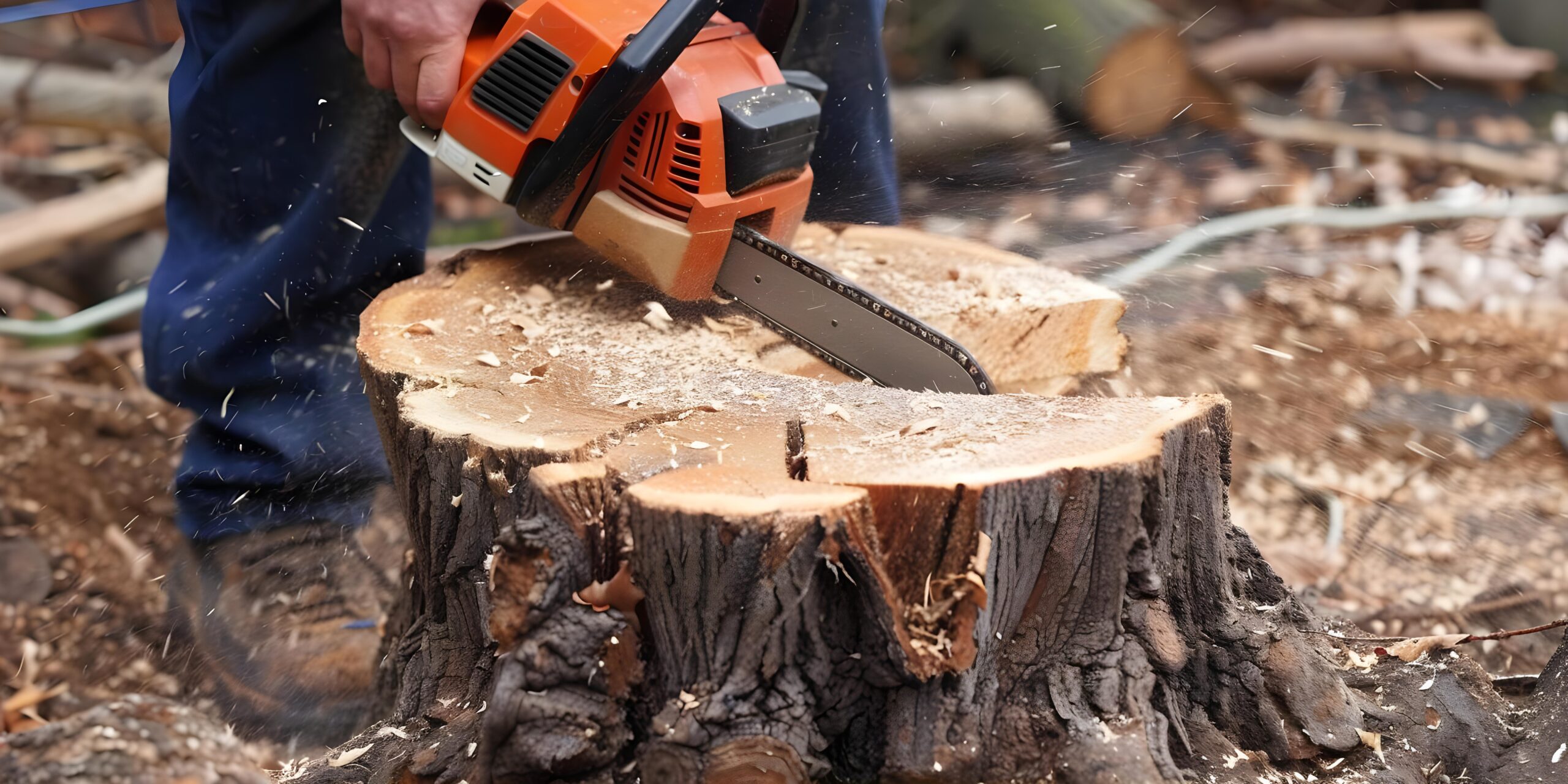
Arboricultural guidance recognizes approaches such as crown reduction, directional pruning, and crown raising when they fit the objective. Proper branch removal and reduction cuts matter. Improper practices, including topping or leaving stubs, are not harmless shortcuts. They can create new problems while failing to address the original one.
I have seen owners request “just cut it back hard” when what they really need is a focused reduction on an overextended limb or the removal of dead, broken, or weakly attached branches. Heavy-handed work often satisfies the eye for a season and then leaves a tree with poorer structure, larger wounds, and a less predictable future. Risk work should not be confused with aggressive cosmetic cutting.
There is also a trade-off to consider. Pruning can lower the likelihood of branch failure, but it cannot solve every defect. If weakness is tied to the trunk, root support, or a major structural problem that pruning cannot meaningfully offset, then removal may still be the prudent recommendation.
Structural support can buy time or preserve value
Not every tree with a structural defect needs to come down. In some cases, Tree Cable and Bracing can reduce the chance of failure in parts of the crown or support a compromised union. Structural support systems are not magic, and they do not make a dangerous tree automatically safe. tree health assessment by certified arborist What Tree Pruning & Crown Shaping they can do is supplement a broader management plan.
Support systems tend to make the most sense when the tree has significant landscape value, the defect is specific rather than widespread, and the rest of the tree remains worth preserving. They are often paired with pruning, because reducing end weight and controlling movement can work together better than either measure alone.
This is where professional judgment matters most. A support system installed on a tree with advanced, generalized instability can create false confidence. By contrast, a well-selected system on a tree with a manageable structural issue can preserve canopy while reducing risk to a more acceptable level. Owners should understand that support systems usually imply future inspection and maintenance, not a one-time fix that can be forgotten.
When removal is the right answer
Some trees can be managed. Some should be removed. The hard part is knowing which is which before the site forces the decision.
Tree Removal Services become appropriate when the level of risk remains too high after reasonable mitigation is considered, or when mitigation would be so severe that little value remains. A tree may also be a removal candidate when defects are multiple and interacting, when the target beneath it cannot be relocated, or when past damage has left the structure unreliable enough that waiting serves no one.
The best removal recommendations are usually specific, not dramatic. They are based on the relationship between defect, likelihood of failure, and consequences if failure occurs. A responsible arborist does not remove simply because a tree is mature, large, or inconvenient. At the same time, a responsible arborist does not preserve a tree at any cost once the numbers no longer make sense in practical terms.
Removal also includes planning for what remains after the trunk is gone. Stump Removal & Grinding is part of many projects because the stump can interfere with replanting, access, hardscape work, or simply the finished use of the space. In some landscapes, leaving the stump in place is acceptable for a time. In others, grinding is the cleanest and safest finish, especially where people walk or mow routinely.
Emergency work is different from planned work
Storms change the normal pace of decision-making. Emergency Tree Services are not just regular tree work performed faster. They involve unstable wood, hanging limbs, partially failed stems, obstructed access, and property conditions that may still be evolving. A tree that has split but not fully fallen is often more dangerous than one already on the ground because internal tension and compression can release suddenly.
After a storm, owners naturally want immediate answers. The first priority, though, is scene safety. If a tree is resting on a structure, blocking essential access, or threatening to fail again, emergency crews focus on stabilizing the situation and reducing immediate hazards. Detailed long-range management decisions may come after that first response.
This is one area where expectations need adjusting. Not every storm-damaged tree should be removed on the same visit, and not every damaged tree can be saved. A measured assessment under emergency conditions still follows the same principles as routine risk work, but the threshold for immediate action is often lower because the consequences are more immediate.
The value of trained eyes and a disciplined process
A lot of avoidable problems begin with either panic or wishful thinking. Panic leads to unnecessary removals. Wishful thinking delays work that should have happened weeks or months earlier. A Certified Arborist Consultation helps steady both extremes.
ISA Certified Arborists are trained to assess tree condition and understand the effects of pruning, removal, and structural support. Their background includes limited visual tree risk assessment and treatment concepts relevant to dangerous-tree evaluation. That training does not produce perfect certainty, because trees are living organisms and outdoor environments are variable. What it does provide is a disciplined process, shared terminology, and professional accountability.
That matters for homeowners, commercial property managers, and institutions alike. A schoolyard shade tree, a specimen near a front entry, and a line of mature trees along a parking lot all carry different target patterns and different tolerances for risk. The answer should fit the setting, not just the tree species or the owner’s first instinct.
How owners can respond before the problem gets worse
Most high-risk situations do not appear out of nowhere. They emerge through neglect, delayed pruning, repeated storm injury, or changes in site use that raise the consequences of failure. The smartest response is often early response.
Here are the most useful steps an owner can take when a tree becomes a concern:
- schedule a professional assessment rather than relying on appearance alone
- avoid climbing, cutting, or tying off limbs without training and equipment
- document recent changes such as storm breakage or sudden canopy decline
- limit access beneath suspect parts of the tree until it is evaluated
- ask whether pruning, support, or removal offers the best risk reduction
That last question is the one many people skip. They ask only, “Can it be saved?” or “Does it need to come down?” Those are understandable questions, but they miss the middle ground where good arboriculture often works best. The better question is, “What option reduces risk appropriately for this site?”
Fire exposure, defensible space, and future hazards
In fire-prone regions, risk assessment broadens. FireSmart Tree Services may include work designed to reduce fuel continuity and improve defensible space, but there is also a tree-risk dimension. Heat exposure, partial crown injury, and changes in site conditions after a fire event can alter a tree’s structure and future performance.
A tree that survives a fire visually may still require follow-up assessment if important parts of the crown or support structure have been compromised. On developed properties, the issue is not simply whether the tree is alive. It is whether it remains suitable near homes, roads, outdoor gathering areas, and utility access routes as the site recovers.
This is another example of why dangerous-tree decisions should not rely on a single visual impression from the ground on one stressful day. Some post-fire trees warrant removal. Others can remain with pruning, monitoring, or a phased management plan. The right answer depends on both the tree and the target.
Good decisions respect both safety and tree value
The best dangerous-tree work I have seen shares one trait: restraint. Not passivity, and not delay, but restraint. Professionals who do this well understand that trees are assets and hazards at the same time. They know when to preserve, when to support, when to prune, and when to remove cleanly and decisively.
Owners benefit from the same mindset. A tree does not become a villain because it has a defect, and it does not become safe because it has sentimental value. Mature landscapes deserve better than fear-based cutting, but people and property also deserve honest recommendations when a tree has crossed the line from manageable to unacceptable.
Dangerous Tree Assessment and Removal is ultimately about judgment under uncertainty. There is no completely safe tree, but there are better and worse ways to manage risk. With a systematic assessment, qualified arboricultural input, and the right blend of Tree Pruning & Crown Shaping, Tree Cable and Bracing, Tree Removal Services, Stump Removal & Grinding, Emergency Tree Services, and FireSmart Tree Services where appropriate, property owners can make decisions that are practical, defensible, and safer over the long term.
Name: Ace Tree Services Ltd.
Address: 4656 Wallace Hill Road, Kelowna, BC
Phone: 250-212-9593
Website: https://acetree.ca/
Hours:
Monday: 7:00 AM–5:00 PM
Tuesday: 7:00 AM–5:00 PM
Wednesday: 7:00 AM–5:00 PM
Thursday: 7:00 AM–5:00 PM
Friday: 7:00 AM–5:00 PM
Saturday: 7:00 AM–5:00 PM
Sunday: Closed
Emergency tree services: 24/7 emergency service is listed.
Open-location code / Plus code: RHF8+8G Kelowna, British Columbia, Canada
Map/listing URL: https://www.google.com/maps/place/Ace+Tree+Services+Ltd./@49.8232606,-119.4337283,563m/data=!3m1!1e3!4m6!3m5!1s0x537d8b1d074815c5:0x450b88afa7a41435!8m2!3d49.8232606!4d-119.4337283!16s%2Fg%2F11ydkpnh22
Embed iframe:
Socials: https://www.facebook.com/people/Ace-Tree-Services/61585901931447/
https://m.yelp.com/biz/ace-tree-services-kelowna
Ace Tree Services Ltd. provides professional tree service for residential, commercial, and municipal customers in Kelowna and across the Okanagan Valley.
The company’s listed services include tree removal, stump removal and grinding, tree pruning and crown shaping, emergency tree services, certified arborist consultation, dangerous tree assessment, tree cable and bracing, and wildfire mitigation.
Ace Tree Services works with homeowners, businesses, property managers, and public-sector clients that need safe, practical tree care in the Kelowna area.
The official site highlights ISA-certified arborists, insurance, and experience handling both routine and complex tree service situations.
Customers can contact Ace Tree Services for tree care planning, hazard concerns, emergency tree cleanup, pruning needs, stump grinding, or advice about trees near homes, fences, driveways, and landscaping.
Ace Tree Services lists regular work hours from 7:00 AM to 5:00 PM Monday through Friday, with 24/7 emergency tree service available for urgent situations.
For tree service in Kelowna, call 250-212-9593 or visit https://acetree.ca/
The public map listing places Ace Tree Services Ltd. in Kelowna and can help customers find directions to the Wallace Hill Road area.
Popular Questions About Ace Tree Services Ltd.
What services does Ace Tree Services Ltd. provide?
Ace Tree Services Ltd. provides tree removal, stump removal and grinding, tree pruning and crown shaping, emergency tree services, certified arborist consultation, dangerous tree assessment and removal, tree cable and bracing, and wildfire mitigation.
Where is Ace Tree Services Ltd. located?
The official website lists Ace Tree Services Ltd. at 4656 Wallace Hill Road, Kelowna, BC.
What areas does Ace Tree Services Ltd. serve?
The official website describes Ace Tree Services as located in Kelowna and servicing the Okanagan.
What phone number should customers call?
Customers can call Ace Tree Services Ltd. at 250-212-9593.
What are Ace Tree Services Ltd.’s regular hours?
The official website lists work hours as 7:00 AM to 5:00 PM, Monday through Friday. Saturday and Sunday regular hours are not listed and should be confirmed directly.
Does Ace Tree Services Ltd. offer emergency tree service?
Yes. The official website lists 24/7 emergency services for urgent tree situations, including emergency tree removal, dangerous tree assessment, stabilization, and limb or branch cleanup.
Does Ace Tree Services Ltd. have certified arborists?
Yes. The official website states that Ace Tree Services has ISA-certified arborists.
Can Ace Tree Services Ltd. help with wildfire mitigation?
Yes. Wildfire mitigation is listed as one of the company’s tree services.
How do I contact Ace Tree Services Ltd.?
Call 250-212-9593 or visit https://acetree.ca/.
Landmarks Near Kelowna, BC
Wallace Hill Road: A local Kelowna road near the address listed for Ace Tree Services Ltd.
Okanagan Lake: A major Kelowna landmark near residential, commercial, and waterfront properties that may need tree pruning, removal, or hazard assessment.
Downtown Kelowna: A central area with homes, offices, rental properties, restaurants, and commercial sites that may need professional tree care.
Mission / Lower Mission: A well-known Kelowna area with mature landscaping, residential properties, and lake-adjacent homes.
South East Kelowna: A rural and residential area with larger properties, orchards, and tree-care needs that can include pruning, removals, and wildfire mitigation.
Crawford: A residential area near the southeast side of Kelowna where homeowners may need tree trimming, hazard assessment, and stump grinding.
Kettle Valley: A hillside residential neighborhood where tree condition, slope, wind exposure, and defensible-space planning can matter for property owners.
Myra-Bellevue Provincial Park: A major outdoor landmark near southeast Kelowna and a useful point of orientation for nearby properties.
Gallagher’s Canyon: A residential and golf community near southeast Kelowna where tree maintenance and wildfire-conscious vegetation management can be practical concerns.
Orchard Park Shopping Centre: A major central Kelowna retail landmark and reference point for customers traveling across the city.
Highway 97: A major Kelowna corridor connecting neighborhoods, commercial properties, and service routes throughout the region.
Kelowna City Park: A recognizable central landmark near downtown neighborhoods and lakefront properties.
Glenmore: A Kelowna neighborhood with residential and commercial properties that may need pruning, storm cleanup, and general tree care.
Rutland: A large residential and commercial area where customers may need tree removal, pruning, stump grinding, or arborist consultation.
Black Mountain: A hillside community where slope, wind, wildfire exposure, and access can influence tree service planning.
For tree service near these Kelowna landmarks, contact Ace Tree Services Ltd. at 250-212-9593 or visit https://acetree.ca/