Certified Arborist Consultation for Trees With Structural Concerns
A tree can look full, green, and settled into the landscape, yet still carry a structural problem that deserves careful attention. That is what makes these cases different from ordinary maintenance. A branch union may be weak. A crown may be carrying weight in the wrong places. A tree may have defects that do not announce themselves from the street but become obvious once a trained eye studies the trunk, canopy, and targets beneath it.
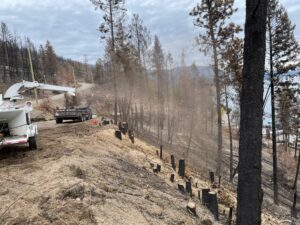
This is where a Certified Arborist Consultation earns its value. Structural concerns are rarely solved well by guesswork, and they are often made worse by fast, cosmetic cutting. A consultation creates a disciplined starting point. It separates appearance from risk, urgency from anxiety, and preservation from removal. For homeowners, property managers, and commercial site operators, that distinction matters. The cost of overreacting can be unnecessary canopy loss or removal of a tree that might have been retained. The cost of underreacting can be far worse.
The arboriculture profession treats tree risk as a systematic process. That phrase matters because it captures how sound decisions are made. A tree is not simply labeled safe or unsafe. Risk is identified, analyzed, and evaluated, then matched with measures that can reduce it to an acceptable level. There is no completely safe tree. Some level of risk always exists. The work of a certified arborist is to understand that reality clearly enough to recommend practical action without unnecessary intervention.
What a certified arborist brings to the conversation
An ISA Certified Arborist is not simply someone who owns tree equipment or has spent years around removals. Certification means training in the art and science of tree care, passing a comprehensive exam, maintaining continuing education, and working under a professional code of ethics. For clients dealing with structural concerns, those pieces matter because the job is not only to cut wood. It is to diagnose, interpret, and recommend.
That distinction becomes obvious in the field. Two trees can show the same outward symptom, such as an overextended limb, but call for different responses depending on species, crown structure, site use, and what sits beneath the canopy. One may need Tree Pruning & Crown Shaping to reduce end weight and improve form. Another may be a candidate for Tree Cable and Bracing to provide structural support while preserving canopy. A third may have defects serious enough to move into Dangerous Tree Assessment and Removal. Without a careful consultation, those differences blur together.
A good consultation is also a brake on poor practices. Improper pruning, including topping or leaving stub cuts, is not a harmless shortcut. It can damage structure, invite decay problems, and create future management issues. Proper pruning relies on correct branch removal and reduction cuts, with a clear purpose behind each cut. That level of judgment does not come from a quick drive-by opinion.
Structural concerns rarely look the same twice
People often ask what counts as a structural concern, expecting a simple checklist. In practice, the concern usually comes from a pattern rather than a single clue. The tree may be leaning toward a target area. The canopy may be imbalanced. A scaffold limb may run long and heavy over a roof, driveway, or play area. A major union may raise questions about long-term strength. After a storm, a tree may hold together visually while still needing Emergency Tree Services because the failure potential has changed.
What makes consultations valuable is not the ability to recite defects. It is the ability to interpret what those defects mean in context. A branch over open lawn does not carry the same practical significance as a branch over an occupied deck. A tree in a quiet corner of a property is assessed differently from one near a sidewalk, parking area, or building entrance. The presence of a target is central to risk, and clients often miss that point. They focus on whether the tree looks bad rather than on what could be struck if a part fails.
That is why dangerous tree questions should not be reduced to fear alone. “It looks scary” is understandable, but not specific enough. “It hangs over the nursery roof and the crown appears heavily weighted to one side” is a better starting point. A consultation turns unease into a usable decision.
How a consultation typically unfolds
When structural concerns are involved, the first step is usually a visual assessment by a trained professional. The arborist studies the tree itself, but also the setting. Where is the tree growing? What occupies the area beneath it? What kind of use does the site receive? Has there been recent storm exposure, construction disturbance, or past pruning that changed the tree’s form? Even before any recommendation is made, the consultation is building a framework for risk rather than relying on a yes or no answer.
From there, the arborist identifies the concerns that matter most. Sometimes the path forward is straightforward. A limb may need reduction pruning to decrease leverage and improve distribution of weight in the crown. Sometimes structural support systems become part of the discussion. Tree Cable and Bracing is not a cosmetic service. It is considered when support may help manage structural weakness and preserve a tree that would otherwise be more vulnerable. In other cases, mitigation may not be enough, especially when the defect is paired with a high-value target and limited options for reducing exposure. That is when Tree Removal Services become part of the conversation.
Clients are often surprised by how often the answer sits between neglect and removal. Arborists work in that middle ground every day. A measured recommendation might include selective pruning now, monitoring over time, and a plan to revisit the tree after a major weather event. That kind of measured response is possible only when the assessment is systematic.
The role of pruning in risk reduction
Pruning is one of the most misunderstood tools in structural management. Many property owners think of pruning as tidying. In the context of structural concerns, it is much more precise than that. The goal may be to reduce end weight, improve branch spacing, raise clearance, or direct growth in a way that better suits the site. Utility pruning guidance has long emphasized crown reduction, directional pruning, raising, and proper branch removal and reduction cuts because these practices influence both safety and long-term structure.
That does not mean every structural problem should be cut away. Excessive cutting can create a different set of problems, especially if it strips too much canopy or drives weak regrowth. Improper techniques like topping are especially damaging because they ignore how trees compartmentalize injury and how new shoots behave after severe heading cuts. Homeowners sometimes ask for a tree to be “cut back hard so it won’t be a problem for years.” In reality, severe pruning can produce a tree that is less stable, less healthy in appearance, and more expensive to manage later.
Tree Pruning & Crown Shaping works best when the objective is clearly defined. If a branch is too long over a target, reduction may be appropriate. If clearance is the issue, raising can help. If the canopy needs better balance, carefully chosen cuts can shift loads without stripping the tree. A consultation identifies that objective before a saw ever starts.
When support systems make sense
Support systems occupy a useful middle ground in tree care, yet they are often discussed too casually. Tree Cable and Bracing is not a magic fix, nor is it suitable for every tree with a questionable union or heavy leader. It is one of several treatments an arborist may consider when the aim is to Tree Pruning & Crown Shaping reduce risk while retaining the tree. The broader point is important: not every structural concern requires removal, and not every retained tree should simply be left alone.
In practical terms, support systems are part of a mitigation strategy, not a substitute for judgment. They are often paired with pruning because reducing load and adding support can work together. The consultation should explain that relationship clearly. Clients should understand what problem the support is meant to address, what limitations remain, and why the tree still needs informed follow-up.
This is also where professional ethics matter. Support hardware can sound reassuring, especially to a property owner attached to a mature tree. But reassurance alone is not good arboriculture. The recommendation should come from a risk-based assessment, not from the desire to avoid a difficult conversation about removal.
When removal is the responsible answer
No client likes to hear that a tree with sentimental or landscape value may need to come down. Even so, there are situations where Dangerous Tree Assessment and Removal is the responsible path. If the arborist determines that the likelihood of failure and the consequences of that failure are not reasonably manageable through pruning, support, or changes to the target area, removal enters the picture for sound reasons.
This is where professional consultation often saves time, money, and conflict. Without it, owners may drift between conflicting advice. One crew says everything should be cut. Another says the tree is probably fine. A third offers a dramatic emergency pitch after a wind event. A certified arborist gives the decision a disciplined basis. If Tree Removal Services are recommended, the reasoning should be understandable: the identified concern, the relevant targets, and why mitigation does not reduce risk enough.
Removal also leads to secondary decisions that are easy to overlook in the first wave of concern. Stump Removal & Grinding may be necessary if the site needs to be restored for access, replanting, or construction. If the area sits near structures or circulation routes, the method and timing matter. Those details do not change the core assessment, but they shape how smoothly the project is completed.
Structural concerns after storms and sudden events
Some tree issues build slowly over years. Others become urgent in a single afternoon. After a storm, the need for Emergency Tree Services can rise quickly, especially where limbs have partially failed or trees have shifted toward occupied areas. The danger in these moments is haste without structure. People want immediate answers, and they are often standing beneath or beside the thing they should be staying away from.
A consultation during or after an emergency still relies on the same professional principles. The arborist identifies the hazard, considers the target, evaluates the level of risk, and recommends action. The difference is pace. Emergency work may focus first on stabilizing the site, securing access, or removing the portion of the tree that presents immediate danger. Later, a more complete evaluation can address the remaining structure, possible retention, and any follow-up pruning.
There is another practical issue here. Storm-damaged trees can be deceptive. A branch may remain attached but compromised. A canopy may look mostly intact while its balance has changed substantially. Property owners often assume that if the tree survived the storm, it must still be strong. That is not always a safe assumption. In high-use spaces, a rapid certified assessment can prevent a second failure from turning into the real incident.
Fire-prone areas add another layer of judgment
In some regions, structural concerns intersect with wildfire planning. FireSmart Tree Services are not just about clearing everything green from a property. They involve managing vegetation with an eye toward fire behavior, defensible space, and the practical function of the landscape. A tree with structural weaknesses near a structure in a fire-prone setting may deserve a different conversation than the same tree in a low-risk location.
This does not mean that every tree near a building should be removed. It means the consultation should account for how the site is used and what threats are relevant there. In a FireSmart context, pruning, selective removal, and thoughtful maintenance may all play a role. Structural concerns become one part of a larger management plan. A certified arborist can help property owners avoid the two most common mistakes in these settings: keeping a dangerous tree because FireSmart vegetation management it provides shade, or removing valuable trees indiscriminately without improving the landscape in a meaningful way.
Questions worth asking during the visit
Clients often get better outcomes when they ask better questions. Structural consultations are technical, but the recommendations should still be understandable. If the explanation feels vague, press for clarity. You are not just paying for work. You are paying for professional judgment.
Here are a few questions that usually lead to a more useful discussion:
- What specific structural concern are you seeing in this tree?
- What target or site condition makes that concern more important?
- Can risk be reduced with pruning or support, or is removal the stronger option?
- If the tree is retained, what follow-up should be expected?
- Are there any urgent access or safety restrictions we should follow right now?
Those questions help shift the conversation from general worry to concrete decision-making. They also make it easier to compare recommendations if more than one opinion is sought.
What property owners can do before the arborist arrives
A consultation is more efficient when the arborist can see the tree clearly and understand the concern quickly. Owners do not need to diagnose the issue themselves, but a little preparation helps. If the concern followed a storm, note the timing and what changed. If a branch suddenly began hanging over a roofline, mention whether that is new or longstanding. If the site is commercial, explain how often the area beneath the tree is occupied.
The most useful preparation is usually simple:
- Keep people and vehicles away from any area that seems exposed to potential failure.
- Take a few clear photos from different angles if the condition may change before the visit.
- Note recent weather events or pruning work that may be relevant.
- Avoid climbing, cutting, or trying to pull on suspicious limbs yourself.
- Be ready to explain how the space under the tree is actually used.
That last point is easy to underestimate. A tree over a side yard, a school pickup lane, and a quiet storage area are three very different risk conversations.
Why “wait and see” is sometimes reasonable, and sometimes not
One of the harder parts of tree care is that uncertainty never disappears completely. ISA guidance is clear that no tree is entirely free of risk. That means some recommendations will include monitoring rather than immediate intervention. For owners who want absolute answers, this can feel unsatisfying. In practice, it is often the most honest recommendation available.
“Wait and see” is reasonable when the identified concern does not currently justify aggressive action, when targets are limited, or when pruning and observation can reduce uncertainty over time. It is not reasonable when the tree presents a meaningful risk to occupied areas and practical mitigation has been delayed simply because the tree is large, familiar, or expensive to address. The consultation should distinguish those situations plainly.
A good arborist is not trying to create work by overstating danger, and not trying to avoid difficult recommendations by downplaying it. The goal is proportion. That is the mark of useful professional advice.
The value of a measured recommendation
The best consultations often feel less dramatic than clients expect. There may be no sweeping declaration, only a careful explanation of risk and options. That is usually a good sign. Structural concerns are serious, but they are rarely served by theatrics. They are served by observation, context, and disciplined recommendations.
Sometimes the result is straightforward Tree Removal Services followed by Stump Removal & Grinding. Sometimes it is Tree Pruning & Crown Shaping to reduce load and improve form. Sometimes Emergency Tree Services are needed first, with a broader management plan after the immediate hazard is addressed. Sometimes Tree Cable and Bracing supports retention of a valued tree that still has years of service left in the landscape. In fire-prone settings, FireSmart Tree Services may shape the recommendation as well.
What ties these outcomes together is the consultation itself. Structural concerns deserve more than a quick opinion from the driveway. They deserve a systematic assessment from a professional trained to identify risk, evaluate options, and recommend measures that reduce danger without unnecessary intervention. When a tree matters, and when the space beneath it matters even more, that level of care is not a luxury. It is the right place to start.
Name: Ace Tree Services Ltd.
Address: 4656 Wallace Hill Road, Kelowna, BC
Phone: 250-212-9593
Website: https://acetree.ca/
Hours:
Monday: 7:00 AM–5:00 PM
Tuesday: 7:00 AM–5:00 PM
Wednesday: 7:00 AM–5:00 PM
Thursday: 7:00 AM–5:00 PM
Friday: 7:00 AM–5:00 PM
Saturday: 7:00 AM–5:00 PM
Sunday: Closed
Emergency tree services: 24/7 emergency service is listed.
Open-location code / Plus code: RHF8+8G Kelowna, British Columbia, Canada
Map/listing URL: https://www.google.com/maps/place/Ace+Tree+Services+Ltd./@49.8232606,-119.4337283,563m/data=!3m1!1e3!4m6!3m5!1s0x537d8b1d074815c5:0x450b88afa7a41435!8m2!3d49.8232606!4d-119.4337283!16s%2Fg%2F11ydkpnh22
Embed iframe:
Socials: https://www.facebook.com/people/Ace-Tree-Services/61585901931447/
https://m.yelp.com/biz/ace-tree-services-kelowna
Ace Tree Services Ltd. provides professional tree service for residential, commercial, and municipal customers in Kelowna and across the Okanagan Valley.
The company’s listed services include tree removal, stump removal and grinding, tree pruning and crown shaping, emergency tree services, certified arborist consultation, dangerous tree assessment, tree cable and bracing, and wildfire mitigation.
Ace Tree Services works with homeowners, businesses, property managers, and public-sector clients that need safe, practical tree care in the Kelowna area.
The official site highlights ISA-certified arborists, insurance, and experience handling both routine and complex tree service situations.
Customers can contact Ace Tree Services for tree care planning, hazard concerns, emergency tree cleanup, pruning needs, stump grinding, or advice about trees near homes, fences, driveways, and landscaping.
Ace Tree Services lists regular work hours from 7:00 AM to 5:00 PM Monday through Friday, with 24/7 emergency tree service available for urgent situations.
For tree service in Kelowna, call 250-212-9593 or visit https://acetree.ca/
The public map listing places Ace Tree Services Ltd. in Kelowna and can help customers find directions to the Wallace Hill Road area.
Popular Questions About Ace Tree Services Ltd.
What services does Ace Tree Services Ltd. provide?
Ace Tree Services Ltd. provides tree removal, stump removal and grinding, tree pruning and crown shaping, emergency tree services, certified arborist consultation, dangerous tree assessment and removal, tree cable and bracing, and wildfire mitigation.
Where is Ace Tree Services Ltd. located?
The official website lists Ace Tree Services Ltd. at 4656 Wallace Hill Road, Kelowna, BC.
What areas does Ace Tree Services Ltd. serve?
The official website describes Ace Tree Services as located in Kelowna and servicing the Okanagan.
What phone number should customers call?
Customers can call Ace Tree Services Ltd. at 250-212-9593.
What are Ace Tree Services Ltd.’s regular hours?
The official website lists work hours as 7:00 AM to 5:00 PM, Monday through Friday. Saturday and Sunday regular hours are not listed and should be confirmed directly.
Does Ace Tree Services Ltd. offer emergency tree service?
Yes. The official website lists 24/7 emergency services for urgent tree situations, including emergency tree removal, dangerous tree assessment, stabilization, and limb or branch cleanup.
Does Ace Tree Services Ltd. have certified arborists?
Yes. The official website states that Ace Tree Services has ISA-certified arborists.
Can Ace Tree Services Ltd. help with wildfire mitigation?
Yes. Wildfire mitigation is listed as one of the company’s tree services.
How do I contact Ace Tree Services Ltd.?
Call 250-212-9593 or visit https://acetree.ca/.
Landmarks Near Kelowna, BC
Wallace Hill Road: A local Kelowna road near the address listed for Ace Tree Services Ltd.
Okanagan Lake: A major Kelowna landmark near residential, commercial, and waterfront properties that may need tree pruning, removal, or hazard assessment.
Downtown Kelowna: A central area with homes, offices, rental properties, restaurants, and commercial sites that may need professional tree care.
Mission / Lower Mission: A well-known Kelowna area with mature landscaping, residential properties, and lake-adjacent homes.
South East Kelowna: A rural and residential area with larger properties, orchards, and tree-care needs that can include pruning, removals, and wildfire mitigation.
Crawford: A residential area near the southeast side of Kelowna where homeowners may need tree trimming, hazard assessment, and stump grinding.
Kettle Valley: A hillside residential neighborhood where tree condition, slope, wind exposure, and defensible-space planning can matter for property owners.
Myra-Bellevue Provincial Park: A major outdoor landmark near southeast Kelowna and a useful point of orientation for nearby properties.
Gallagher’s Canyon: A residential and golf community near southeast Kelowna where tree maintenance and wildfire-conscious vegetation management can be practical concerns.
Orchard Park Shopping Centre: A major central Kelowna retail landmark and reference point for customers traveling across the city.
Highway 97: A major Kelowna corridor connecting neighborhoods, commercial properties, and service routes throughout the region.
Kelowna City Park: A recognizable central landmark near downtown neighborhoods and lakefront properties.
Glenmore: A Kelowna neighborhood with residential and commercial properties that may need pruning, storm cleanup, and general tree care.
Rutland: A large residential and commercial area where customers may need tree removal, pruning, stump grinding, or arborist consultation.
Black Mountain: A hillside community where slope, wind, wildfire exposure, and access can influence tree service planning.
For tree service near these Kelowna landmarks, contact Ace Tree Services Ltd. at 250-212-9593 or visit https://acetree.ca/