Certified Arborist Consultation and the Science of Tree Care
A tree can shade a house for decades, frame a street, soften wind, and hold soil in place, yet the same tree can become a source of real concern when a major limb starts to fail, roots disturb hardscape, or a storm exposes weaknesses no one noticed before. That tension is exactly why Certified Arborist Consultation matters. Good tree care is not guesswork, and it is not just a matter of owning a chainsaw. It sits at the intersection of biology, structure, safety, and judgment.
The public often sees only the visible part of the work: a crew pruning branches, removing a damaged trunk, or grinding a stump after a removal. What tends to stay hidden is the decision-making process behind those actions. An experienced arborist is not simply asking whether a tree can be cut. The better question is whether it should be cut, how much intervention is appropriate, what risks are present, and whether a less invasive treatment can preserve the tree while bringing conditions back to an acceptable level.
That blend of restraint and action is where the science of tree care becomes clear.
What certification actually signals
An ISA Certified Arborist is trained in both the art and science of tree care, has passed a comprehensive examination, continues education to maintain certification, and is expected to follow a code of ethics. Those points matter because tree work is one of those fields where confidence can easily outpace competence. Trees are large living structures. They do not forgive poor cuts, weak rigging decisions, or bad risk calls.
Certification does not mean every problem has an easy answer. Trees are too variable for that. Species respond differently, site conditions vary, and two trees with similar canopies may have very different structural histories. What certification does indicate is that the person assessing the tree is working from recognized principles rather than hunches.
That distinction becomes especially important when a homeowner is weighing expensive or irreversible work. Tree Removal Services, Tree Pruning & Crown Shaping, Dangerous Tree Assessment and Removal, and Tree Cable and Bracing all sound straightforward on paper. In practice, each one can be either a precise treatment or an unnecessarily aggressive intervention depending on how the situation is evaluated.
The first step is not cutting, it is looking
Most meaningful arborist consultations start with observation. Not casual observation from the driveway, but a systematic look at the tree, the site, and the target area around it. The central question is not “Is this tree bad?” It is closer to “What condition is this tree in, what defects or stressors are present, what could fail, what would it strike, and what management option best fits the level of risk?”
That is the basis of tree risk assessment as described in arboricultural guidance: a structured process to identify, analyze, and evaluate risk, then recommend measures that bring risk down to an acceptable level. That wording matters. It recognizes a truth that many property owners find uncomfortable at first: there is no completely safe tree. Some amount of risk is always present.
A mature tree can be healthy and still lose a limb in the right weather conditions. A tree with a visible defect may still be retainable if the site has low occupancy and the defect can be managed. A certified arborist should be able to explain that difference without defaulting to alarm or sales pressure.
A solid consultation often turns on details such as these:
- The condition of the crown, trunk, and visible root area.
- The presence of structural defects, deadwood, or previous poor pruning.
- The likelihood of occupancy in the area a branch or tree could strike.
- Whether mitigation through pruning or support is realistic.
- Whether removal is the only reasonable option.
Those are not dramatic observations, but they are the foundation of responsible tree care. The science shows up in the discipline of the process.
Why pruning is more technical than it looks
Pruning is one of the most misunderstood parts of arboriculture. Many people think of it as aesthetic trimming, a quick way to neaten the yard or pull branches away from a roofline. Appearance can be part of the job, especially in Tree Pruning & Crown Shaping, but appearance should never override structure or tree health.
Pruning guidance in arboriculture addresses methods such as crown raising, crown reduction, and directional pruning, along with proper branch removal and reduction cuts. It also warns against bad practices like topping and leaving stubs. Those warnings are not academic. Improper cuts can create larger problems than the original branch arrangement.
A reduction cut, for example, is not the same thing as indiscriminately shortening a branch. Direction matters. Branch size matters. The relationship between the cut and the remaining lateral matters. When those details are ignored, the result is often a tree that responds poorly, looks unnatural, and may become more structurally problematic over time.
One of the clearest markers of good consultation is that the arborist can explain what kind of pruning is being proposed and why. If the answer is vague, or if every tree is treated as a candidate for heavy thinning or topping, that is a warning sign. Trees differ. A pruning plan should reflect species, age, site, and purpose.
I have seen conversations around pruning shift completely once the objective gets clarified. A client may ask for a tree to be “cut back hard” because it feels too large, when the real concern is roof clearance over one side of the crown. In that case, targeted directional pruning may solve the immediate concern without disfiguring the whole tree. That is the value of informed consultation. It narrows the work to what actually needs doing.
When removal is justified, and when it is not
No reputable arborist treats removal as the answer to every problem. At the same time, some trees do need to come down. Dangerous Tree Assessment and Removal is part of responsible tree care precisely because not every defect can be managed, and not every tree can be retained safely.
The hard part is that removal decisions are rarely emotional for just one reason. Some owners are attached to a tree that clearly presents a serious issue. Others want removal because of nuisance factors, when the condition of the tree itself does not support that level of intervention. A consultation should separate preference from necessity.
Tree Removal Services become more justifiable when the tree has defects or conditions that cannot be reasonably mitigated, or when the level of risk to people or property is too high to accept. The arborist’s role is not to promise perfect safety. It is to assess whether available actions reduce risk enough, and if they do not, to say so plainly.
That directness is valuable. So is restraint. Arboricultural guidance recognizes that treatment may reduce risk without unnecessary intervention. In practical terms, that means a tree with a problematic limb is not automatically a tree that needs full removal. Sometimes the answer is selective pruning. Sometimes it is structural support. Sometimes the answer is monitoring. Sometimes the answer is removal. The point is that the decision should arise from assessment, not assumption.
Structural support is part engineering, part biology
Among the least understood services in the public eye is Tree Cable and Bracing. Many property owners assume a cable is a cure, a way to “save” any tree indefinitely. That is not a realistic view.
Structural support systems exist because some trees develop weak attachments, codominant stems, or branch unions that benefit from supplemental support. Arboricultural training includes treatments such as structural support systems, and broader tree work guidance also addresses rigging and controlled lowering, which reflects the technical nature of managing loads in and around trees. Still, support hardware is not a magical fix. It is one management option within a larger assessment.
A well considered consultation has to weigh several questions. Is the defect one that support can help manage? Will pruning reduce loading enough to improve the situation? Is the tree otherwise worth retaining? Does the target area below justify the investment and future monitoring that support systems imply?
Those questions matter because support systems are not the same as forgetting a problem exists. They are part of an ongoing management strategy. A tree that has been cabled or braced still needs periodic evaluation. If that expectation is not discussed at the consultation stage, the service has not really been explained.
Emergency work demands calm judgment
Storms expose flaws fast. A tree that looked stable on Tuesday can be hung up over a driveway on Wednesday morning after wind, saturated soil, or heavy snow loading. This is where Emergency Tree Services differ from routine maintenance. The pace changes, the hazards multiply, and the pressure to act can cloud decision-making.
ISA guidance notes that pruning or removing trees, especially large ones, is dangerous work and should be done only by trained and properly equipped professionals. That is doubly true in emergency conditions. Tensioned wood, partially failed stems, utility conflicts, unstable footing, and compromised access turn urgent calls into technical operations.
A good emergency response still follows the same core principle as non-emergency consultation: assess before acting. The order may be compressed, but the thinking cannot disappear. What is loaded, what is likely to move, what are the targets, and what method allows controlled removal or stabilization? The public often sees speed and assumes that is the mark of skill. In emergency work, control is the stronger sign.
This is also where honest communication matters. Not every storm-damaged tree can be made safe immediately. Sometimes the first task is simply to secure the area, remove the most immediate hazard, and plan the next phase of work once the site is stable. That is not hesitation. It is professional judgment.
Stumps are not just leftovers
After removal, many owners focus on the empty space where the tree stood and pay less attention to what remains at ground level. Yet Stump Removal & Grinding often has practical importance beyond appearance. A stump can interfere with future use of the space, create mowing headaches, or leave the site feeling unfinished.
Even here, consultation has a role. The decision is not always just “grind or leave it.” Site use matters. Access matters. The owner’s plan for replanting or landscaping matters. A narrow side yard, for example, may limit equipment choice. A front lawn intended for immediate regrading may change the scope of grinding. The point is not that stump work is mysterious. It is that even a straightforward follow-up service benefits from being matched to the site rather than treated as an afterthought.
That same practical mindset is one of the reasons a comprehensive arborist consultation often saves money over time. It aligns each service with the actual objective, instead of turning every issue into a larger project than necessary.
Fire awareness changes tree care priorities
In regions where wildfire risk is part of life, tree care takes on another layer of significance. FireSmart Tree Services fit into a broader approach to vegetation management around structures and access routes. The details of implementation vary by site, but the basic professional value is clear: tree work in these settings should be intentional, not cosmetic.
That means looking at vegetation arrangement, canopy relationships, and site conditions through a different lens than routine ornamental pruning. A tree that is acceptable in one context may call for a different management approach where fire exposure is a concern. This is another reason consultations matter. They help connect the service choice to the property’s real risk profile instead of applying a one-size-fits-all plan.
Clients sometimes expect a simple answer, such as “trim everything up” or “remove all dense growth.” In practice, those broad instructions can lead to poor outcomes if they are not tied to informed assessment. Professional tree care is at its best when the recommendation is specific, proportionate, and rooted in the actual conditions on site.
What a strong consultation sounds like
The best arborist consultations are usually memorable for their clarity. The arborist explains what is known, what is uncertain, and what options exist. They do not promise that every tree can be preserved, and they do not treat every defect as a sales opportunity. They frame the decision in terms of condition, targets, and management choices.
A useful consultation often includes language like this: the tree has a structural issue that raises concern, but the risk may be reduced through pruning; the tree shows a defect in a location with frequent occupancy, which changes the recommendation; the support system could help, but it should be understood as mitigation rather than a cure; the tree can be retained for now, but should be reevaluated as conditions change.
That kind of explanation reflects professional discipline. It also respects the owner’s role. Tree decisions are easier when people understand not only what is being proposed, but why the alternatives were ruled in or ruled out.
Here are a few signs that a consultation is grounded in sound practice:
- The arborist evaluates the tree and the surrounding target area, not just the visible defect.
- Recommendations include the reasoning behind pruning, support, monitoring, or removal.
- Risk is discussed as something to manage, not eliminate entirely.
- Unsafe shortcuts, such as topping, are avoided rather than normalized.
- The limits of treatment are stated plainly when a tree cannot be retained responsibly.
That kind of conversation tends to build trust because it treats the tree as a living structure and the property owner as a decision-maker, not merely a customer to be sold a package.
Why standards and continuing education matter in the field
Trees are familiar, and familiarity can make people underestimate The original source the technical depth of arboriculture. Yet the field depends on standards, best management guidance, and ongoing training because the work is inherently high stakes. A poor haircut grows out. A poor pruning cut on a mature limb does not. A bad removal plan can damage property or injure workers. An incorrect risk call can leave a serious hazard unmanaged or remove a tree unnecessarily.
That is why continuing education and ethical expectations matter so much for certified professionals. Tree care is not static. The core biological realities remain, but a strong practitioner stays engaged with accepted guidance, updates skills, and works within a standards-based framework.
The public benefit is simple. When someone hires for Certified Arborist Consultation, they are not just paying for labor. They are paying for informed judgment before the labor begins. In many cases, that judgment is the most valuable part of the service.
The science is visible in the restraint
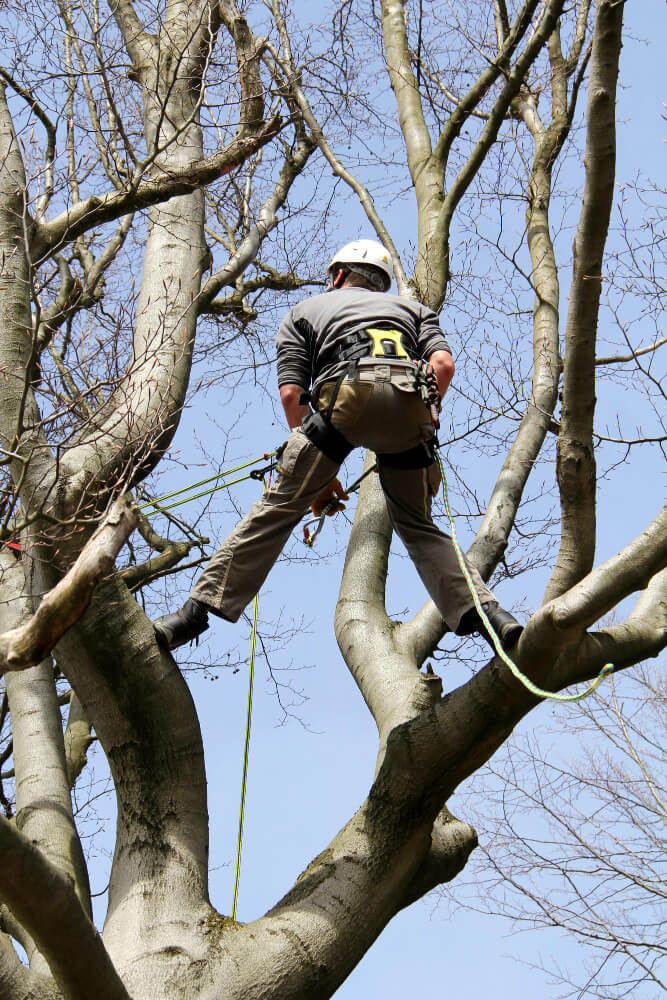
People often recognize tree care when something dramatic happens: a crane-assisted removal, a storm response, a large stump grinder, a crew lowering heavy wood in sections. Those operations absolutely require expertise. But one of the clearest signs of scientific tree care is quieter than that. It appears when the arborist recommends less than the client expected because less is what the tree and site actually require.
That restraint may mean preserving a tree that looked questionable until it was properly assessed. It may mean choosing directional pruning instead of heavy reduction. It may mean using Tree Cable and Bracing where support is justified, or declining to install hardware where it would only delay the inevitable without meaningfully changing risk. It may mean staging Emergency Tree Services in a way that prioritizes control over speed. It may mean tying Stump Removal & Grinding to the owner’s long-term site plans rather than treating it as automatic.
This is the heart of the profession. The science of tree care is not just knowledge of cuts, ropes, or equipment. It is the disciplined habit of matching treatment to evidence, risk, and purpose. A certified arborist consultation brings that discipline to the front of the process, where it belongs.
When that happens, tree care stops being reactive and becomes precise. The tree is seen for what it is, a living structure with benefits, limits, and needs. The work becomes safer, the recommendations become more defensible, and the property owner is better equipped to make decisions that hold up over time.
Name: Ace Tree Services Ltd.
Address: 4656 Wallace Hill Road, Kelowna, BC
Phone: 250-212-9593
Website: https://acetree.ca/
Hours:
Monday: 7:00 AM–5:00 PM
Tuesday: 7:00 AM–5:00 PM
Wednesday: 7:00 AM–5:00 PM
Thursday: 7:00 AM–5:00 PM
Friday: 7:00 AM–5:00 PM
Saturday: 7:00 AM–5:00 PM
Sunday: Closed
Emergency tree services: 24/7 emergency service is listed.
Open-location code / Plus code: RHF8+8G Kelowna, British Columbia, Canada
Map/listing URL: https://www.google.com/maps/place/Ace+Tree+Services+Ltd./@49.8232606,-119.4337283,563m/data=!3m1!1e3!4m6!3m5!1s0x537d8b1d074815c5:0x450b88afa7a41435!8m2!3d49.8232606!4d-119.4337283!16s%2Fg%2F11ydkpnh22
Embed iframe:
Socials: https://www.facebook.com/people/Ace-Tree-Services/61585901931447/
https://m.yelp.com/biz/ace-tree-services-kelowna
Ace Tree Services Ltd. provides professional tree service for residential, commercial, and municipal customers in Kelowna and across the Okanagan Valley.
The company’s listed services include tree removal, stump removal and grinding, tree pruning and crown shaping, emergency tree services, certified arborist consultation, dangerous tree assessment, tree cable and bracing, and wildfire mitigation.
Ace Tree Services works with homeowners, businesses, property managers, and public-sector clients that need safe, practical tree care in the Kelowna area.
The official site highlights ISA-certified arborists, insurance, and experience handling both routine and complex tree service situations.
Customers can contact Ace Tree Services for tree care planning, hazard concerns, emergency tree cleanup, pruning needs, stump grinding, or advice about trees near homes, fences, driveways, and landscaping.
Ace Tree Services lists regular work hours from 7:00 AM to 5:00 PM Monday through Friday, with 24/7 emergency tree service available for urgent situations.
For tree service in Kelowna, call 250-212-9593 or visit https://acetree.ca/
The public map listing places Ace Tree Services Ltd. in Kelowna and can help customers find directions to the Wallace Hill Road area.
Popular Questions About Ace Tree Services Ltd.
What services does Ace Tree Services Ltd. provide?
Ace Tree Services Ltd. provides tree removal, stump removal and grinding, tree pruning and crown shaping, emergency tree services, certified arborist consultation, dangerous tree assessment and removal, tree cable and bracing, and wildfire mitigation.
Where is Ace Tree Services Ltd. located?
The official website lists Ace Tree Services Ltd. at 4656 Wallace Hill Road, Kelowna, BC.
What areas does Ace Tree Services Ltd. serve?
The official website describes Ace Tree Services as located in Kelowna and servicing the Okanagan.
What phone number should customers call?
Customers can call Ace Tree Services Ltd. at 250-212-9593.
What are Ace Tree Services Ltd.’s regular hours?
The official website lists work hours as 7:00 AM to 5:00 PM, Monday through Friday. Saturday and Sunday regular hours are not listed and should be confirmed directly.
Does Ace Tree Services Ltd. offer emergency tree service?
Yes. The official website lists 24/7 emergency services for urgent tree situations, including emergency tree removal, dangerous tree assessment, stabilization, and limb or branch cleanup.
Does Ace Tree Services Ltd. have certified arborists?
Yes. The official website states that Ace Tree Services has ISA-certified arborists.
Can Ace Tree Services Ltd. help with wildfire mitigation?
Yes. Wildfire mitigation is listed as one of the company’s tree services.
How do I contact Ace Tree Services Ltd.?
Call 250-212-9593 or visit https://acetree.ca/.
Landmarks Near Kelowna, BC
Wallace Hill Road: A local Kelowna road near the address listed for Ace Tree Services Ltd.
Okanagan Lake: A major Kelowna landmark near residential, commercial, and waterfront properties that may need tree pruning, removal, or hazard assessment.
Downtown Kelowna: A central area with homes, offices, rental properties, restaurants, and commercial sites that may need professional tree care.
Mission / Lower Mission: A well-known Kelowna area with mature landscaping, residential properties, and lake-adjacent homes.
South East Kelowna: A rural and residential area with larger properties, orchards, and tree-care needs that can include pruning, removals, and wildfire mitigation.
Crawford: A residential area near the southeast side of Kelowna where homeowners may need tree trimming, hazard assessment, and stump grinding.
Kettle Valley: A hillside residential neighborhood where tree condition, slope, wind exposure, and defensible-space planning can matter for property owners.
Myra-Bellevue Provincial Park: A major outdoor landmark near southeast Kelowna and a useful point of orientation for nearby properties.
Gallagher’s Canyon: A residential and golf community near southeast Kelowna where tree maintenance and wildfire-conscious vegetation management can be practical concerns.
Orchard Park Shopping Centre: A major central Kelowna retail landmark and reference point for customers traveling across the city.
Highway 97: A major Kelowna corridor connecting neighborhoods, commercial properties, and service routes throughout the region.
Kelowna City Park: A recognizable central landmark near downtown neighborhoods and lakefront properties.
Glenmore: A Kelowna neighborhood with residential and commercial properties that may need pruning, storm cleanup, and general tree care.
Rutland: A large residential and commercial area where customers may need tree removal, pruning, stump grinding, or arborist consultation.
Black Mountain: A hillside community where slope, wind, wildfire exposure, and access can influence tree service planning.
For tree service near these Kelowna landmarks, contact Ace Tree Services Ltd. at 250-212-9593 or visit https://acetree.ca/